Building Once Upon Today: Why I Tested My AI Pipeline Locally First
Why I set up whisper.cpp, Ollama, and FLUX.2 locally instead of testing against paid APIs while building Once Upon Today for Shipaton 2026.
Before diving into the local AI pipeline, it's important to note that Once Upon Today has recently undergone a visual redesign. The original AI-generated logo had a flaw in its bottom portion, which resembled a leaf instead of an open diary with clear pages and a spine. To address this, the designer sat down and hand-drew the logo in Affinity Designer, a new vector design tool for them after years of using Adobe Illustrator.
Affinity Designer proved helpful, as it provided ready-made shapes for crescents and stars, which were already incorporated in the logo's night-sky design. This streamlined the process and saved time. The redesigned logo now features a crescent moon, a scatter of stars, an open book, and a quill, giving it a more intentional and purposeful appearance.
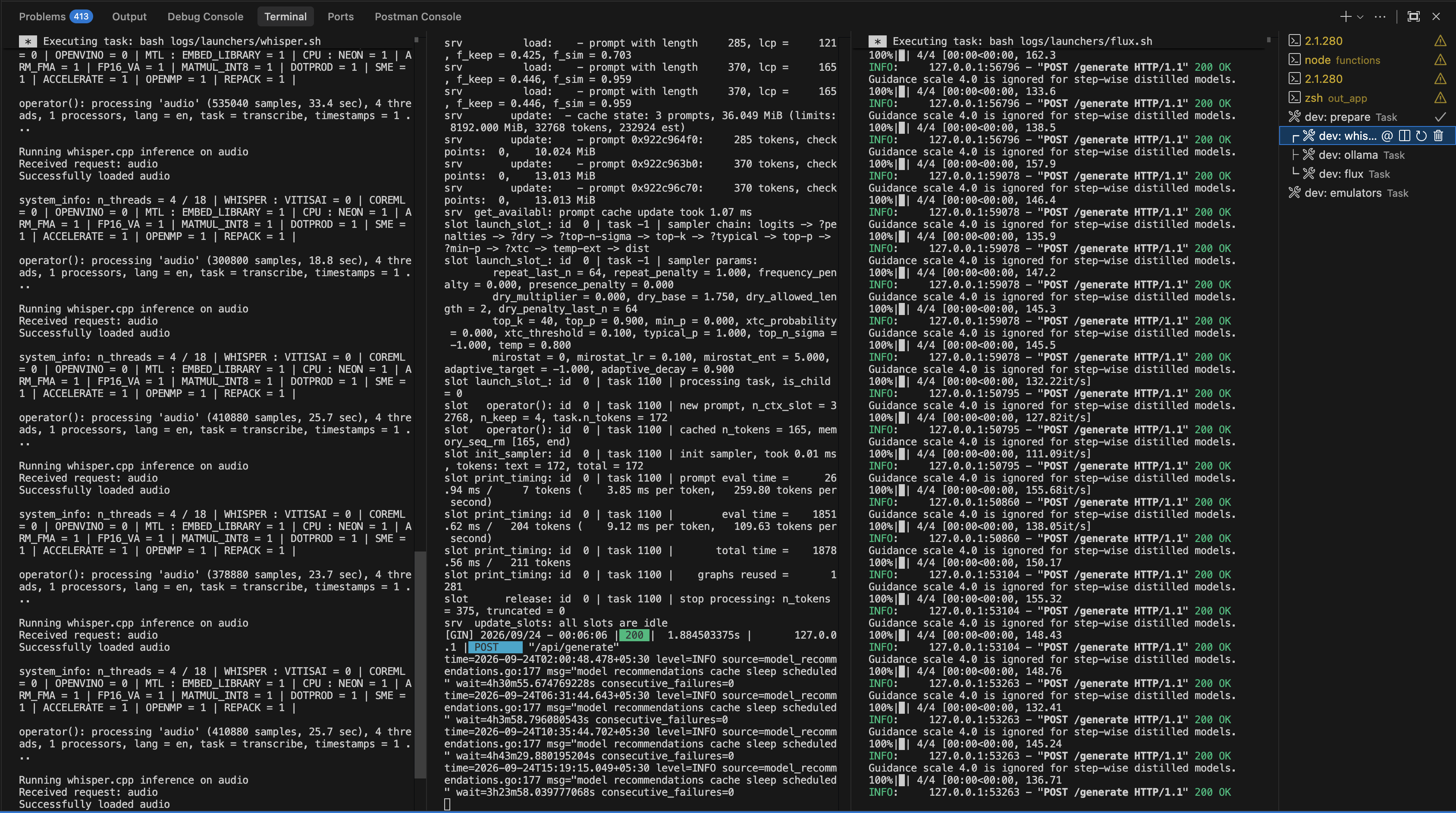
Moving forward, the app is being built and tested with a three-stage AI pipeline that turns voice notes into illustrated diary panels. Transcription runs on whisper.cpp, installed via Homebrew, with a base.en model from Hugging Face served locally using whisper-server. The prompt-writing layer uses Ollama to serve Qwen2.5 (3B), an easy-to-set-up local HTTP API that converts the transcribed voice note into a concise visual scene description before it reaches the image model.
Initially, AUTOMATIC1111/Stable Diffusion was used for image generation, but it faced difficulties due to unmaintained repositories and compatibility issues. The designer then switched to FLUX.2 (4B), a well-maintained model served through a FastAPI app, which eliminated build problems and provided a smooth development experience.
Testing involved running all three components simultaneously during development, allowing for rapid iteration without incurring costs associated with paid APIs. This local setup validated the AI pipeline, ensuring that any potential issues were addressed before moving to production with higher-quality visuals.
Written by urgent.news from HackerNoon's reporting — not their text. Machine-written — may contain errors; check the original before relying on it.