Asia stocks slip as oil, yields rise; chipmakers hit by OpenAI pause
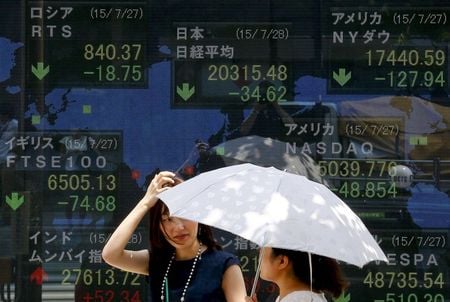
Asian stocks experienced a decline on Monday, driven by heightened uncertainty surrounding a potential U.S.-Iran truce and a surge in global bond yields. The tech-heavy Nasdaq futures led the downward trend, contributing to losses in the U.S. stock market. South Korea's KOSPI and China's blue-chip CSI 300 both fell by around 2% and 2.3% respectively, while the Shanghai Composite dropped 1.7%.
Hong Kong's Hang Seng index, however, saw a modest gain of approximately 0.6%. Japan's Nikkei 225 and TOPIX index showed minimal movement, with the latter edging down by 0.1%.
Rising oil prices, following U.S. President Donald Trump's rejection of an Iranian proposal to reopen the Strait of Hormuz, played a significant role in the market's downturn. Brent Oil Futures surged more than 2%, reaching over $106 a barrel, marking an 18% gain since September. This hike in oil costs further fueled concerns about elevated inflation, which may prompt central banks to either maintain or raise interest rates.
The semiconductor industry faced particular pressure, with chipmakers like South Korea's SK Hynix Inc and Samsung Electronics both losing nearly 5% each. Japan's Kioxia Holdings also saw a decline of 2.5%. In Hong Kong, Semiconductor Manufacturing International Corp dropped by 3.6%, and Hua Hong Semiconductor declined by 4.8%. This selling was triggered by OpenAI's decision to pause training, evaluation, and inference for some of its advanced artificial intelligence models as part of its efforts to enhance safety controls.
The move heightened concerns that a slower pace of AI development could potentially reduce demand for advanced chips, servers, and data-center infrastructure.
While Asian shares faced a challenging day, Singapore's Straits Times Index and Australia's S&P/ASX 200 managed to show minor gains of 0.6% and 0.3% respectively. Investors are now eagerly awaiting the Reserve Bank of Australia's policy decision on Tuesday, with expectations of a 25-basis-point increase in the cash rate. Market participants and economists remain optimistic about this forthcoming announcement.
However, the week ahead will be data-intensive, with U.S. inflation, manufacturing, and labor-market reports expected to be closely monitored. Additionally, the situation at the Strait of Hormuz will be under scrutiny, as developments in this region could significantly impact oil prices and influence interest-rate expectations.
Written by urgent.news from Investing.com's reporting — not their text. Machine-written — may contain errors; check the original before relying on it.
This story
This is one outlet's version. Read the fullest account.