Alberta, resources and the political economy of Canadian federalism
CANADA is unlikely to break apart tomorrow. But Alberta offers an unusually clear illustration of a more profound problem confronting modern federations: what happens when the geography of production no longer sits comfortably with the geography of political authority?
Canada is unlikely to break apart in the near future, but Alberta serves as a prime example of a growing issue faced by modern federations: how regional geographic production patterns align or misalign with political authority boundaries. This is particularly relevant for Alberta, which is a leading hub for Canadian energy production.
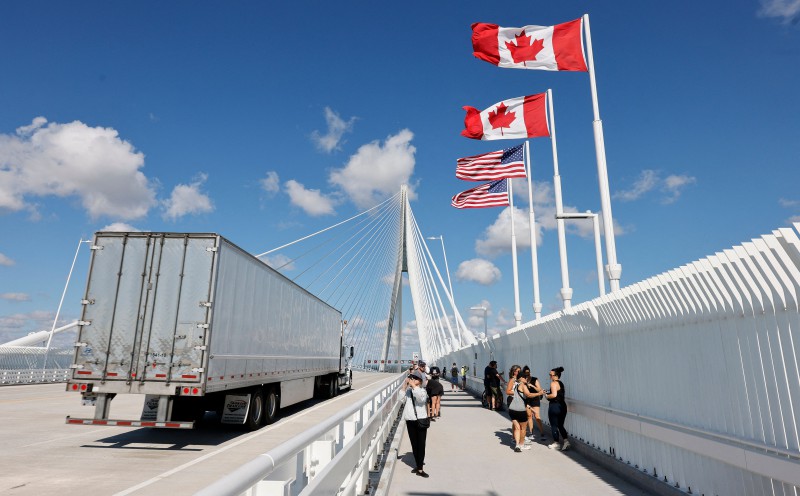
In 2025, Canada produced a record 310.9 million cubic meters of crude oil and equivalent products, with Alberta's oil sands alone accounting for 203.1 million cubic meters. The recent expansion of the Trans Mountain pipeline has highlighted how critically Alberta's productive capacity relies upon infrastructure linking a landlocked resource economy to international markets.
Therefore, the core dispute surrounding Alberta is not merely financial; it is fundamentally about production federalism. This refers to questions around who produces, owns the resources, regulates production, bears environmental costs, finances infrastructure, determines market access, and how income, risks, and political authority related to that production should be shared across a federal government structure.
These are complex questions that are becoming increasingly difficult for Canada to neatly compartmentalize. While Alberta views hydrocarbons as a vital part of its provincial economic foundation, the federal government must simultaneously consider emissions policies, interprovincial infrastructure, Indigenous rights, international obligations, and the broader interests of the Canadian economy as a whole.
Neither perspective is inherently wrong, but they risk becoming incompatible if federal institutions cannot find a middle ground.
Written by urgent.news from New Straits Times's reporting — not their text. Machine-written — may contain errors; check the original before relying on it.