A Journey to Antarctica in Photos: Remembering Ernest Shackleton’s Grand Expedition
Among the treasures of the Royal Geographical Society’s two million strong collections are over 150 glass and celluloid negatives: the work of Frank Hurley, official photographer to Ernest Shackleton’s Imperial Trans-Antarctic Expedition of 1914-1917. These wonderful images have an importance
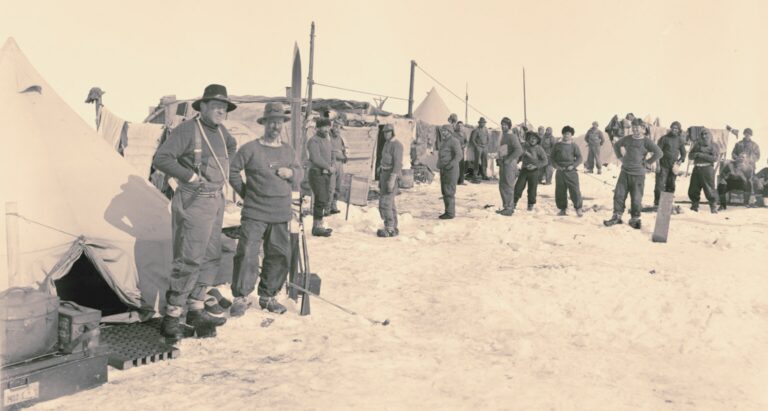
In the Royal Geographical Society’s vast collection, more than 150 photographs captured by Frank Hurley, the official photographer of Ernest Shackleton’s Imperial Trans-Antarctic Expedition from 1914 to 1917, stand as a testament to the expedition’s history. These captivating images, beyond their artistic value, offer a glimpse into the lives of the men who braved the Antarctic wilderness.
For the author, these photographs hold a special place as they were the means by which they learned about their grandfather’s journey aboard the Endurance. The author’s father, Ernest Shackleton’s youngest child, never shared the story of his father, only learning about it by inquiring about the Hurley photos on the walls. It wasn’t until later in life that the full truth about the dogs being killed and eaten for sustenance during the expedition became known.
Hurley’s images, imbued with emotion and artistic flair, provide a unique perspective on the expedition. One photograph, in particular, shows the Endurance in the ice, reduced to a skeletal state with sled dogs around her. This image left the author curious about the fate of the dogs, a question that went unanswered for years until they were finally told.
Hurley and the crew later returned to the wreck of the Endurance to salvage supplies, including his glass plate negatives and cinematograph film. Among these treasures are a few standout images such as “The Endurance Crushed by the Ice,” “Head of Moraine Fjord, South Georgia” (also known as “Lulworth Cove”), and “The Long, Long Night,” which showcases the ship illuminated by 20 phosphorous flares against the Antarctic night.
However, Hurley’s work extends beyond the expedition. He was originally hired as the official photographer on Douglas Mawson’s Australasian Antarctic Expedition from 1911 to 1913. Shackleton discovered Hurley’s 1913 documentary film, Life in the Antarctic, and was impressed enough to recruit him for the Endurance expedition. Due to Hurley’s delay in returning from the Australian bush, he was likely the only polar photographer to be rescued by an Aboriginal tracker.
Known for his commitment and artistic vision, Hurley was not afraid to embellish his subjects for effect. After the expedition, Hurley returned to South Georgia to film penguins and seals, aiming to expand the film’s content and ultimately repay the expedition’s debts. While the author finds it difficult to single out a favorite among Hurley’s glass plate negatives, some of his most memorable works include “The Endurance Crushed by the Ice,” “Head of Moraine Fjord, South Georgia,” and “The Long, Long Night.”
Written by urgent.news from Literary Hub's reporting — not their text. Machine-written — may contain errors; check the original before relying on it.