We wear our heritage better than we teach it
South Africa celebrates its diverse heritage each September, but indigenous languages remain marginalised in education, science, technology, business and public life. The writer argues that preserving them requires more than cultural ceremonies: they must be developed as languages capable of carrying modern knowledge.
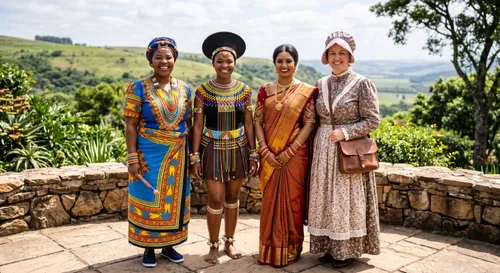
We celebrate Heritage Day with grace and confidence. This day marks our nation's cultural diversity, allowing us to display our various cultural identities without conflict. However, we must question whether a culture can thrive when its knowledge cannot be reliably passed down. This question is best illustrated through a recent Heritage Month campaign.
Wikimedia South Africa's translation initiative, encouraging volunteers to convert English heritage articles into local languages, sheds light on a more subtle issue. During a translation session, a student chose Afrikaans over her native tongue, explaining that she couldn't write her home language due to inadequate schooling. This highlights a troubling trend: a language may persist in spoken form but weaken in written communication.
If a language survives in conversation, family discussions, songs, and ceremonies but struggles in written forms like explaining balance sheets or publishing academic work, it risks becoming a narrow cultural expression rather than a thriving living language. South Africa's heritage strategy has focused on symbolism—acknowledging eleven official languages and providing protections through ceremonies, public holidays, and constitutional rights.
Yet, English remains the dominant language in universities, corporate environments, media, scientific publishing, technology, and much of the government sector. African languages, while culturally rich, often serve as identity markers rather than tools for advanced knowledge. A language's vitality depends on its ability to handle complex tasks such as financial transactions, legal proceedings, mathematical explanations, and philosophical debates.
If a language cannot perform these functions, its speakers may perceive it as suitable for personal use but not for professional success. Heritage Month sometimes perpetuates this dichotomy when children wear traditional attire on Friday and return to predominantly English-speaking classrooms on Monday. While parents may prefer English-medium education for its perceived advantages—access to higher education, better job opportunities, and economic mobility—the situation becomes problematic when proficiency in an African language and access to modern opportunities seem mutually exclusive.
The Department of Basic Education has taken steps with Mother Tongue-based Bilingual Education, incorporating African languages into mathematics and science instruction beyond the foundational years. This is a positive step, but the core issue goes beyond language choice. It lies in whether a language evolves sufficiently to accommodate modern intellectual demands.
Language development requires continuous effort: creating new terminology, writing textbooks, editing dictionaries, translating concepts, producing literature, building digital corpora, and engaging in public debates about new vocabulary. The digital age presents both opportunities and challenges. AI learns from vast amounts of existing text, giving languages with robust online presence an advantage.
Languages with scant digital representation lag behind. For instance, languages like isiZulu, Sesotho, Tshivenda, and Xitsonga have fewer searchable, structured materials compared to English. Consequently, AI tools will likely comprehend and serve them less effectively. This digital divide extends beyond internet access; it encompasses the languages the internet understands.
Ignoring this disparity could hinder the development of African languages in the knowledge economy. To truly strengthen these languages, South Africa should invest in producing more substantial non-fiction works in African languages. Universities should value intellectual contributions in indigenous languages, moving beyond a preference for English publications.
Public broadcasters should broaden their programming to include indigenous languages, showcasing serious journalism, publishing, podcasts, and academic works. By doing so, South Africa can foster a linguistic environment where African languages not only survive but thrive in the digital era.
Written by urgent.news from IOL's reporting — not their text. Machine-written — may contain errors; check the original before relying on it.