US-Iran conflict: What UAE residents need to know today
The US-Iran conflict has entered another uncertain phase after US President Donald Trump rejected Iran’s proposal to reopen the Strait of Hormuz within seven days, while Washington steps up economic pressure on Tehran with support from the UAE, UK, Turkey and Oman. UAE passengers have been advised to check their flight status before travelling to the airport on Sunday amid delays and schedule…
The US-Iran conflict has taken a new uncertain turn after US President Donald Trump refused Iran's suggestion to reopen the Strait of Hormuz within a week. Simultaneously, Washington has intensified economic sanctions on Tehran with the backing of the UAE, UK, Turkey, and Oman. UAE travelers are advised to verify their flight status prior to arriving at Dubai, Abu Dhabi, and Sharjah airports due to reported delays and schedule adjustments. In Riyadh, schools have moved to remote learning for a week, though the reason remains unexplained.
U.S. Treasury Secretary Scott Bessent acknowledged the UAE, UK, Turkey, and Oman for their support in Washington's economic pressure campaign against Iran. He announced the deployment of U.S. teams globally to push for action against Iran under the title "Operation Economic Outcast." As part of this operation, targeted financial measures were imposed on banks and aviation services. Secretary Bessent expressed that the U.S. would continue collaborating with the four countries to fortify measures against Iran.
Trump has dismissed Iran's proposal to open the Strait of Hormuz within seven days as part of a plan to cease the conflict and resume nuclear discussions. Iranian Foreign Minister Abbas Araghchi stated that Iran is still awaiting a formal U.S. response through mediators before determining its next move. Iran insists on reopening the waterway contingent on Washington fulfilling its conditions.
Iranian President Masoud Pezeshkian affirmed that the proposal was coordinated with Supreme Leader Mojtaba Khamenei and backed by a six-member team authorized to negotiate on Tehran's behalf.
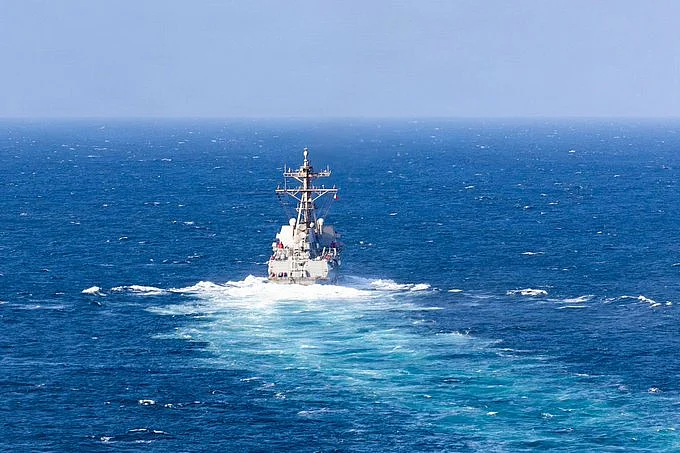
The rejection has left the two sides at a deadlock over who should initiate the process. Iran's Islamic Revolutionary Guard Corps Navy has threatened to target U.S. warships, including those in the Indian Ocean, if Washington escalates the conflict again. U.S. military presence has grown around the Strait of Hormuz, with reports of KC-135 Stratotankers, KC-46 Pegasus refueling aircraft, and an MQ-4C Triton surveillance drone patrolling the region. Iran has indicated that its military remains on high alert.
Written by urgent.news from Gulf News's reporting — not their text. Machine-written — may contain errors; check the original before relying on it.
This story
This is one outlet's version. Read the fullest account.