This father documents what we're losing, so his children will know he tried
WHEN Sean Gallagher stood before an audience in Kuala Lumpur recently to present Witness to a Changing Planet , stories from “the front lines of climate change, environmental loss and a world in transition”, he wasn’t simply showing photographs.
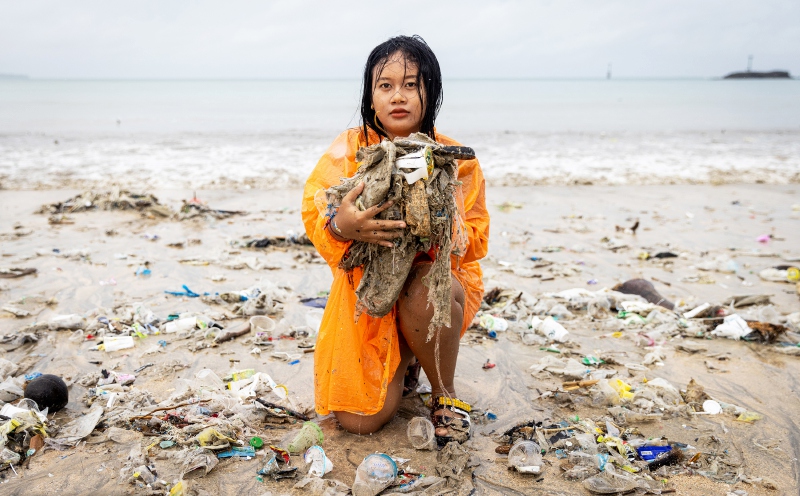
When Sean Gallagher addressed an audience in Kuala Lumpur to share Witness to a Changing Planet, he didn't just present photographs. As a British environmental photojournalist and filmmaker, Gallagher had been documenting environmental change for nearly two and a half decades. His keynote speech at International Sustainability Week 2026 in Malaysia drew from his extensive experience witnessing the impacts of climate change from the Tibetan Plateau to Tuvalu's rising seas. However, his stories were fundamentally about people and the consequences of their changing homes.
This theme resonated with Gallagher since his teenage years. During a field trip in southern Brazil at 22, he immersed himself in the Atlantic rainforest for three weeks while studying its protection. While armed with a point-and-shoot film camera, Gallagher realized that understanding science alone was insufficient. He needed to convey the emotional impact of environmental changes.
Upon returning to Britain, his mother gifted him her old Canon film camera. Gallagher taught himself photography through library resources and eventually built a darkroom at home. His passion for photography evolved into a vocation - using images to tell stories about human-environment interactions.
After an internship at Magnum Photos in London, Gallagher recognized photography's potential to convey social, political, and environmental narratives beyond mere beauty. This led to him exploring stories that were often overlooked, such as China's desertification. In 2006, he embarked on a major project in China, capturing the effects of desertification on landscapes and communities, supported by the Pulitzer Centre.
Gallagher's work transcended environmental photography. He sought to capture the human dimension, finding that people often connect with stories about families and communities affected by environmental changes. One such moment happened while documenting Ganges pollution in northern India. He met an elderly man whose wife had succumbed to pollution, and Gallagher witnessed the poignant emotional reaction that stayed with him long after the shoot.
To Gallagher, an environmental story must go beyond abstract impacts. He emphasizes the importance of humanizing these issues, showing how they affect real people and their lives. For him, each photograph becomes a doorway back to those moments, allowing viewers to connect with the human stories behind environmental crises.
Written by urgent.news from New Straits Times's reporting — not their text. Machine-written — may contain errors; check the original before relying on it.