The Deepening Energy Crisis Is A Wake-Up Call For India
Seven months have passed since the launch of Operation Epic Fury by the United States and Israel on Feb 28. The Strait of Hormuz continues to be blockaded; Iran's persistent attacks on oil tankers and merchant ships passing through the Strait have effectively imposed an embargo on sea transport, severely disrupting energy supplies. The United States recently stated that a billion barrels of oil…
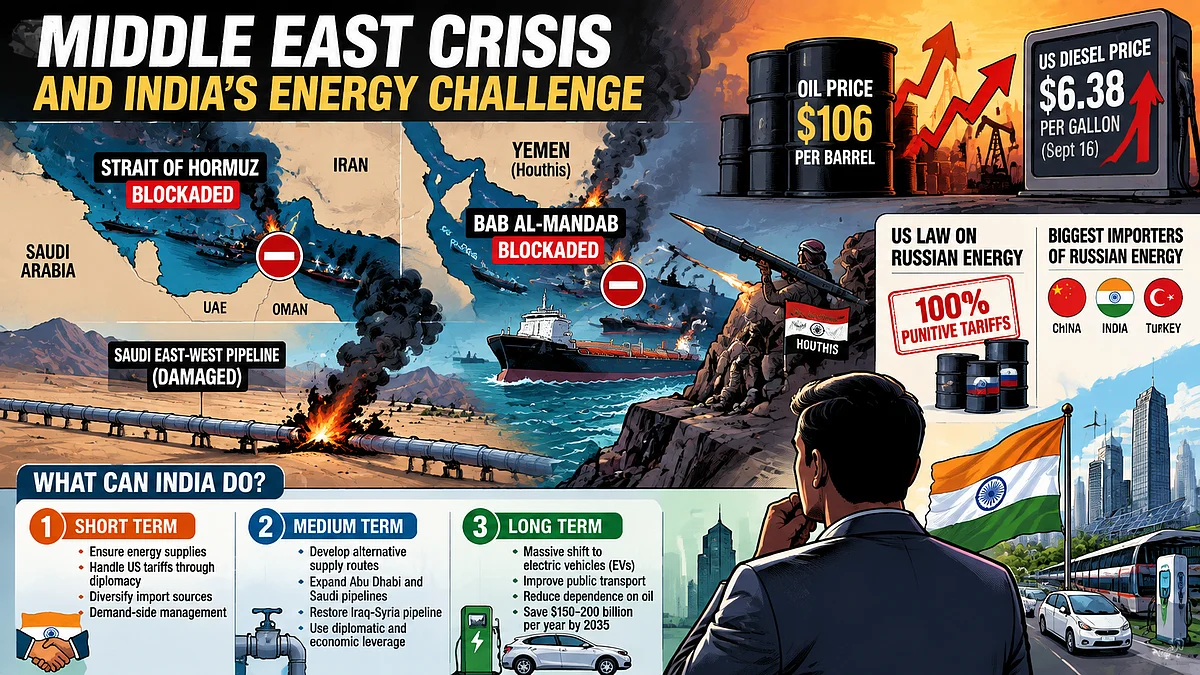
The ongoing energy crisis has become a wake-up call for India, as it faces the potential consequences of a disrupted supply chain. Since the start of Operation Epic Fury on February 28 by the United States and Israel, the Strait of Hormuz has been blockaded, preventing the transport of oil and causing a significant disruption in energy supplies. Although the exact situation remains uncertain, energy through the Strait is volatile and could be disrupted easily.
Efforts to mitigate supply chain disruptions have included the use of the East-West pipeline, strategic reserves, commercial storage, and demand-side management by countries like China. However, continued disruption is likely to have serious consequences, with supply falling short of demand and prices soaring. The recent seizure of Yemen's western coast by Houthis and the capture of the port of Mokha have further complicated the situation.
India, being a major importer of Russian energy, could be severely affected by the Graham Law, which imposes 100% punitive tariffs on countries buying Russian oil and gas significantly. This law will not exempt China, India, or Turkey due to their leverage in controlling global supply of rare earths and permanent magnets. In the short term, India needs to overcome energy shortages and American tariffs by lobbying the US establishment and diversifying energy supplies.
In the medium term, India should accelerate the creation of alternative supply routes, including enhancing the capacity of the Abu Dhabi Crude Oil Pipeline, expanding the Saudi East-West pipeline, and restoring the Iraq-Syria pipeline.
Most importantly, in the long term, India must focus on eliminating oil consumption from transport systems by electrifying vehicles. With over 400 million motor vehicles consuming 182 billion litres of diesel and petrol annually, transitioning to electric vehicles (EVs) is crucial for long-term energy security. India currently has a 7.5% market share for EVs, while China leads with 60%.
Implementing a national program to shift to near 100% EVs by 2035, combined with improved public transport, will significantly enhance India's energy security and reduce trade deficits.
Written by urgent.news from Free Press Journal's reporting — not their text. Machine-written — may contain errors; check the original before relying on it.