Spanien: Ärger über Wohnungsnot setzt Spaniens Regierung unter Druck
Zehntausende protestieren in Madrid gegen Zwangsräumungen und explodierende Mieten.
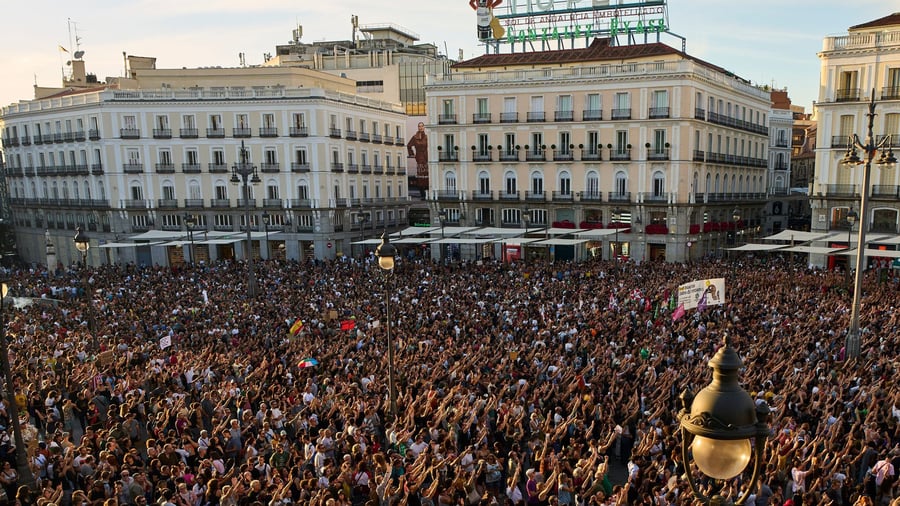
In Madrid, tens of thousands of people took to the streets in outrage over the eviction of an 87-year-old woman and the growing housing crisis in Spain. The protest was organized under the slogan "Ni una Maricarmen más" (No more Maricarmen), specifically targeting the forced eviction of Maricarmen Abascal, who was evicted after 70 years in her apartment in the Spanish capital.
The Interior Ministry reported around 25,000 participants, while the organizer claimed up to 300,000 people attended. Hundreds of people set up tents overnight in the city's central square, which also attracts many tourists. Demands range from better protection against forced evictions to legal measures against rising rents, housing as a revenue source, and strengthening tenant rights.
The protests were sparked by the case of 87-year-old Maricarmen Abascal, who moved into her apartment in Madrid's Retiro district in 1956 and later inherited the lease. When the building was sold to an investment company, she was supposed to move out as her old lease would no longer be valid. The new owners won the case in court, and after several failed attempts to evict her, she was finally removed by police despite the resistance of her supporters.
In an interview with the TV channel RTVE, she said, "I haven't been able to defend my house, but I have fought so that others learn to fight for theirs." Despite her limited mobility and a 50 percent disability rating, she wants to continue fighting for the right to housing. After the demonstration, participants established a protest camp with dozens of tents at Madrid's main square, Puerta del Sol.
The square has been the central and symbolic location for the 15-M movement, a citizen protest for greater political participation, direct democracy, social and economic justice, against corruption, and austerity policies. The protest connects to similar events from 2011, where the square was occupied for weeks and became a hub for grassroots self-organization, leading to the formation of new parties that replaced the traditional two-party system in Spain.
The demonstrators hold both the left-wing central government of Pedro Sánchez and conservative regional governments, like Madrid's Isabel Díaz Ayuso, responsible for the housing crisis. They demand automatic renewal of lease contracts for an indefinite period, better protection against forced evictions, a freeze on rents, and a reform of the rental law that strengthens rental regulations and the regulation of room rentals.
Evictions of 650,000 public housing units owned by so-called "bird funds" were proposed by left-wing party Podemos MEP Irene Montero. Thousands from various generations joined the march from Puerta del Sol to the Congress building, including families, young people, and pensioners. Simultaneous demonstrations took place in eleven other Spanish cities.
In recent days, local demonstrations had already occurred nationwide. In the wake of the protests, the government is working on adopting a new decree-law on housing policy on Tuesday, which would immediately become law but would then need parliamentary approval within 30 days. The government is currently negotiating with several parties to secure the necessary majority.
Written by urgent.news from Handelsblatt's reporting — not their text. Machine-written — may contain errors; check the original before relying on it.
This story
This is one outlet's version. Read the fullest account.