Schweizer Neutralität: Schweizer lehnen Abschottung durch strikte Neutralität ab
Wirtschaftsinteressen, moralischer Kompass und hitzige Debatten: Was bedeutet das Nein zur Neutralitätsinitiative für die internationale Zusammenarbeit der Schweiz und den Umgang mit Sanktionen?
In Switzerland, the initiative advocating for a strict interpretation of the country's neutrality failed in a recent popular vote. The population did not wish to further limit collaboration with neighboring countries or engage in business with nations that have instigated wars. First calculations from the survey institute gsf.bern showed that approximately 71% of voters rejected the push for a very strict interpretation of Swiss neutrality in the constitution.
The issue has stirred heated debates nationwide for weeks, as the idea of neutrality is deeply ingrained in Swiss culture, like precision watches and cheese. However, Helen Keller, a professor of international law at the University of Zurich, noted that while everyone supports neutrality, everyone has a different understanding of what it entails.
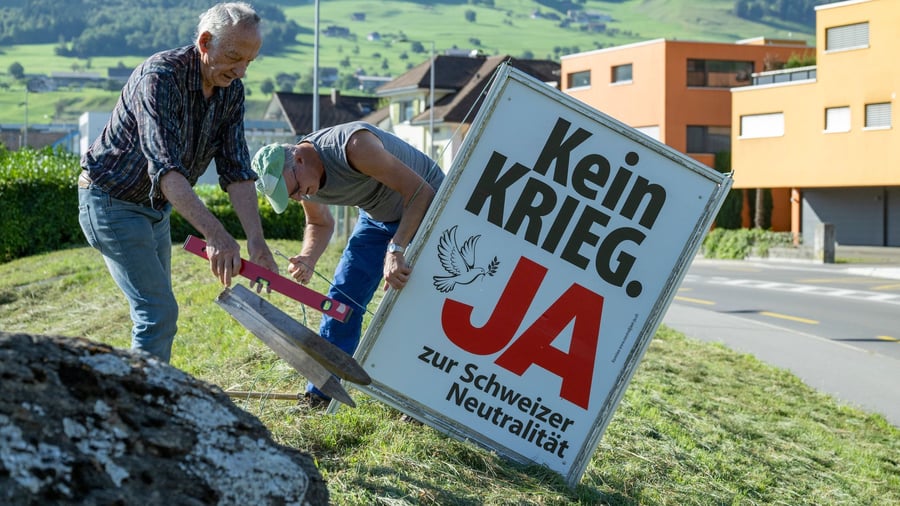
The initiative "Pro Switzerland," backed by the strongest voting party, the right-conservative SVP, was behind the push. SVP veteran Christoph Blocher had already predicted that even if they lost, they would return. The initiative primarily focused on war and peace, acknowledging that the economy would also benefit. With the peace dove on their posters and the slogan "No War," they suggested that strict neutrality could better protect Switzerland from attacks.
Walter Wobmann, president of the initiative committee, claimed that the security of their country had been massively jeopardized. Blocher believed that Russia would only stop at the Swiss border if the country was strictly neutral, as he told the Neue Zürcher Zeitung (NZZ). During World War II, Switzerland had provided weapons, electricity, and foreign currency to the Nazi regime, buying gold from Nazi Germany, including looted gold.
So, strict neutrality also meant no economic boycotts or travel bans, according to Blocher. "Neutrality is not a free pass," said Monika Rühl, director of the economic association Economiesuisse. Trade sanctions are a vital tool for the international community to respond to severe violations of international law. Rühl emphasized that if war crimes are committed, such as kidnapping children, Switzerland should not hide behind neutrality.
A very strict interpretation of neutrality raises further questions about other international obligations, she added. Keller also questioned whether Switzerland would participate in a tribunal dealing with crimes in Ukraine and implement international arrest warrants. "Will we not implement international arrest warrants?" The trade with war parties was questioned by Günther Baechler, a former diplomat who supported the no campaign.
He demanded a clear moral compass: "We cannot treat perpetrators and victims the same." Strict neutrality, however, was clear: "This means that Switzerland can continue trading with a country at the same extent as before foreign sanctions," said former ambassador Paul Widmer of the "NZZ". The family of Blocher, who owns the worldwide operating company Ems Chemie with two factories in Russia, understood this.
Swiss neutrality has been guaranteed internationally since 1815, requiring Switzerland to avoid wars and defense alliances like NATO. The push by "Pro Switzerland" had led the government in Bern to implement most EU sanctions against Russia after the start of the Russian war against Ukraine, triggering the neutrality initiative.
It aimed to write a strict interpretation of neutrality into the constitution, even banning cooperation with defense alliances, except when the country is militarily attacked or an attack is imminent. Only UN-sanctioned sanctions would be allowed, which Russia could have prevented with its veto at the World Security Council during the Ukraine invasion.
"He who seeks partners only in a crisis is too late," said Raphaël Bez, General Secretary of the European Movement Switzerland. The movement would prefer Switzerland to be part of the EU.
Written by urgent.news from Handelsblatt's reporting — not their text. Machine-written — may contain errors; check the original before relying on it.