Märkte Insight: Das endgültige Ende der Nullzins-Ära steht kurz bevor
Noch eine Notenbank weltweit hält den Leitzins bei null Prozent. Doch auch in diesem Währungsraum zieht die Inflation an. Ein globales geldpolitisches Experiment endet, meint Jakob Blume.
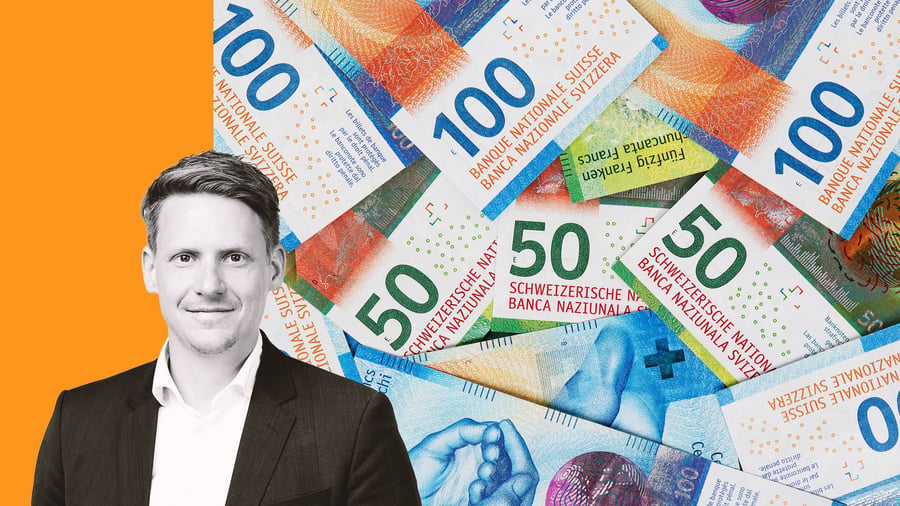
The Swiss economy presented an unusual picture, according to Martin Schlegel, the head of the Swiss National Bank (SNB), at the end of last week. While inflation in the Alpine republic remains low compared to the rest of Europe, it is significantly higher. According to the SNB's forecast, inflation is expected to reach 1.2 percent over the next six months, rather than the 0.8 percent previously anticipated.
This is reflected in the exchange rates as well. The Swiss franc is currently worth less than 1.06 euros and is trading near its lowest point in twelve months. Though the SNB held the key interest rate at zero percent in its decision last Thursday, experts expect the SNB to be the last reserve central bank in the world to raise the key rate above zero, marking the end of the global zero-interest-rate policy.
The weakening Swiss franc is not only a result of this but also marks the end of the central banking experiment of the past decade, which involved central banks dealing with ultra-low interest rates. Increasingly, the Swiss economy seems to be unable to escape the pressure of inflation and the rising global interest rates. With the SNB lagging behind the European Central Bank (ECB) and the US Federal Reserve (Fed) in the interest rate hike cycle, the Swiss franc is also suffering.
Daniel Hartmann, chief economist at asset manager Bantleon, notes in a recent study, "The opening gap between the SNB and the ECB's interest rates has already left its mark on the franc: against the euro, it has lost about five percent since March." The strong domestic currency shielded Switzerland from the high energy import costs for long, but now, the prices at the pump are also increasing between Basel and Geneva.
SNB economists attribute the recent rise in inflation primarily to energy prices. In the second half of 2027, inflation pressure is expected to ease again. Hartmann is convinced: "The recent weakening of the franc creates the basis for a moderate tightening of monetary policy – even in Switzerland." He expects the first interest rate hike to occur as early as December, with the latest being March 2027.
The UBS bank also believes that the SNB has a window for interest rate hikes in the upcoming quarters. Such an interest rate hike would temporarily support the depreciation of the Swiss franc. What happens next with Swiss monetary policy and the Swiss franc, often seen as a safe harbor, will depend on a number of factors, the UBS analysts write.
"If global inflation remains high in 2027, the Fed and the ECB could raise interest rates again next year." Expected rising interest rates in the euro area and the US could further weaken the franc. "This would argue for additional interest rate hikes by the SNB in the coming quarters," and thus, the zero-interest-rate phase in Switzerland may be over for the foreseeable future.
Written by urgent.news from Handelsblatt's reporting — not their text. Machine-written — may contain errors; check the original before relying on it.