Is China really stealing AI from American companies?
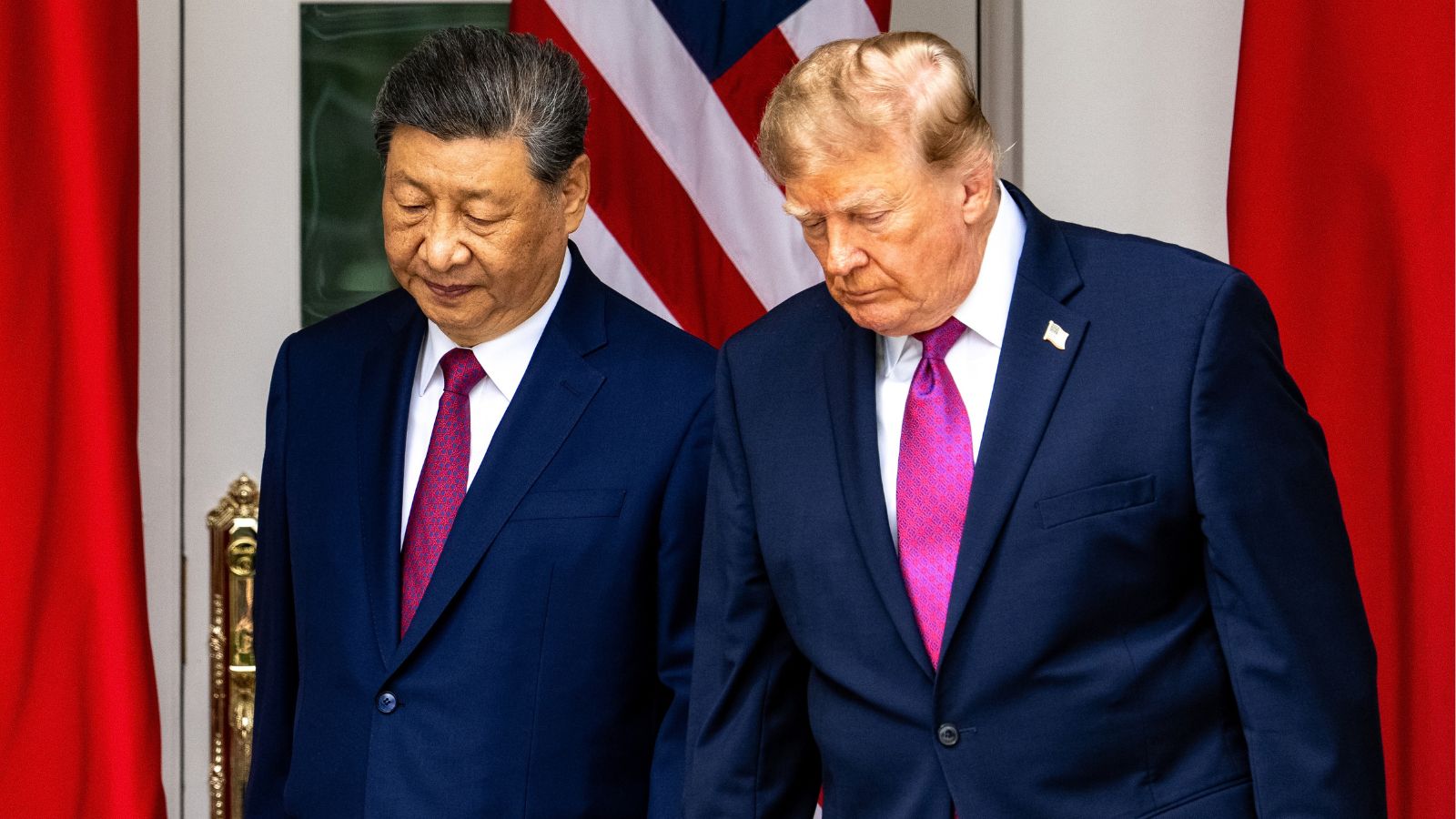
For more than two years, technology firms like Anthropic, OpenAI, and Google have accused Chinese entities of dishonestly replicating their artificial intelligence (AI) technologies. These accusations intensified as Chinese President Xi Jinping met with then-U.S. President Donald Trump in Washington. Amid heightened apprehension over AI's potential risks, the leaders were anticipated to debate the technology's swift advancement, with many U.S. officials, tech tycoons, and ordinary citizens advocating for a reduction in its pace.
Major American AI companies such as Anthropic and OpenAI are at the forefront of this technological race, yet Chinese startups like Z.ai and Moonshot are not far behind. A central point of contention in these discussions revolves around the practice of "distillation," a method frequently alleged by Silicon Valley companies. However, some experts argue that the claims made by firms such as Anthropic and OpenAI might be exaggerated.
According to Charles O’Neill, chief of model training at Baseten, a U.S.-based company providing access to Chinese technologies, the notion that Chinese technologies mirror those of Anthropic is not entirely accurate. Distillation is a technical process initially devised in the early 2010s to create more efficient AI systems. It functions by utilizing data from a pre-existing model to construct a new system that operates on less powerful hardware.
This method allows for the creation of a less resource-intensive version of a more potent AI model. Nevertheless, distillation has lately been utilized for another purpose: extracting data from competitors' systems. To achieve this, an outside firm would register numerous accounts on the rival's platform (for instance, Anthropic's Claude or OpenAI's GPT) and delegate the systems to execute various tasks, such as coding or mathematical computations.
The distiller can subsequently utilize the data produced by these existing AI systems to train their own model. Although distillation is not explicitly prohibited by law, certain legal experts propose that it could infringe upon the Defend Trade Secrets Act, a statute which enables businesses to sue over the theft of trade secrets.
However, U.S. courts have yet to render a definitive decision on this matter. Furthermore, copyright law may not be applicable, as distillation aims to replicate the general functionality of a system rather than its exact text content. Critics point out that Anthropic and OpenAI have also committed similar actions. Anthropic is currently embroiled in multiple lawsuits alleging the illicit use of copyrighted internet data to train its models.
Last year, in a landmark legal settlement, Anthropic agreed to pay $1.5 billion to a coalition of authors and publishers after a court ruled that it had unlawfully downloaded and stored millions of copyrighted books. The settlement represented the largest payout in U.S. copyright history. OpenAI and other companies face comparable lawsuits, including one filed by The New York Times in 2023, which asserts that OpenAI and its partner Microsoft utilized millions of articles published by The Times to train their chatbots, which now vie with the news outlet as a source of information.
Both OpenAI and Microsoft deny these allegations. Chinese companies are likely guilty of copying American systems, although it is unclear to what extent. After DeepSeek, a Chinese startup, unveiled a highly potent and efficient AI system last year, OpenAI accused DeepSeek of distilling its technologies. Since then, Chinese systems have continued to improve, prompting Anthropic to make similar accusations.
In June, Anthropic sent a letter to Senators Tim Scott and Elizabeth Warren, alleging that Chinese conglomerate Alibaba had distilled its technologies. However, Chinese companies have not yet responded publicly to these accusations. Distillation alone cannot account for China's competitive advantage in AI. While distillation allows Chinese companies access to part of American systems—the outputs generated by those systems—they do not possess the underlying computer code, which would be available if the technology were open source.
Although distillation can expedite the creation of a new AI model, the process necessitates further investment, computational resources, and expertise. To capitalize on distillation, a Chinese firm must first develop a robust system of its own. Once achieved, distillation can refine this model, but it requires additional resources and talent.
Can Anthropic and OpenAI prevent other companies from distilling their systems? They can attempt to halt the practice and have attempted to do so. If Anthropic or OpenAI suspect that someone is distilling their systems, they might terminate the offender's account. Nonetheless, other entities are likely to emerge. If Anthropic and OpenAI excessively restrict access, they may inadvertently hinder legitimate users.
Lino Le Van, another researcher at alphaXiv, a Silicon Valley-based startup tracking AI developments, noted that stopping distillation is practically unfeasible.
Written by urgent.news from The Indian Express's reporting — not their text. Machine-written — may contain errors; check the original before relying on it.