How war became part of everyday medicine outside Kharkiv
In Mala Danylivka, family physician and cardiologist Daria Kantemyr sees the effects of years of war in her patients, her staff and the daily work of a public clinic near Kharkiv.
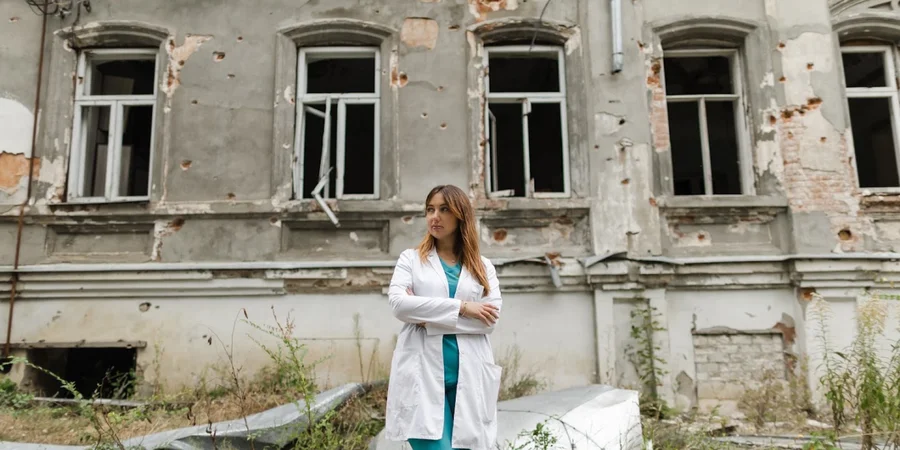
In Mala Danylivka, family physician and cardiologist Daria Kantemyr observes the impact of the ongoing war on her patients, staff, and the operations of a public clinic near Kharkiv. On a Friday morning in early September, the outpatient clinic appears quiet, with few people in the hallway and no lines outside the doctors' offices. The surrounding area, including university buildings and dormitories, is accustomed to the constant threat of Russian drones and explosions, which have been a part of life here for years.
Prior to Russia's full-scale invasion, the dormitories were bustling with students, including foreigners who sought medical care from local doctors. However, recent events have transformed the clinic's atmosphere. Daria, a seasoned medical professional with experience in primary care and hospital medicine, reflects on the profound changes that have occurred in the past four and a half years of the war.
Now, conditions that were once considered exceptional circumstances have become commonplace in this part of Kharkiv Oblast. Young patients in their 20s are presenting with high blood pressure, anxiety, and sleep disturbances following attacks. The clinic has had to invest in backup power systems and ensure that staff can come to work despite the ongoing drone threat.
When immediate danger arises, the clinic's concrete shelter is quickly accessed, allowing staff and patients to take shelter in a few steps. However, air-raid alerts can persist for extended periods, making it impractical to halt appointments every time.
The skills expected of civilian doctors have also evolved. While basic and advanced life support, bleeding control, and mass-casualty response were once additional training for many family doctors, they are now integral to their daily practice. Daria's experience working in a hospital that served as a stabilization point during the early stages of the war brought her into direct contact with these challenges.
She recalls patients being brought in with gunshot wounds, and air-raid alerts continuing for hours on end. This intense environment pushed doctors to adapt quickly and maintain an unwavering commitment to patient care.
Daria's personal experiences during the war have left a lasting impact. In 2022, she witnessed her friend's grandmother being injured by a Russian cluster munition while seeking medical attention at a regional hospital in Kharkiv. Later, she herself was struck by a cluster munition near her home, an experience that continues to cause her anxiety.
The sound of explosions and sudden changes in the environment trigger intense reactions, reminiscent of the chaos and destruction she endured during the early days of the conflict.
Despite the constant threat of war, Daria and her colleagues remain dedicated to providing essential healthcare services. As Ukrainian forces liberated parts of Kharkiv Oblast in the fall of 2022, Daria and her team began visiting neighboring communities closer to the Russian border, addressing the gaps in care left by departing doctors and nurses.
While some residents continue to live in these settlements, the availability of medical care in those areas remains limited, forcing patients to travel for essential medical attention.
Back at the Mala Danylivka clinic, the impact of war is evident in various aspects of daily operations. Power cuts are an inevitable reality, with the center having prepared for such incidents by investing in large battery systems, generators, and fuel reserves. These measures, largely donated by charities, enable the clinic to function independently for approximately one week during serious blackouts. Additionally, plans are underway to incorporate solar panels to further enhance energy sustainability.
The clinic's infrastructure has been gradually improved over the years, with two of the community's clinics having undergone renovations. Electronic medical records have become a vital part of the clinic's operations, allowing for the efficient exchange of patient information, referrals, prescriptions, and treatment histories. This digital system not only streamlines medical workflows but also aids in the continuity of care, especially for patients arriving from frontline or border communities who may lack previous medical records and documents.
Written by urgent.news from New Voice of Ukraine's reporting — not their text. Machine-written — may contain errors; check the original before relying on it.