How Much Should AI Be Allowed to Decide in Your Product? A PM's Decision Tree
"Can AI do this?" is the wrong question. A PM's decision tree for sorting AI features by what a wrong answer costs and who absorbs it.
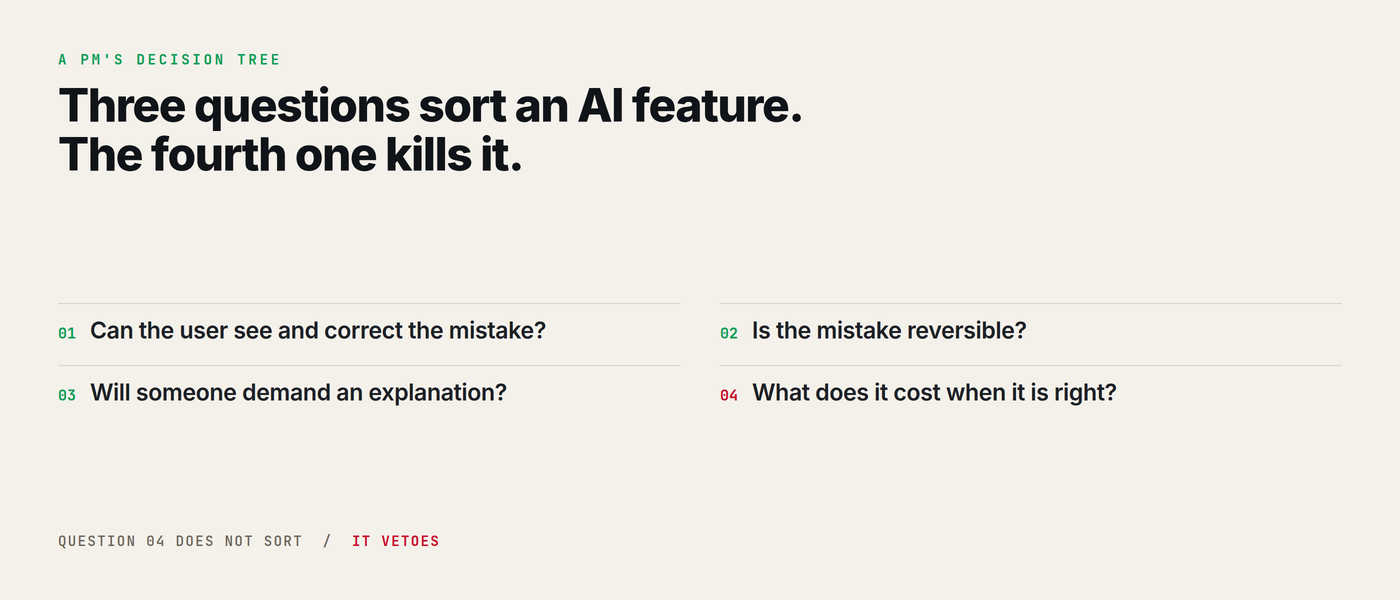
Product managers face increasing pressure to incorporate AI into their products, whether it's a chatbot, auto-replies, smart recommendations, or auto-approvals. The decision tree for determining which features should be AI-driven and which should not is based on three critical questions. The first question is whether the user can see and correct the mistake made by the AI model.
This is crucial because when the user can inspect and fix the AI's output before any harm occurs, the error cost is significantly reduced. An AI drafting an email, for instance, is a perfect example where the user can edit or delete the AI-generated content. The second question pertains to whether the mistake made by the AI model is reversible.
Irreversible errors, such as money moved or data deleted, pose much higher risks compared to reversible mistakes like a mildly annoying auto-reply. Building an undo feature or a staged execution process can convert irreversible actions into reversible ones, which often proves more valuable than merely improving the AI model's accuracy.
The third and final question is whether the decision will require an explanation from someone. Decisions that affect customers, regulators, or legal teams demand clear explanations. In regulated domains like lending, the model's decision must come with an explanation, often necessitating adherence to specific legal requirements.
Thus, the PM's decision tree helps prioritize AI-driven features based on user correctibility, error reversibility, and the need for explanations, ultimately guiding product managers in making informed decisions about AI integration.
Written by urgent.news from HackerNoon's reporting — not their text. Machine-written — may contain errors; check the original before relying on it.