Greenfield shipyard in Thoothukudi: a southern port to development
The proposed mega greenfield shipyard in Thoothukudi will bring more benefits than the eye can see, not just to the district but also to the entire southern region
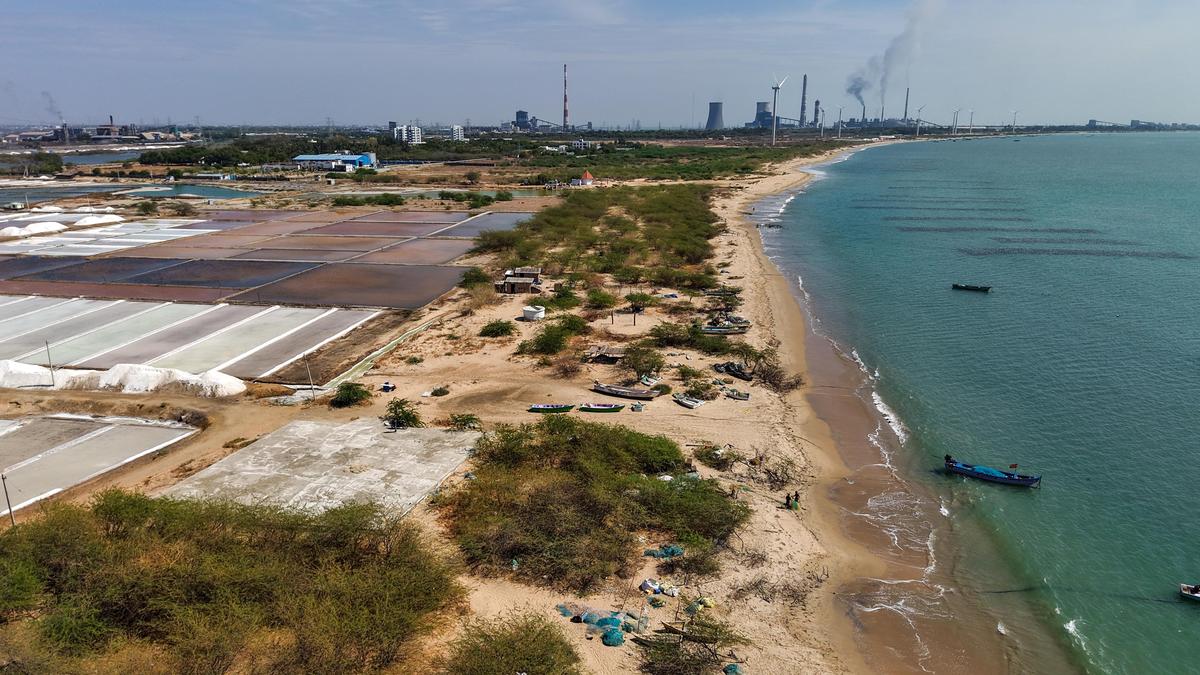
Thoothukudi, historically recognized as the 'Pearl City', is transforming its image by embracing its untapped potential to become a prominent maritime-manufacturing center in Tamil Nadu. The proposed greenfield shipyard in the district is seen as the cornerstone for a new industrial ecosystem in southern Tamil Nadu. This ambitious project, with an investment of around ₹38,000 crore and an annual capacity of 2.5 million Gross Tonnage (GT), is expected to serve as the catalyst for growth, much like Ulsan, a South Korean city renowned for shipbuilding and a thriving industrial landscape.
The project, valued among the major industrial developments in southern Tamil Nadu, is set to bring about a ripple effect, stimulating the growth of ancillary industries and service activities around the anchor facility.
The development of India’s first mega greenfield shipyard in Thoothukudi recently gained momentum with the signing of a tripartite Memorandum of Understanding (MoU) between HD Korea Shipbuilding & Offshore Engineering Co Ltd (HD KSOE), National Shipbuilding and Heavy Industries Park, Tamil Nadu Limited (NSHIP-TN), and Sagarmala Finance Corporation Limited (SMFCL), a Government of India entity.
The land for the first phase of the project, spanning around 1,700 acres in the revenue villages of Mullakadu (1), Mullakadu (2), and Pazhayakayal, has been identified. The project has advanced from the conceptual stage with the inception of a detailed feasibility report (DFR) work order and the commencement of preparatory activities at the proposed site.
Moreover, an RFP has been released to solicit global consultants to prepare a detailed project report (DPR), infusing international expertise into the planning and broader maritime manufacturing ecosystem.
The project's significance transcends the shipyard itself. It is anticipated to generate a demand for a network of industries, including steel fabrication, marine equipment, electrical systems, welding, machinery, and more. This integrated ecosystem, if successfully established, could offer opportunities for small and medium enterprises in and around the Thoothukudi district and potentially extend the industrial impact to neighboring districts.
This multiplier effect makes the Ulsan comparison particularly significant. However, the transformation is not without concerns over land, livelihood, and rehabilitation. The project area encompasses salt-pan land, which has raised concerns regarding its impact on the livelihood of salt-pan laborers, producers, and fishermen.
The district administration has conducted an enumeration of the people affected by the proposed site, identifying around 50 fishermen families, 350 labor families, 447 laborers, and 109 salt producers. Stakeholders have discussed the proposed rehabilitation and compensation measures, which include house site pattas and government-constructed pucca houses, one-time resettlement assistance, support for fishing boats and outboard motors for affected fishing families, and alternative sites, development of essential infrastructure for salt production, and one-time resettlement assistance for salt producers.
For salt-pan laborers, the measures encompass skill development and vocational training in maritime and allied trades, priority employment opportunities in the anchor and ancillary sectors, and financial assistance through a one-time lump-sum aid. The success of this project hinges on ensuring that those whose livelihoods are affected are able to participate in the new industrial economy, making skill development a critical component of the initiative.
With the potential to create 15,000 direct jobs upon stabilization and thousands more through ancillary industries, the project is poised to bolster the port-led economy of Tamil Nadu.
Written by urgent.news from The Hindu's reporting — not their text. Machine-written — may contain errors; check the original before relying on it.