Bengaluru traffic gets worse? Cars queue up inside society as users say ‘never come out ever’
The woman initially filmed the traffic on the road from her room before turning the camera towards the residential complex. The footage appeared to show vehicles moving slowly towards the society's exit.
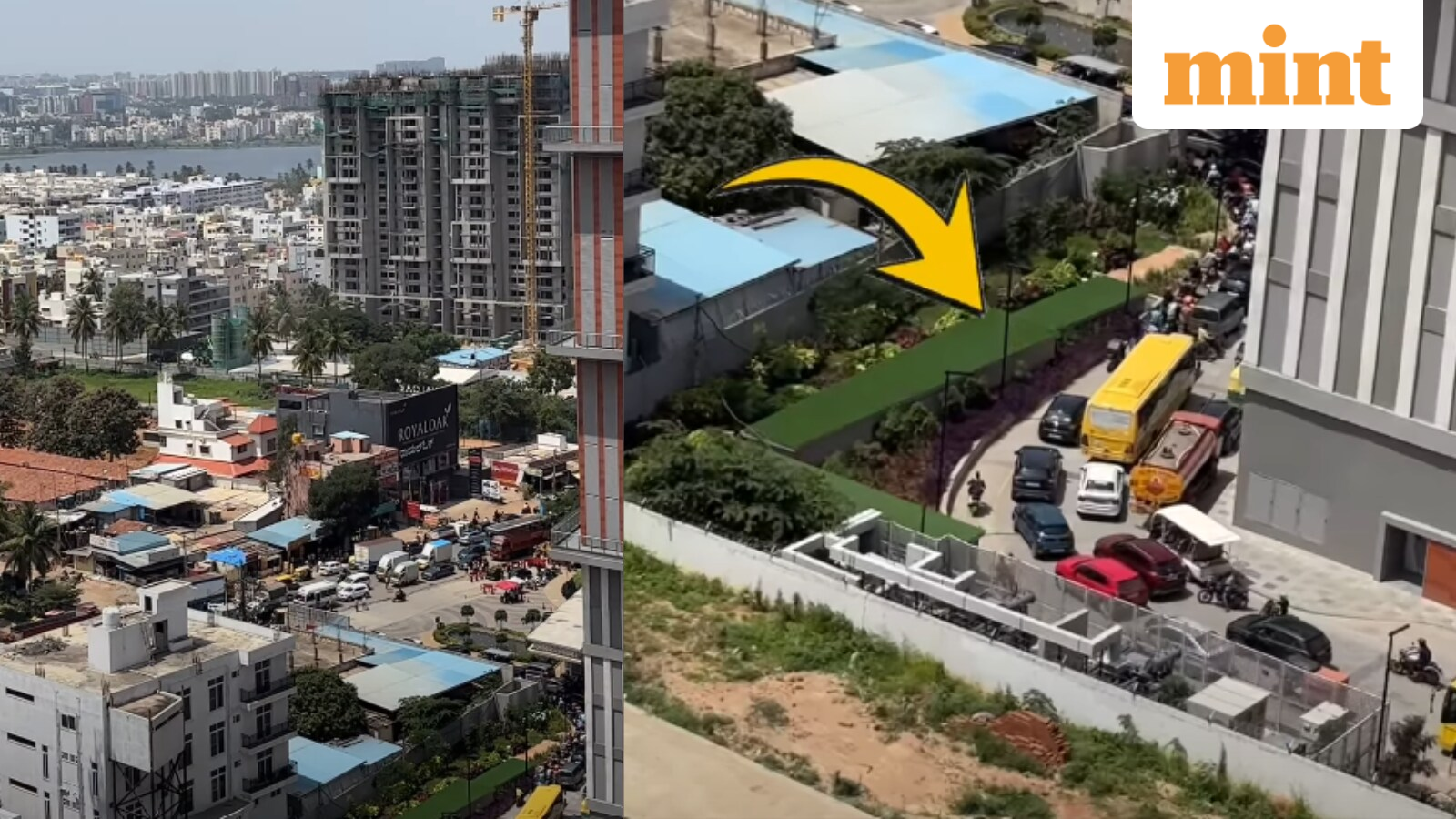
Bengaluru's notorious traffic woes have taken a new turn, as residents are now stuck in queues not just on the roads, but also inside their residential societies. A video capturing this phenomenon has gone viral, shedding light on the city's worsening transport situation.
The footage, recorded in the Varthur area, showcases a long line of cars parked outside a home, with another line of vehicles queuing up inside the housing complex. According to the video's uploader, residents were experiencing traffic congestion even before they reached the main road. One resident claimed that it took around 30 minutes for some people to leave the complex due to the traffic at the exit.
This incident has sparked a wave of reactions on social media, with users discussing the city's consistently poor traffic conditions. Some users jokingly noted that living in a housing project with a mall can now be considered a perk, while others criticized the lack of separate entry and exit points, leading to a sense of being trapped.
The video has been identified as depicting Brigade Utopia, a residential society in Varthur, a neighborhood plagued by traffic issues. Several users have pointed out that the narrow roads in the area have exacerbated the congestion, making it difficult for residents to leave their homes.
Bengaluru's traffic woes are a recurring topic on social media, with airport commutes often cited as examples of the city's broader commuting challenges. A Bengaluru-based entrepreneur recently shared a video showing a traffic jam stretching for several kilometers in the Varthur-Gunjur area, highlighting the daily commute of up to five kilometers for residents in Whitefield. The entrepreneur expressed concern about the city's inability to provide better transport infrastructure, particularly for its white-collar workforce.
Written by urgent.news from Live Mint's reporting — not their text. Machine-written — may contain errors; check the original before relying on it.