APOD: 2026 September 27 – Andromeda Before and After Photoshop
The post APOD: 2026 September 27 – Andromeda Before and After Photoshop appeared first on NASA Science .
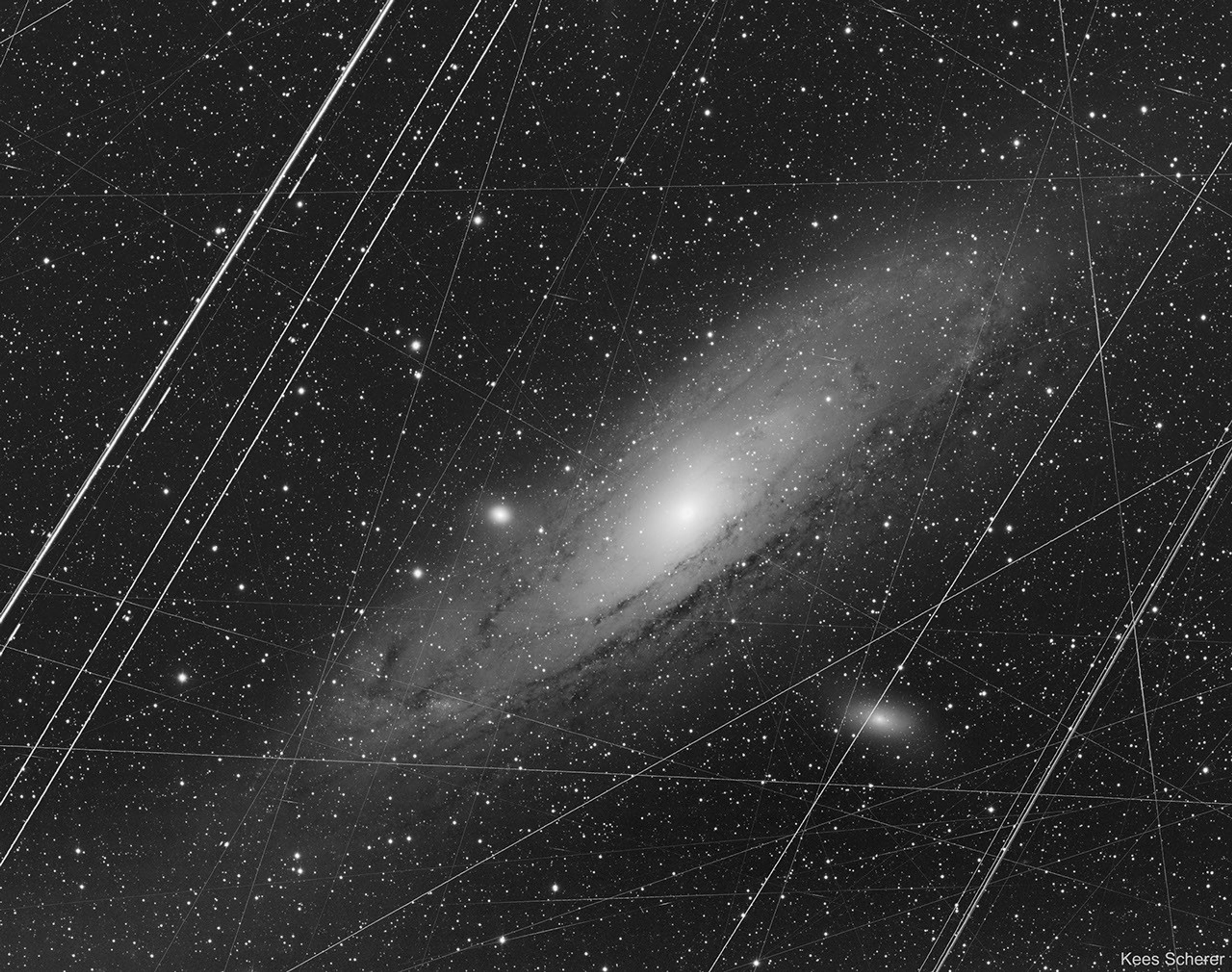
Today's Astronomy Picture of the Day showcases an intriguing comparison of the Andromeda galaxy, both in its unaltered form and after enhancements. The original image, captured from a garden observatory in Portugal in 2019, reveals the closest major galactic neighbor of our Milky Way under the busy skies of Earth. However, this initial view is marred by several imperfections, including bright airplane trails, long satellite trails, cosmic ray streaks, and bad pixels.
These earthly artifacts were not removed using Photoshop, contrary to the title's implication, but rather significantly mitigated through a series of computer software programs. These programs, which included Astro Pixel Processor, DeepSkyStacker, and PixInsight, worked together to reduce the impact of these distortions, allowing for a clearer representation of the Andromeda galaxy as it truly appears.
The aim was not to create a deceptive digital fantasy, but rather to eliminate human-made interference, thereby providing a more accurate depiction of the distant galaxy. For those interested in submitting their own images, APOD's email address has been updated, and its main NASA site is transitioning to a new address at science.nasa.gov/apod.
The next Astronomy Picture of the Day will feature the captivating phenomenon known as "cosmic latte."
Written by urgent.news from NASA Science's reporting — not their text. Machine-written — may contain errors; check the original before relying on it.
Also reported by 1 other outlet
- APOD: 2026 September 27 – Andromeda Before and After Photoshop science.nasa.gov