A decade-long gamble turned Canon into Nikon’s biggest threat with a professional camera that was launched with a complete system of 180 accessories on Day One!
Inside the 1966 secret project that changed professional photography forever
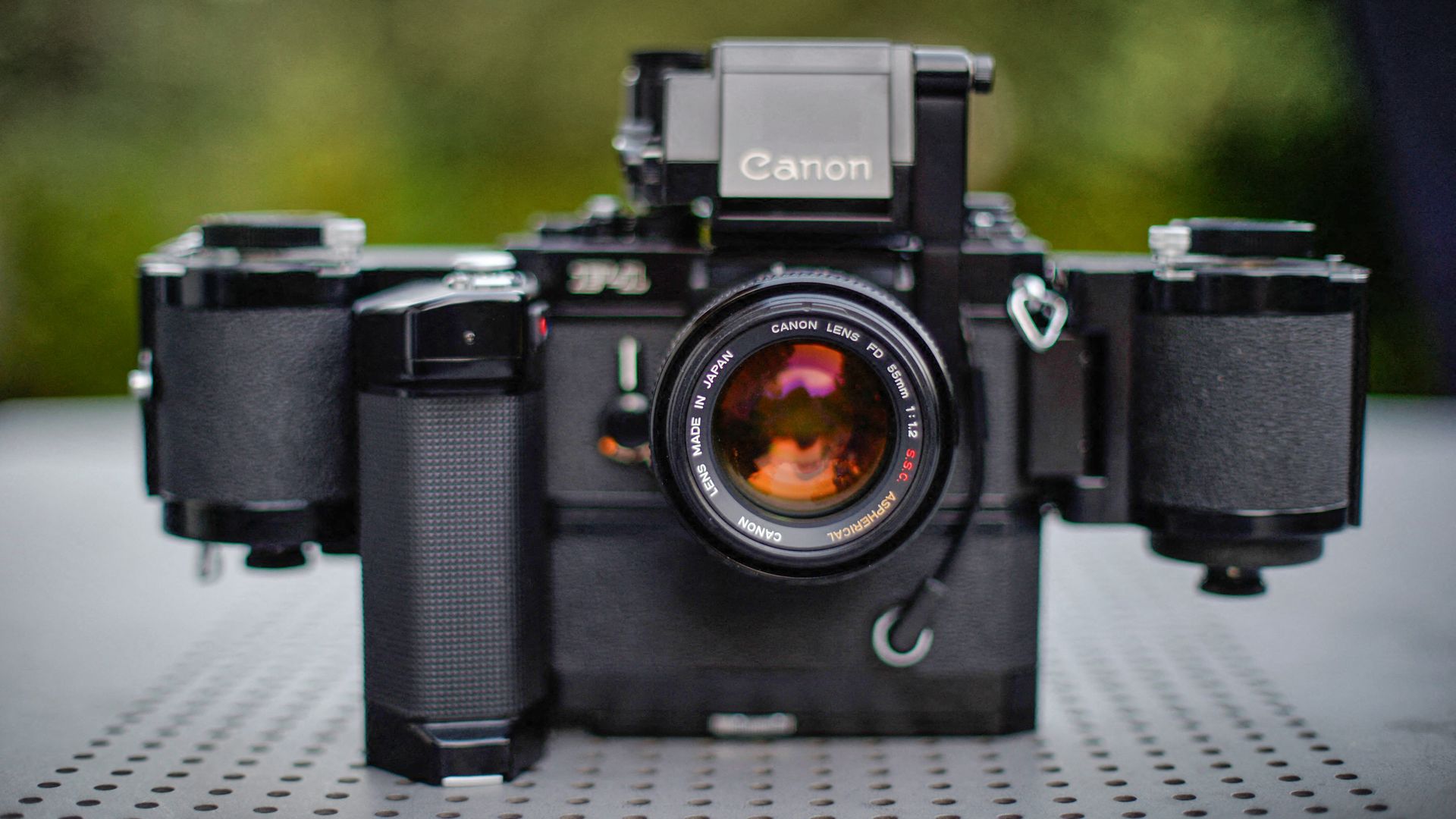
In 1966, Canon faced a challenge as Nikon dominated the professional photography market. Recognizing the need for a comprehensive system, Canon set out to create a camera that could withstand heavy daily use and come with an extensive range of accessories. The camera they developed, the Canon F-1, launched with 14 lenses covering focal lengths from 17mm to 300mm, alongside 180 accessories available on the day of its release.
This bold move aimed to rival Nikon's Nikon F, with the goal of building a camera that could operate reliably under the harshest conditions. The F-1 was designed with a focus on reliability, featuring interchangeable eye-level and waist-level finders, focusing screens, motor drives, bulk film backs, and remote control systems. By 1969, prototypes underwent rigorous testing to ensure they could function for 100,000 shutter cycles in temperatures ranging from -30°C to +60°C, regardless of humidity.
The camera was engineered to be rugged, with a fully mechanical shutter requiring only the light meter to be powered by a battery. With an all-metal construction, the F-1 was built to last, promising a ten-year lifespan for professionals to invest in the system with confidence. By 1971, the F-1 was ready to launch, offering a choice of five interchangeable viewfinders and screens.
Despite not surpassing Nikon in the professional market until the 1990s, the Canon F-1 established Canon as a serious competitor in professional photography, with Canon eventually becoming the world's largest seller of interchangeable-lens digital cameras by 2003.
Written by urgent.news from Digital Camera World's reporting — not their text. Machine-written — may contain errors; check the original before relying on it.