Why US chip controls took a back seat at the Xi-Trump summit
There is little question that Jensen Huang and Lisa Su, the heads of US semiconductor chip giants Nvidia and Advanced Micro Devices (AMD), had secured two of the best seats in the house at the White House state dinner on Thursday evening: at the head table alongside the two presidents and their wives. But what remains unclear is how much progress they were able to make on their primary goal of…
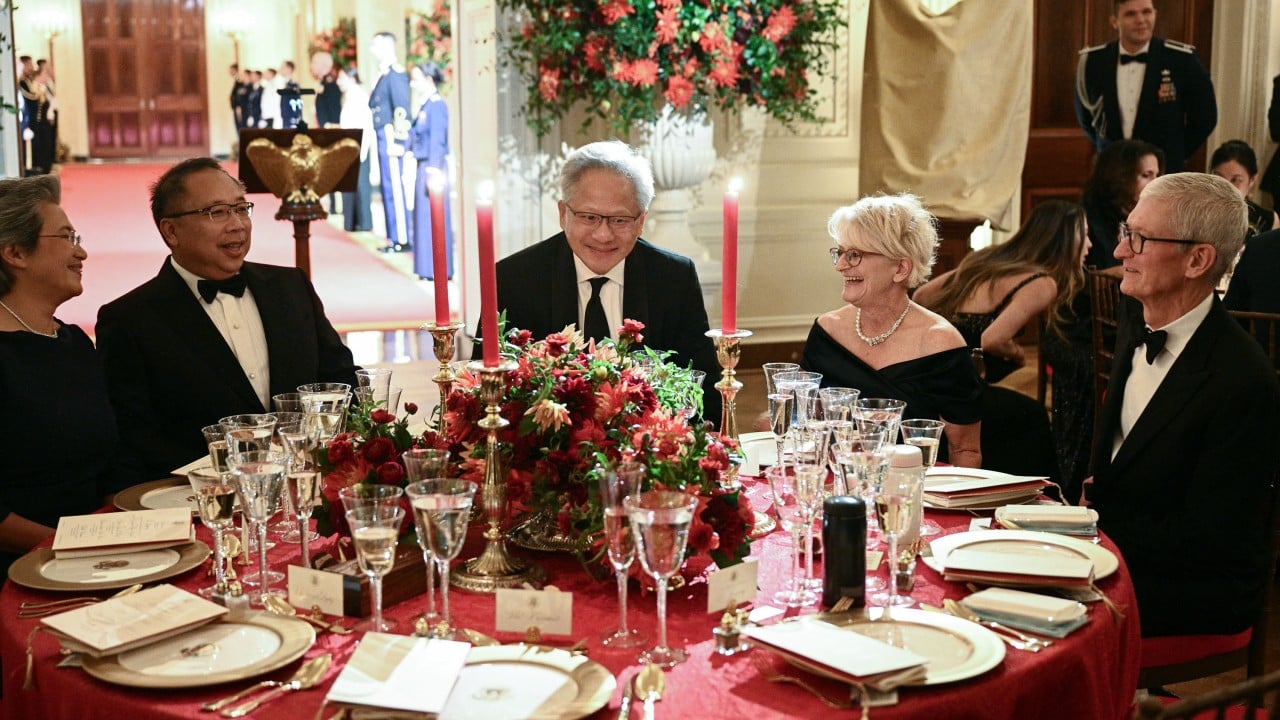
At the Xi-Trump summit, Nvidia CEO Jensen Huang and AMD CEO Lisa Su were seated with the two presidents at the head table during the White House state dinner. However, it is unclear how much progress they made on their main objective of regaining access to the Chinese market. This is because US semiconductor chip export controls were not a significant issue during the Chinese President's visit to Washington.
Kyle Chan, a Brookings fellow, noted that export controls were not a major topic during the talks, despite their regular mention by Chinese President Xi during his meetings with President Biden. US Trade Representative Jamie Greer also stated that the US had removed "national security issues" export controls from the trade discussions.
China's Ministry of Foreign Affairs did not mention export controls in its report of the summit's eight deliverables. Despite the ongoing export controls, China appears confident in its chip self-reliance efforts, which have been steadily improving. According to TrendForce, Chinese chip suppliers are projected to control nearly 80% of the domestic AI server market by 2026, with foreign suppliers' share dropping to 21%.
Written by urgent.news from Reuters Business via SCMP's reporting — not their text. Machine-written — may contain errors; check the original before relying on it.
This story
This is one outlet's version. Read the fullest account.