Orangutans reel as Indonesia’s raging blazes scorch habitats, haze suffocates survival
JAKARTA, Sept 26 — Wildfires that tore through Indonesian Borneo’s vast tropical forests have piled pressure...
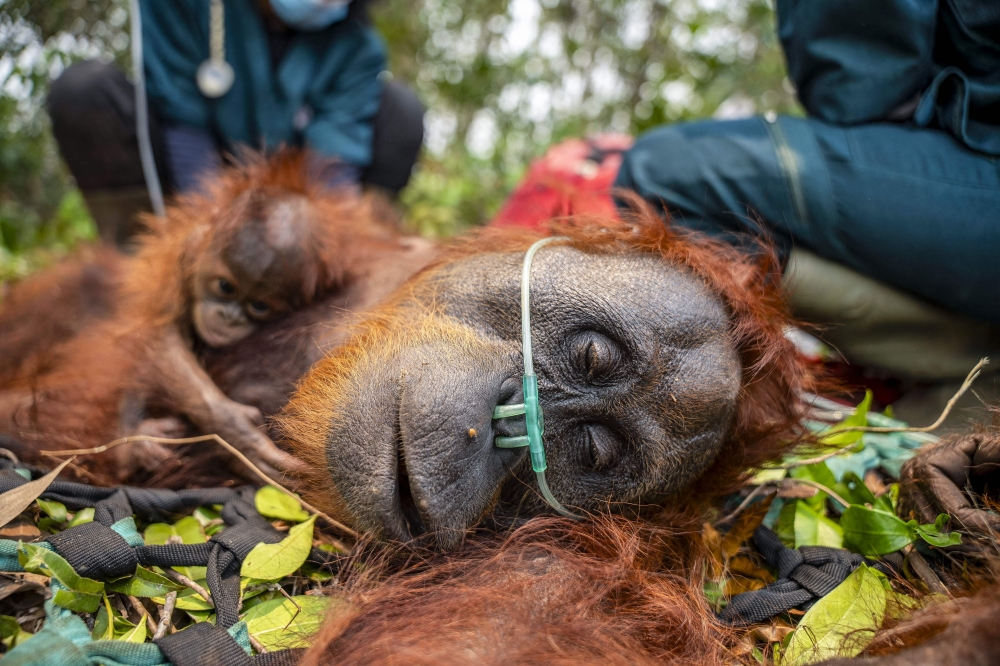
Jakarta, September 26 — The International Union for Conservation of Nature (IUCN) reported on Saturday that Indonesia's devastating wildfires have placed immense pressure on the critically endangered Bornean orangutans. The country has been grappling with fires for weeks in Borneo and Sumatra, generating dense haze that has spread to neighboring Malaysia and Singapore.
A significant portion of Borneo's orangutan habitats, accounting for 52 percent, are currently engulfed in fires. The conservation network highlighted that fire and smoke exposure inflict tangible physiological, behavioral, and ecological harm to orangutans residing in peat forest habitats. During hazy conditions, orangutans exhibit indications of fat depletion despite consuming more food and resting more, implying heightened energy requirements, potentially due to an overworked immune system.
Wildfires have also ravaged the habitats of five gibbon species across Sumatra and Borneo, indicating that these primates share the same smoke-laden air with the local human population, potentially suffering respiratory issues exacerbated by habitat loss and behavioral disruptions. As of Tuesday, Indonesia had rescued 100 animals, including 53 orangutans, threatened by the infernos, according to a forestry ministry spokesman.
Conservationists urge authorities to transcend emergency response and invest in preventive measures. These measures encompass safeguarding and rewetting peatlands, addressing drainage and deforestation, and ensuring protected and appropriately restored burned forests. The Indonesian government revealed that more than 202,000 hectares of land were scorched nationwide between January and July, with the Nusantara Atlas project estimating the figure to be closer to 900,000 hectares between January and August.
Written by urgent.news from Malay Mail's reporting — not their text. Machine-written — may contain errors; check the original before relying on it.