Meta VR Glasses vs Xreal Aura: Which spatial computing glasses will win?
Meta just announced its new VR Glasses so how do they compare to the forthcoming Xreal Auras. There are more similarities than you may think.
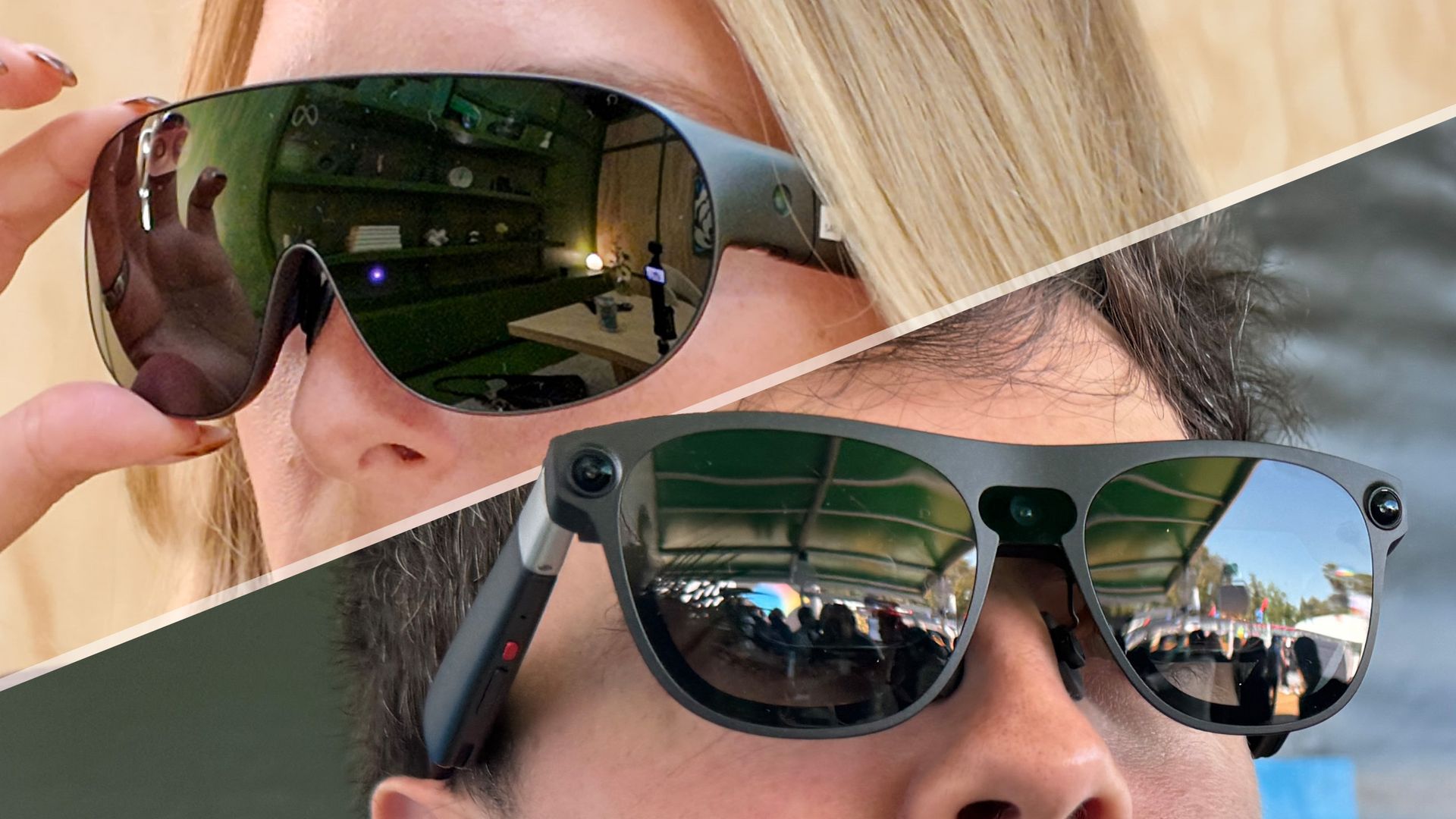
As Meta Connect 2026 unfolded, the spotlight shone on the newly unveiled Meta VR Glasses, which are set to hit the market in spring 2027 for a hefty price tag of $1,299. This announcement came at a pivotal moment, as Google and Xreal's collaborative Project Aura was expected to launch before the end of the same year, though the exact price point for this device remains undisclosed.
Both Meta and Xreal are diving into the spatial computing virtual reality arena with their respective smart glasses, tethered to a puck that houses the battery and CPU. While there are clear resemblances between the two, there are also distinct differences spanning design, operating system, and AI capabilities. Let's delve into how these two wearable spatial computers measure up against each other.
Starting with specifications, the Meta VR Glasses are priced at $1,299 and weigh 100 grams (including the glasses and the compute puck), whereas the Xreal Aura costs $1,000 and weighs slightly less at 95 grams. Both devices run on Snapdragon Reality Elite chipsets and feature micro-OLED displays with a 70-degree field of view. Hand, eye, and face tracking are provided by Meta, while the Xreal Aura relies on 6 degrees of freedom spatial tracking and hand tracking using a pair of world-facing cameras.
One area where the Meta VR Glasses excel is in display quality. Meta has a track record of delivering high-quality VR experiences, and these glasses live up to that reputation with their Dolby Vision, Dolby Color, and IMAX-certified displays. The glasses provide a crisp, edge-free visual experience, ideal for watching movies and 3D content.
The near-one-to-one tracking of your hands and eyes is another standout feature, enabling intuitive interactions with the virtual world. The external sensors of the Meta VR Glasses can detect your hands even when they're resting in your lap, making the experience more natural and convenient compared to the Xreal Aura.
On the other hand, the Xreal Aura brings a software and AI advantage to the table. With a partnership with Google, the Aura runs on Android and integrates Gemini, an advanced AI platform that offers real-time assistance in the physical world. This sets Xreal apart from Meta's Muse AI, which currently lags behind in terms of maturity.
Additionally, Xreal's Aura is compatible with a wider range of devices, such as the Steam Deck and Nintendo Switch 2, allowing users to enjoy a broader selection of games and applications across their gadgets.
Written by urgent.news from Tom's Guide's reporting — not their text. Machine-written — may contain errors; check the original before relying on it.