Hong Kong’s Paul Chan predicts positive market response to Xi-Trump summit
Hong Kong’s finance chief has predicted a positive market response to the Xi-Trump summit, saying the mitigation of geopolitical uncertainties will bolster investor confidence. Financial Secretary Paul Chan Mo-po made his prediction on a radio programme on Saturday, a day after Chinese President Xi Jinping wrapped up a three-day visit to Washington to meet with US counterpart Donald Trump, with…
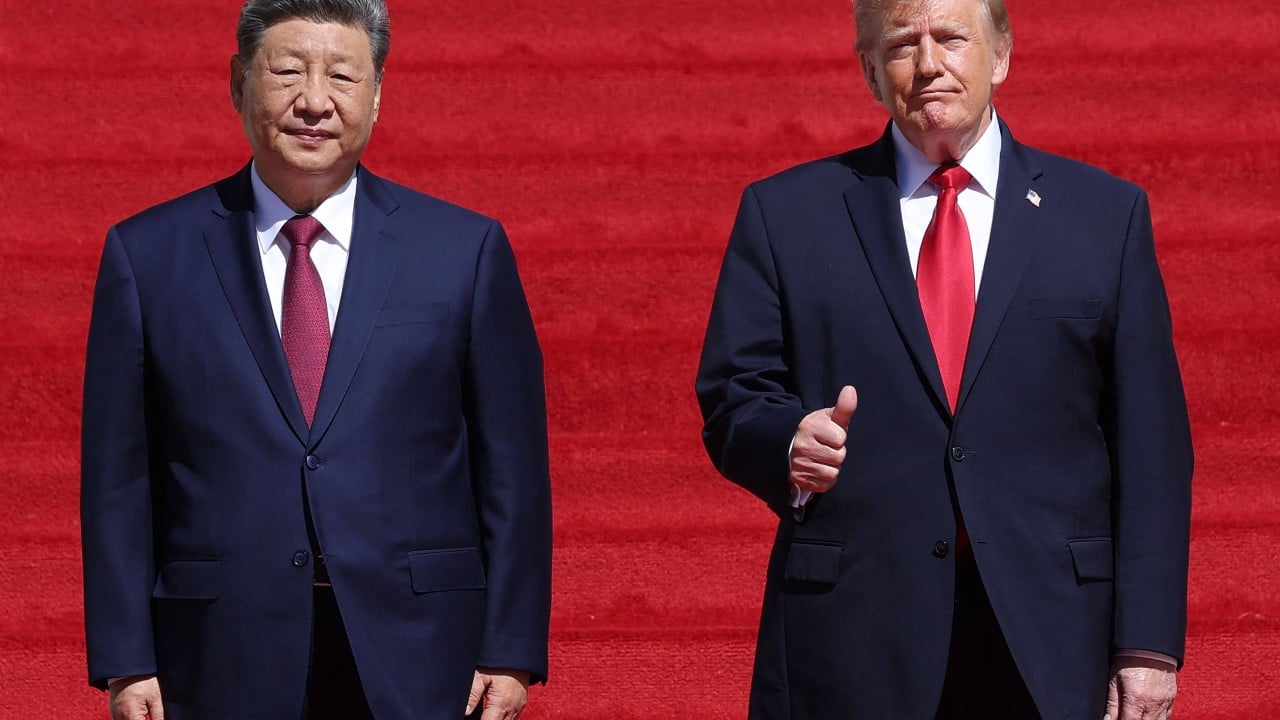
Hong Kong's Finance Secretary Paul Chan has forecasted a favorable market reaction to the ongoing summit between Chinese President Xi Jinping and US President Donald Trump. Speaking on a radio program on Saturday, Chan noted that easing geopolitical uncertainties would strengthen investor confidence. This statement came a day after Xi's three-day visit to Washington, where the two leaders pledged further discussions despite minimal tangible outcomes.
Chan expressed confidence in the market's positive interpretation of the reduced geopolitical tensions, which previously had caused economic concerns and market volatility. He assured that Hong Kong's economy would persistently grow, with domestic firms expanding abroad, benefiting the region, including Southeast Asia and the Global South. He reiterated Hong Kong's role as a primary driver of global economic expansion.
Chan highlighted Hong Kong's geographical advantages that could facilitate mainland Chinese enterprises in establishing a global presence. He cited the city's successful initial public offering (IPO) market performance this year as evidence. Additionally, Chan pointed to the Apec Finance Ministers' Meeting, scheduled from October 20 to 21, as another platform to showcase Hong Kong's business advantages.
Addressing Hong Kong's commitment to expanding the use of the renminbi, Chan aimed to allay stakeholders' concerns that this move would disrupt the pegged exchange rate system. He emphasized that Hong Kong has an independent currency and maintains a fixed exchange rate band, providing international investors with the assurance that their money transfers remain stable. This certainty is critical for international financial centers like Hong Kong.
Chan explained that the government had issued some of its bonds in renminbi to capitalize on lower interest rates, and converting the bond proceeds back into Hong Kong dollars still generated a net financial gain. He further proposed settling government payments and expenses for mainland-supplied goods and services in renminbi as a practical approach to minimize exchange rate risks and reduce transaction costs.
Chan stressed that renminbi offshore business is a unique competitive advantage for Hong Kong and will continue to expand.
Recognizing that global trade, including imports and exports, accounts for approximately 14 to 15 percent of the world's total, Chan noted that many countries are increasingly promoting transactions in local currencies to lower costs and eliminate exchange rate risks. This trend, particularly in trading with China, including oil purchases, suggests that more foreign entities may hold renminbi.
Consequently, these entities will seek investment opportunities and require a convenient platform to convert their renminbi into other currencies.
Written by urgent.news from South China Morning Post's reporting — not their text. Machine-written — may contain errors; check the original before relying on it.
This story
This is one outlet's version. Read the fullest account.
- Disney Halloween Time brings wicked fun, new shows, and fresh characters to Hong Kong Disneyland timeout.com
- Hong Kong targets HK$20 billion digital green bond thearabianpost.com
- Hong Kong’s Paul Chan predicts positive market response to Xi-Trump summit scmp.com
- HSBC scraps US$25,500 members’ club perk for Hong Kong bankers businesstimes.com.sg
- China holding sensitive F-35 parts diverted to Hong Kong japantimes.co.jp
- Monaco Smart and sustainable marina: From Egypt to Hong Kong, global marina projects look to Monaco financialpost.com
- Hong Kong seeks up to $2.5b in digital green bonds techinasia.com