Expert Explains | Why the Trump-Xi bonhomie doesn’t mean an end to US and China’s rivalry
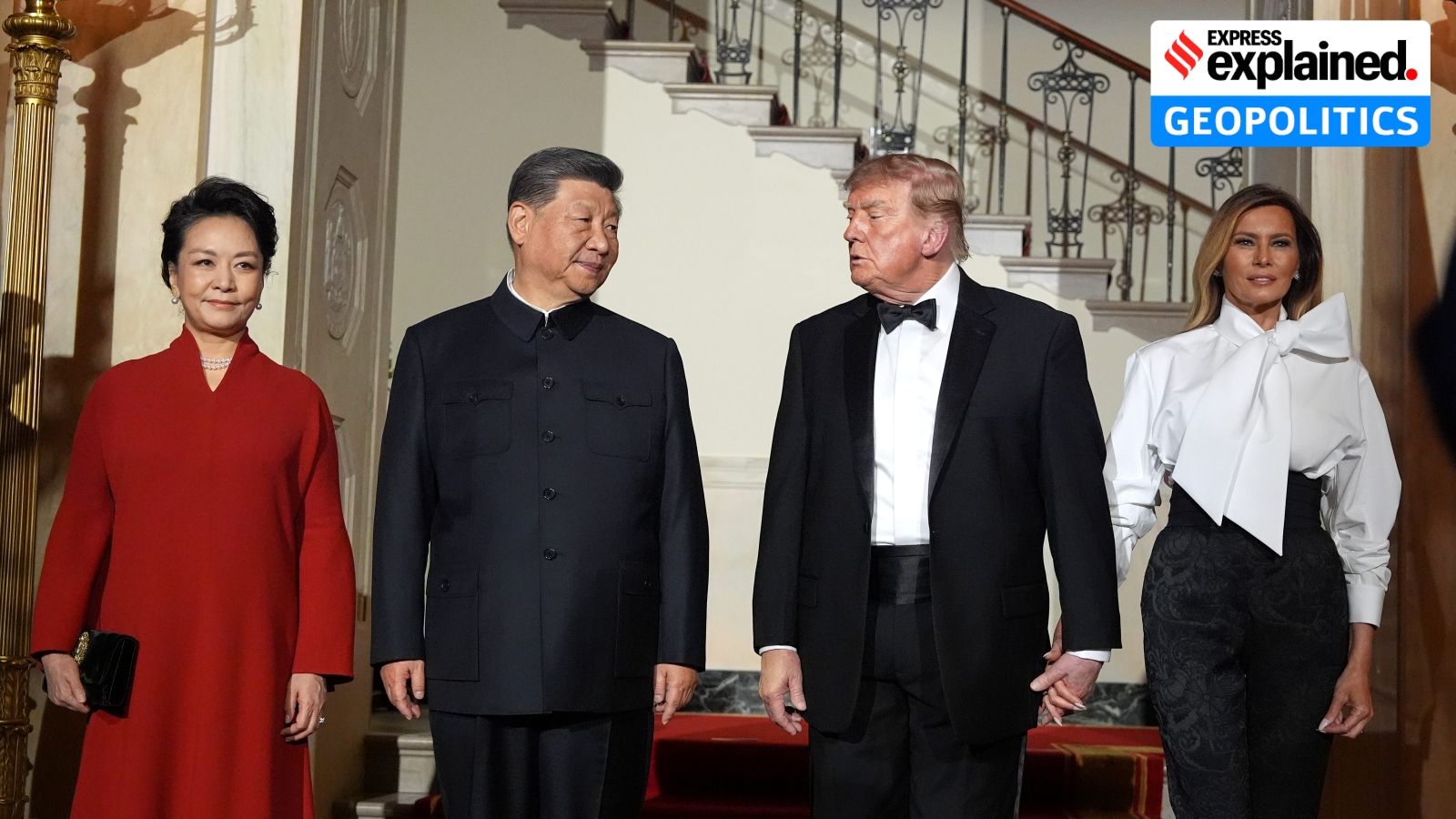
The recent Washington summit between US President Donald Trump and Chinese President Xi Jinping did not yield significant progress on critical issues like trade and artificial intelligence (AI). Instead, the visit showcased a cordial atmosphere, with Trump personally greeting Xi and organizing a military flyover. Both leaders agreed to extend the trade truce for two months, and Xi emphasized the need to ensure AI remains under human control, though little concrete progress was made on the issue.
The elaborate welcome for Xi Jinping at Joint Base Andrews in Maryland reflects Washington's recognition of the evolving nature of US-China relations. The US still holds substantial advantages in military, economic, and technological spheres, but China has demonstrated its own bargaining leverage, particularly through its control of rare earths and critical minerals. The tariff confrontation in 2025 showed that economic coercion can have reciprocal impacts, thus prompting the return to summitry.
However, the short extension of the trade truce does not indicate comprehensive progress or economic normalization. Both sides have chosen to maintain tariffs, export controls, and technology restrictions as leverage tools while engaging in negotiations and establishing mechanisms for commercial cooperation. Their shared interest in preventing AI competition from leading to dangerous unintended consequences has led to discussions on AI guardrails.
Nevertheless, the two nations remain divided over the underlying principles of technological competition, with the US seeking to restrict Chinese access to advanced chips and computing capabilities, and China striving for greater technological self-reliance. The AI dialogue primarily serves as a means to manage risks associated with an increasingly consequential rivalry, rather than indicating genuine convergence.
Written by urgent.news from The Indian Express's reporting — not their text. Machine-written — may contain errors; check the original before relying on it.