Engineers teach spacecraft to 'dream' their way to the space station
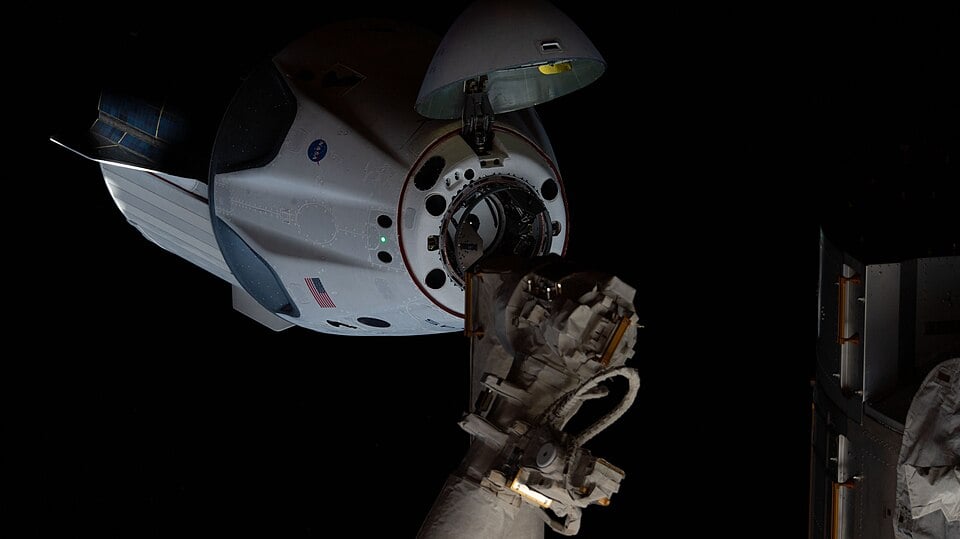
Docking with the ISS may seem simple. However, actually doing so shows how difficult orbital mechanics can be. It's like traveling down a highway at 28,000 km/hr (17,000 mph) and parallel parking in an open garage on a multibillion-dollar laboratory traveling at the same speed. If you try to accelerate forward, you actually drift up, and there's no air friction to naturally slow you down. Oh, and…

Docking with the International Space Station (ISS) appears simple, but executing the task is incredibly challenging due to the complexities of orbital mechanics. Imagine traveling at 28,000 km/h (17,000 mph) while attempting to parallel park in an open garage – that's the situation astronauts face. Spacecraft must accelerate precisely to dock, and there's no air friction to naturally slow them down.
Any miscalculation could result in catastrophic consequences, including the loss of both spacecraft and the potential for debris to harm satellites and even people on the ground.
For decades, aerospace engineers have relied on hard-coded physics equations and human pilots to achieve successful docking. However, researchers at Stanford University are exploring a novel approach using artificial intelligence (AI). Their method, dubbed the Out-of-this-World Model (OWM), employs a technique called reinforcement learning (RL) to simulate numerous docking scenarios and predict the most successful outcome.
Unlike traditional computer vision techniques, which can be easily disrupted by changes in lighting or shadow, the OWM model is designed to learn the fundamental physics of space travel directly from experience. It essentially "dreams" up potential futures based on past visual cues, allowing it to adjust its course in real-time and account for unexpected situations.
This approach significantly reduces the computational burden compared to traditional methods, cutting down the required simulations from 25 million to just 500,000.
In tests, the OWM model successfully docked with the ISS in 53% of attempts, compared to the 29% success rate of a reinforcement learning baseline. While there's still room for improvement, particularly in close-up operations, the OWM model demonstrates significant promise for future spacecraft docking and proximity operations. As space becomes more accessible, with increasing numbers of satellites and potential human presence, AI-driven systems like the OWM could play a crucial role in ensuring safe and efficient interactions between spacecraft.
Written by urgent.news from Phys.org's reporting — not their text. Machine-written — may contain errors; check the original before relying on it.