District Six marks Heritage Day with memory stones, stories and Klopse
On September 24, 2026, families shared memories, followed the Klopse through Cape Town’s streets, and carried their written memories into the District Six Museum.
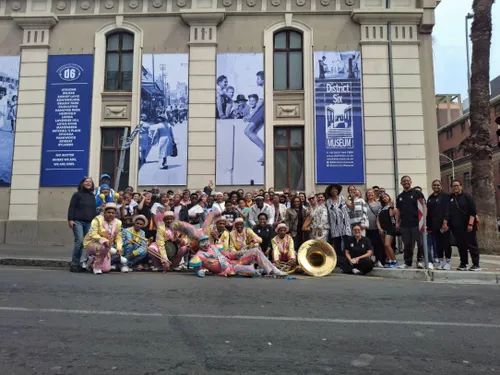
On September 24, former District Six residents, descendants, community members, and youth convened at the District Six Homecoming Centre to observe Heritage Day. They commemorated the day by sharing their memories and stories in the museum's archive. The event began on February 11, 2026, when the District Six Museum unveiled its painted floor map, creating a space for active memorialization.
At the Homecoming Centre, attendees wrote their memories on stones, walls, and printed maps, recording family names and former addresses to preserve these personal accounts for younger generations. The blue stones were then placed on the floor map of Salt for preservation in 2027.
Tina Smith, the head of exhibitions, challenged the older generation to consider the importance of the legacy and heritage they are leaving behind for future generations. She encouraged them to question the value of their humanness and heritage. Uncle Solly, one of the wise elders, expressed his gratitude for being honored today and for other elders who took the time to attend.
Mandy Sanger, a District Six Museum educator, facilitated one-on-one conversations with attendees during the restitution program. She guided the youth in connecting their family histories to the broader narrative of District Six, ensuring the weight of these memories was passed on to younger generations. One 86-year-old resident shared her memories of growing up in Springfield Terrace in 1938, surrounded by twelve sisters and twelve brothers.
Participants wrote notes declaring that District Six belonged to everyone who calls it home, emphasizing the national heritage debate in the lived experiences of families awaiting land restitution. When asked about their origins, displaced residents mentioned distant townships across the Cape Flats, such as Hanover Park, Manenberg, Bonteheuwel, Heideveld, Mitchells Plain, Athlone, Belhar, and Lavender Hill, as well as other locations like Atlantis, Ocean View, and Macassar.
Tina Smith emphasized Ubuntu as the practical foundation of District Six, where no one would go hungry, and community members shared food and resources. Uncle Ikram, born in District Six in 1966, recalled the early 1970s removals, mentioning that his grandmother taught him how to read and write before they were forcibly displaced. He eventually found District Six again after his journey.
Lisa Fredericks, the Manager of Collections, Research, and Documentation for the District Six Museum Archival Department, oversees the preservation of these lived accounts. She began her journey with the museum in 2021 and officially took on her current position in November 2025. After the oral history sessions, the blue stones of memory and heritage came to life through the attendees.
At the conclusion of the event, the procession moved outside for a march to the main museum building on Buitenkant Street, led by Klopse musicians. This Cape Town Minstrel carnival tradition, dating back to the 19th century, is rooted in emancipation celebrations and has been running since 1907. The voorloper (lead dancer), adorned with feathers, represented the high-stepping carnival dance moves, with motorists pausing to watch the procession.
Written by urgent.news from IOL's reporting — not their text. Machine-written — may contain errors; check the original before relying on it.