Australian backlash to datacentres is faux import from US, officials say: ‘We are not the United States’
Pro-datacentre officials argue scale of Australia’s buildout is smaller, more regulated and less damaging than in US Australian politicians and business leaders are arguing that their populace’s growing resentment of AI datacentres is an inauthentic import from the United States. Like the US, Australia is seeing community resentment grow in response to a surge in the construction of massive AI…
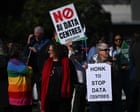
Australian politicians and business leaders claim that the growing anger towards AI datacentres among Australians is not a genuine reaction, but rather an import from the United States. While the US is experiencing heated debates and community protests over large datacentres, Australia’s backlash has quickly escalated into a national conversation. This has led to calls for a national moratorium, community protests, and government inquiries into the issue.
Pro-datacentre officials argue that Australia’s buildout of datacentres is smaller, more regulated, and less damaging compared to the US. They point out that the scale of the US debate is being exaggerated and transplanted into Australian discussions via social media. In 2026, community resentment towards new datacentre developments has reached a fever pitch, resulting in calls for stronger regulations and rules governing their construction and energy consumption.
State governments in Australia, eager for economic growth, have welcomed the investment from datacentre projects, sometimes even overriding local council approval processes to accommodate the size of the developments. Victoria’s Minister for Economic Growth, Steve Dimopoulos, expressed concern that the negative sentiment towards new developments was due to US social media influence.
He stated that Australia is not like the United States and that the country has more carefully monitored, managed, and regulated systems for planning, energy, and water.
Datacentre industry leaders have also criticized the backlash, saying that the Australian debate is being fought on America’s facts. Industry lobby group Data Centres Australia's Belinda Dennett argued that the sector is often portrayed as a threat to the grid, water supplies, and job creation, while in reality, these claims originate from the US, where the industry operates at a vastly different scale with different market rules.
Dennett claimed that headlines about datacentres in the US are being applied to the Australian market without proper context.
However, it has been pointed out that Australia has a lower density of datacentres per capita compared to the US, with just under one datacentre per 100,000 people in Australia, compared to 1.5 per 100,000 in the US. Additionally, the pace of datacentre construction in Australia is rapidly increasing, with several large datacentres with 1 gigawatt or more capacity currently in the planning stages.
Trending videos on social media platforms like TikTok and Instagram have highlighted major community concerns about the impact of datacentres on local communities. In the Northern Territory, a 2 gigawatt gas-powered datacentre is planned, which would consume the equivalent of 2 million households' annual electricity consumption.
The Australian government, aware of the US gas boom fueled by datacentre demand for power, has planned to override state regulations and ban the use of gas to power new centres. Instead, operators will be required to source renewable energy to meet the energy needs of the datacentres. Some experts believe that the backlash is justified, following the US example, where vocal and logically based arguments have been made about the potential increase in electricity and water costs for residents.
However, the challenge for the Australian government is explaining how the US issues differ from local concerns, and legislation for the new framework is expected to take effect in the following year.
Written by urgent.news from The Guardian's reporting — not their text. Machine-written — may contain errors; check the original before relying on it.
This story
This is one outlet's version. Read the fullest account.