A Blow‑by‑Blow Account of What Would Happen If the Yellowstone Supervolcano Erupted Now
Would it be the end of humanity? The post A Blow‑by‑Blow Account of What Would Happen If the Yellowstone Supervolcano Erupted Now appeared first on Nautilus .
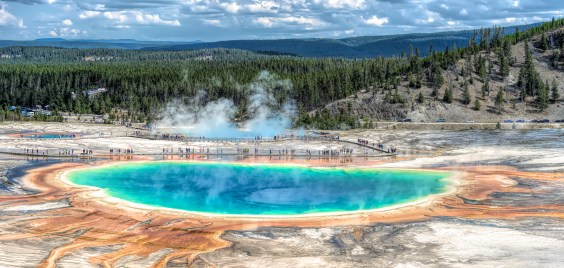
Around 631,000 years ago, a super-eruption occurred in what is now Yellowstone National Park, Wyoming, United States. Ash spread across North America and the effects were felt globally. Despite its immense scale, no human witnessed the catastrophe. Early humans may have noticed hazier skies and unusual sunsets. Today, humanity would certainly take notice of a Yellowstone eruption, as it would pose a significant threat to civilization.
Researchers hypothesize what might happen in the worst-case scenario based on scientific research and recent disaster management. Shortly after 6 a.m., a seismologist at the University of Utah Seismograph Stations detects a series of sharp spikes in the usually quiet seismic readings recorded by Yellowstone's monitoring system. The measurements indicate earthquakes beneath Yellowstone overnight.
Instruments monitoring the volcano's activity record the unusual tremors, which are not typical of the region. An array of instruments, including seismometers, GPS stations, strainmeters, and sensors within active geyser areas, continuously collect data. Satellite observations, gas sampling, and field surveys provide additional information for scientists to analyze.
Earthquake swarms warrant attention when they appear to be migrating through the crust or becoming progressively shallower, as these patterns can indicate magma or pressurized hydrothermal fluids moving upwards. The scientist assesses the unusual tremors and checks them against neighboring seismometers. The team contacts colleagues at the Yellowstone Volcano Observatory (YVO) to follow their response plan.
After four weeks, the earthquake swarm continues to migrate upwards, and GPS stations above the swarm begin moving apart. Measurements of strain have increased, and satellite radar reveals a broad area of accelerating ground uplift. These observations are consistent with magma forcing its way into the crust, similar to what has been observed in Hawai i prior to eruptions.
However, Yellowstone has produced similar alarming combinations of signals before without subsequent eruptions. The YVO responds cautiously, deploying additional temporary seismometers and GPS units, increasing gas and water sampling frequency, and coordinating closer with the National Park Service and emergency management authorities.
The volcano's alert level is raised from "normal" to "advisory" to indicate unrest above background levels. Scientists speculate about the potential impacts of a major eruption, but maintain a cautious approach to avoid unnecessary alarm.
Written by urgent.news from Nautilus's reporting — not their text. Machine-written — may contain errors; check the original before relying on it.