Why artistic freedom needs ‘adab’ and ‘rasa’
Malaysia’s multicultural landscape can be a minefield, but the right values can help one navigate it without offending any party.
Malaysia's cultural tensions have resurfaced after a stage performance mocked the national constitution and insulted key institutions. National Unity Minister Aaron Ago Dagang and Religious Affairs Minister Zulkifli Hasan emphasized that artistic freedom, while important, must not undermine national unity, social harmony, or respect for essential institutions.
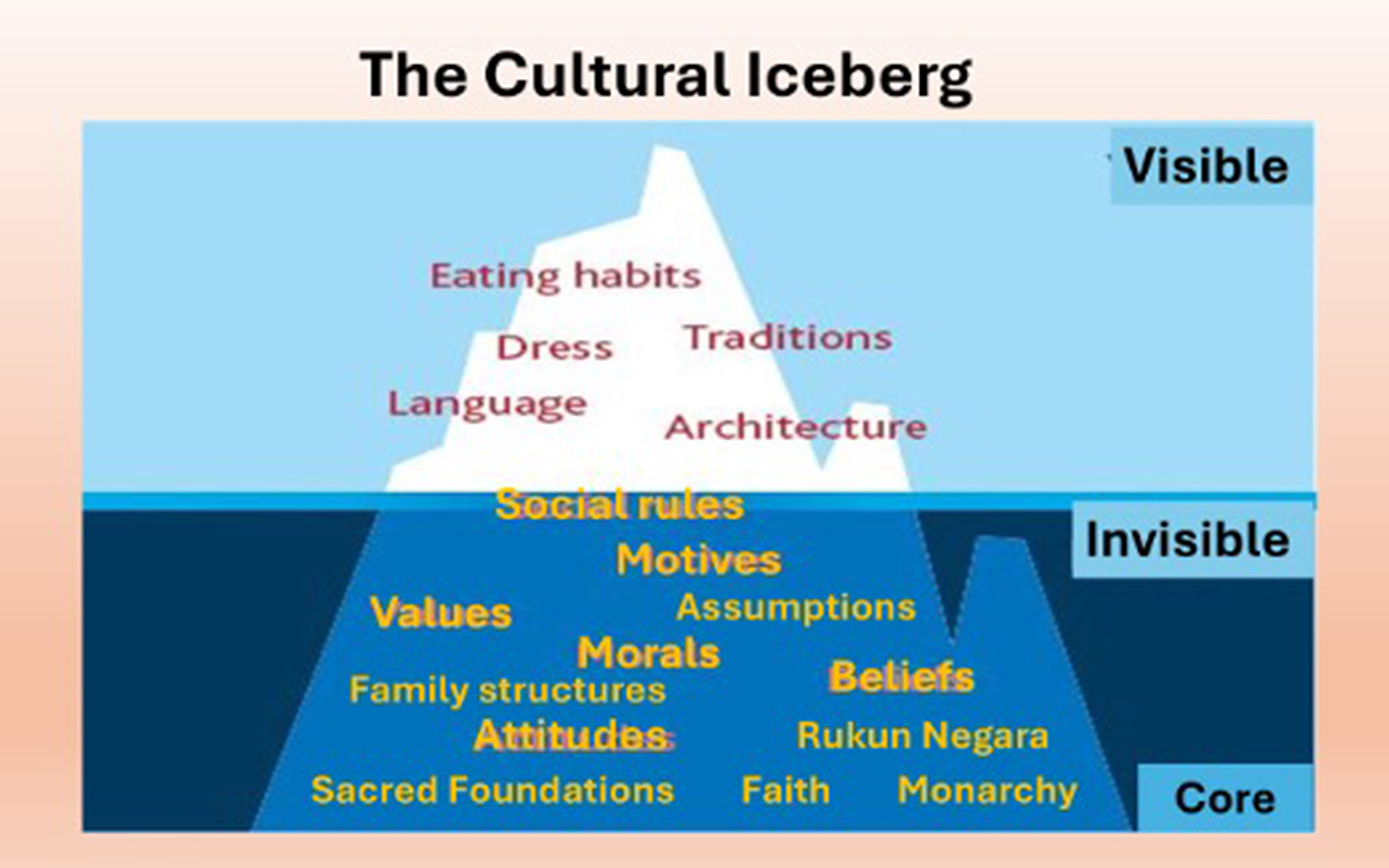
This incident highlights the challenges when creators fail to navigate Malaysia's intricate multicultural sensitivities. To grasp the issue, we can apply the anthropological "iceberg model" of culture. The visible, recognizable aspects of culture include dress, cuisine, festivals, language, and performances. However, the majority of cultural foundations lie beneath the surface, encompassing deeply ingrained values, attitudes toward authority, concepts of family, and fundamental institutions like the Malay Rulers and the national ideology, the Rukun Negara.
The Rukun Negara, established in 1970 to unify the nation after a crisis, functions as our collective moral compass and guide for coexistence in a diverse society. Mocking these foundational elements triggers immediate cultural shock and outrage. Generational disparities also contribute to the conflict. Older generations, raised during Malaysia's formative years, intuitively recognize these hidden boundaries, appreciating the cautious behavior necessary for social harmony.
Conversely, younger artists, immersed in the fast-paced digital age of social media platforms like TikTok and Instagram, prioritize shock value and viral appeal over cultural awareness. This can lead to the blurring of public and artistic experimentation, disregarding the impact of their creations on a multi-ethnic, multi-generational audience.
Before publicly presenting art, creators should consult elders, community leaders, and diverse perspectives. Seeking feedback across age, ethnic, and religious backgrounds is not censorship; it is responsible stewardship in a multicultural nation. The Malay worldview emphasizes social interactions anchored by core values: Adab (courtesy and proper conduct), Hormat (respect for institutions, elders, and differing beliefs), Rasa (empathy and cultural sensitivity), Jaga hati (mindful consideration to avoid offending others), and Jaga muka (preserving dignity and honor).
The ultimate aim is Harmoni, ensuring diversity strengthens rather than divides the nation. True artistic maturity lies in honoring these unspoken boundaries, using creativity to elevate the human spirit, provoke meaningful reflection, and unite people. As Malaysia becomes increasingly digital, artists and content creators must remember that the true essence of art is not in pushing boundaries to provoke offense, but in respecting the unspoken rules that allow for peaceful coexistence.
Asma Abdullah, an author, former educator, and interculturalist, emphasizes that Malaysian artists should strive for art that honors these values, fostering unity in our diverse society.
Written by urgent.news from Free Malaysia Today's reporting — not their text. Machine-written — may contain errors; check the original before relying on it.
Also reported by 1 other outlet
- Why artistic freedom needs ‘adab’ and ‘rasa’ freemalaysiatoday.com