Vice President calls for stronger local pharmaceutical production to reduce medicine imports
Vice President Professor Naana Jane Opoku-Agyemang has called for stronger local pharmaceutical production as Ghana seeks to reduce its reliance on imported medicines and improve access to essential drugs. She said expanding the capacity of Ghanaian pharmaceutical manufacturers would strengthen the health system and help the country respond more effectively to changing healthcare needs. The Vice…
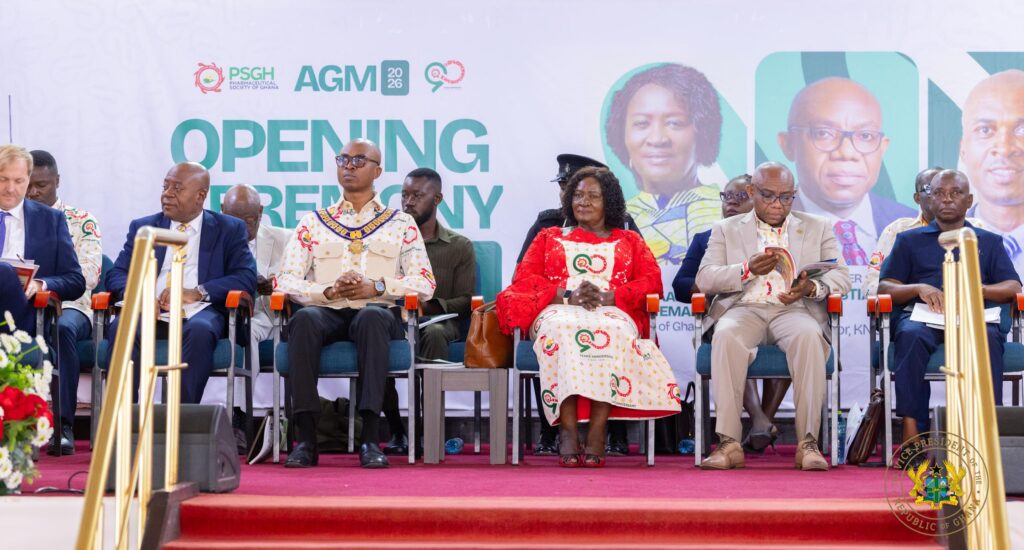
Vice President Professor Naana Jane Opoku-Agyemang has advocated for strengthened local pharmaceutical manufacturing in Ghana to diminish its reliance on imported medicines and bolster access to essential drugs. She emphasized that expanding Ghanaian pharmaceutical manufacturers' capacity would fortify the health system and enable the country to more efficiently adapt to evolving healthcare requirements.
Addressing the 90th Anniversary Annual General Meeting and Scientific Conference of the Pharmaceutical Society of Ghana in Accra, the Vice President highlighted that local manufacturers were already augmenting their capacity to produce diverse essential medicines and pharmaceutical products. "Local manufacturers are developing capacity to produce infusions, injectables, ophthalmic products and anaesthetics," she pointed out.
Professor Opoku-Agyemang further stated that enhancing local production would not only strengthen the pharmaceutical industry but also improve access to vital medicines. The government is pursuing a five-year strategy to escalate the proportion of medicines manufactured locally from the current 30% to 70%. Pharmaceutical Society President, Pharm.
Paul Owusu Donkor, endorsed the 70% target but stressed that attaining it necessitates sustained government support. He implored the government to transform its five-year strategy into a funded delivery program, advocating for predictable public procurement of quality-assured medicines manufactured domestically, timely supplier payment, and affordable long-term financing for pharmaceutical manufacturers.
These measures, according to Donkor, would provide local producers with greater assurance to invest in production capacity, thereby contributing to the government's goal. In addition to pharmaceutical manufacturing, Professor Opoku-Agyemang urged pharmacists to assume a more significant role in tackling Ghana's escalating burden of chronic and non-communicable diseases.
She also advocated for regulatory measures that keep pace with technological advancements affecting healthcare, such as artificial intelligence, digital prescribing, and evolving medicine supply chains. The Vice President expressed that Ghana's shifting health needs necessitate a health system capable of identifying diseases early, managing conditions effectively, and preventing avoidable complications.
The conference, themed "Science. Impact. Legacy: 90 Years of Pharmaceutical Excellence," is centered on discussions regarding the future of Ghana's pharmaceutical sector, access to medicines, and strategies to enhance resilience within the health system.
Written by urgent.news from MyJoyOnline Ghana's reporting — not their text. Machine-written — may contain errors; check the original before relying on it.