US ‘must choose’ whether to end war, says Iran president
Masoud Pezeshkian said disputes should be resolved through dialogue rather than killing, accusing Israel of provoking and imposing the war on Iran.
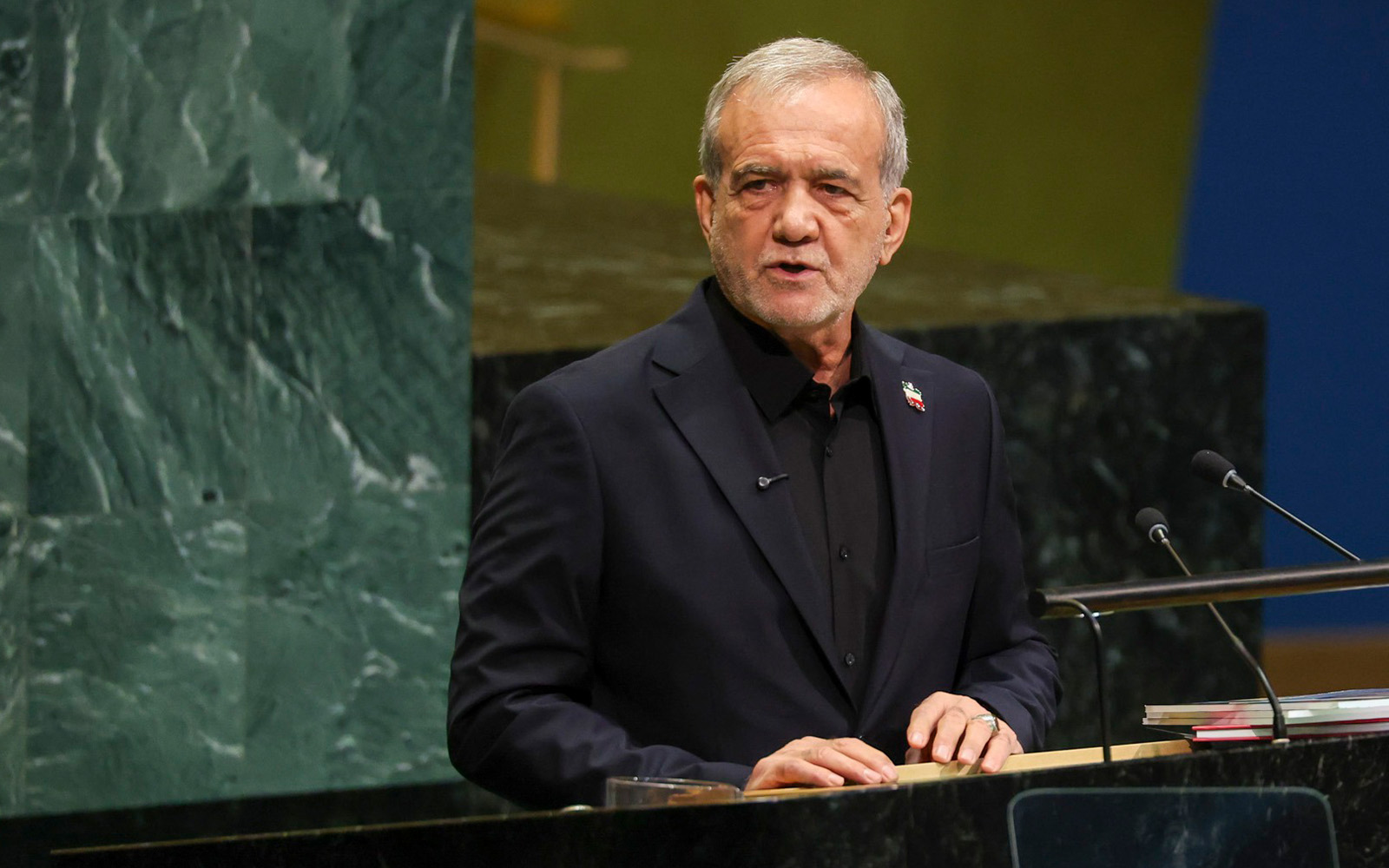
Iranian President Masoud Pezeshkian stated on a US television interview that it is up to the United States to decide whether to end the war in Iran. At the United Nations, Pezeshkian took a defiant stance, asserting that Iran does not want to continue fighting and that it will not bend to Washington's demands. He argued that the war was imposed on Iran by Israel and that resolving issues through dialogue is preferable to violence.
Pezeshkian said that Iran is ready to strike a deal with Donald Trump to end the conflict. He questioned why, within two weeks of an agreement being signed, it was blown up. Pezeshkian expressed indifference to whether the current American government reaches an agreement within international legal frameworks, emphasizing that what matters for Iran is whether the agreement is reached before or after the US midterm elections.
Iranian Foreign Minister Abbas Araghchi met with US envoy Steve Witkoff and son-in-law Jared Kushner during the UN General Assembly in New York. However, their talks did not immediately yield a breakthrough. Pezeshkian insisted that the Houthi militant movement in Yemen, widely believed to be backed by Iran, does not take orders from Tehran's government. He emphasized that the Houthis are responsible for their own actions and that there is no systematic relationship between Iran and the Houthis.
The Saudi government, backed by its allies, accused Iran of supporting the Houthi militant movement, which has been launching ballistic missiles at the kingdom and fighting against Riyadh-backed forces for control of Yemen. The Houthis have imposed a naval blockade on Saudi Arabia, targeting its tankers and territory, and have seized parts of Yemen's Red Sea coast, vital for Saudi oil exports.
This has caused energy prices to rise, further solidifying Iran and its allies' control over two crucial waterways relied upon by the wider Gulf region for oil and fuel exports.
Written by urgent.news from Free Malaysia Today's reporting — not their text. Machine-written — may contain errors; check the original before relying on it.
This story
This is one outlet's version. Read the fullest account.
- US ‘must choose’ whether to end war: Iran president gulfnews.com
- US 'must choose' whether to end war: Iran president al-monitor.com
- US ‘must choose’ whether to end war, says Iran president freemalaysiatoday.com