UNESCO urges Ghanaian journalists to mine archives for richer reporting
UNESCO has urged journalists in Ghana to look beyond press releases and routine interviews and turn to the country's historical archives for deeper, more credible reporting.
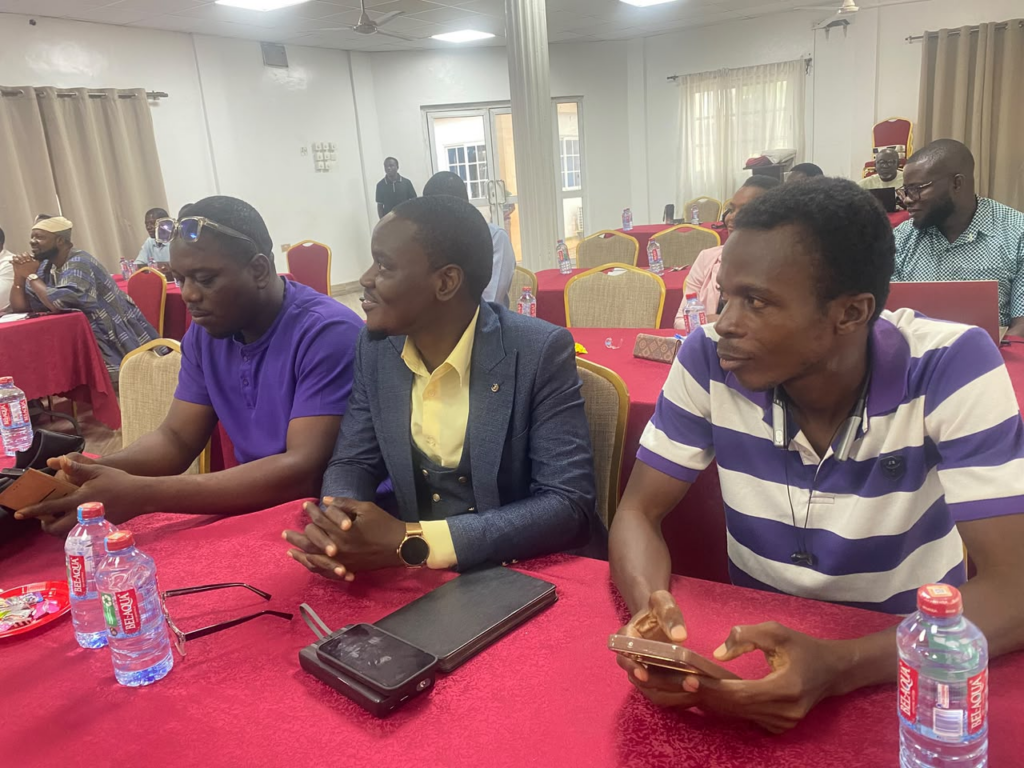
The United Nations Educational, Scientific and Cultural Organization (UNESCO) has urged Ghanaian journalists to delve into the country's historical archives as a means to produce more thorough and credible reporting. This suggestion was made during a training workshop held for journalists in Tamale on September 25. The participants were introduced to the utilization of records preserved in libraries, museums, and other memory institutions to enhance their work.
Hamid Yakubu, a UNESCO Communication and Information Specialist at the Accra Office, emphasized that documentary heritage remains an important but often overlooked source for journalists. He explained that these records can assist reporters in fact-checking information, discovering fresh angles, and situating current events within a historical context. "Documentary heritage holds vital information about the evolution of a particular country, and this information is vital to the work of journalists," Mr. Yakubu stated.
He further suggested that journalists can leverage historical documents to corroborate claims and provide context for current developments. As an example, he pointed to Ghana's national budget, stating that reporters can analyze past budgets to identify patterns and trends that can enrich their coverage of the latest budget. "You can give perspectives to stories by going to documents.
For instance, very soon the Minister of Finance is going to read his budget. As a journalist, what can you do? You can go and look at previous budgets and see whether there will be similarities, dissimilarities, and whatever," he elaborated.
Yakubu also noted that Ghana boasts a rich collection of documentary heritage across pivotal epochs of the nation's history, such as slavery, colonialism, the independence struggle, the post-colonial period, and Pan-Africanism. He highlighted that institutions like the George Padmore Library and museums contain valuable information that journalists can utilize to inject historical depth into their stories.
He further asserted that even a single historical document or photograph can yield multiple journalistic angles. To illustrate, he cited a case from the Tamale training where a single photograph was later employed to tell a story and influence society. UNESCO plans to continue engaging with participants and encouraging them to incorporate documentary heritage into their reporting.
"We’re going to continue to monitor, to encourage them to do stories with not the familiar perspectives of how we go about doing our stories, but there are always angles that we can look at," Yakubu stated.
The forthcoming phase of this initiative will involve training journalists in Accra.
Written by urgent.news from MyJoyOnline Ghana's reporting — not their text. Machine-written — may contain errors; check the original before relying on it.