Trump’s warm welcome for Xi met with caution and uncertainty in Taiwan
Taiwanese officials and observers have reacted cautiously to the Washington summit between Donald Trump and Xi Jinping, with uncertainty lingering over what the two leaders discussed about the island. The only public mention of Taiwan after Thursday’s closed-door talks between the pair came from Beijing’s official statement, which said Xi had urged Trump to “oppose ‘Taiwan independence’” and…
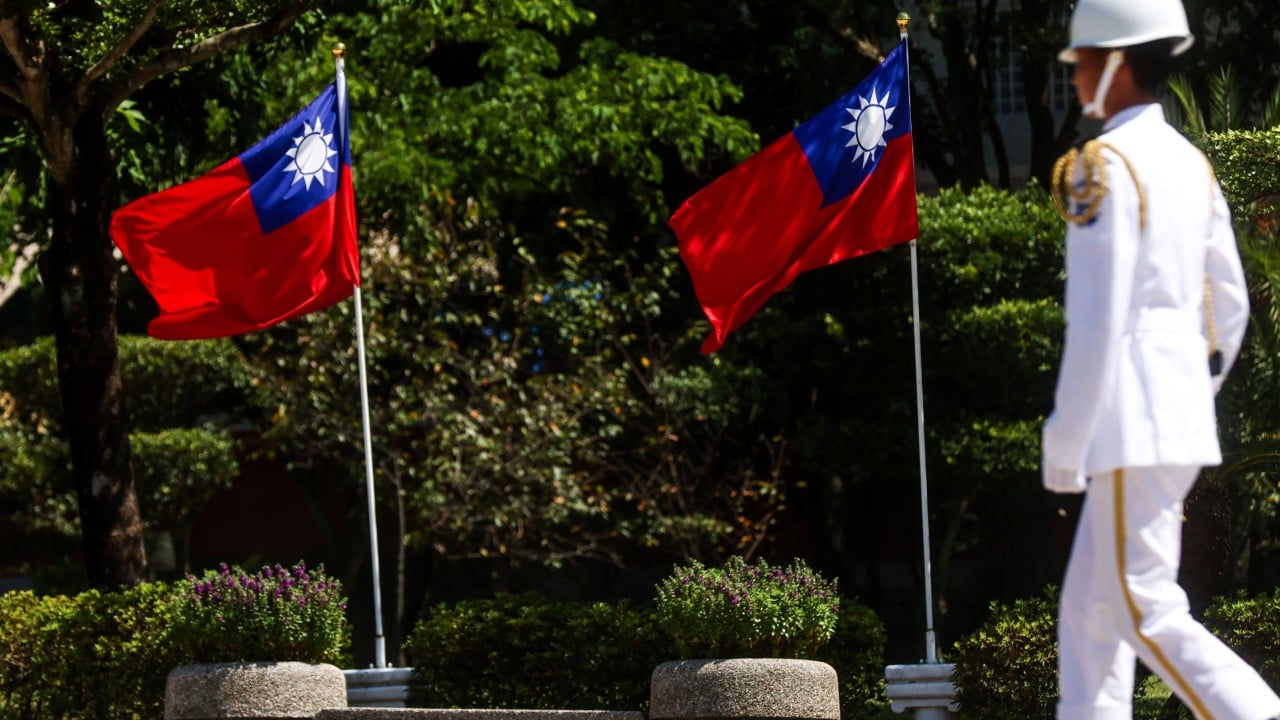
The recent summit between Donald Trump and Xi Jinping in Washington drew mixed reactions from Taiwanese officials and observers. While some cautiously welcomed the Washington summit, uncertainty lingered over the specifics of their discussions regarding Taiwan. The only public mention of Taiwan came from Beijing, which stated that Xi had advised Trump to "oppose 'Taiwan independence' and handle the Taiwan question with caution". The White House had not issued a detailed account of the exchange.
The summit marked the second between Trump and Xi in five months after their May meeting in Beijing. In Taiwan, the elaborate reception for Xi fueled debate about Trump's intention to strengthen his personal relationship with the Chinese leader. Trump and his wife Melania personally greeted Xi and his wife Peng Liyuan on the tarmac at Joint Base Andrews, a departure from traditional presidential protocol.
This ceremony featured a red carpet, military honors, and a flyover by US military aircraft, followed by a state dinner attended by over 130 guests, including leading US technology executives.
While some analysts cautioned against interpreting the ceremonial treatment alone as a shift in US policy, others noted that it aimed to encourage Beijing to respond to Washington's demands on trade, artificial intelligence, and rare earths. Chang Wu-ueh, a cross-strait studies expert at Tamkang University, stated that Trump's lavish reception was akin to returning Beijing's favor from the last time he visited China.
Dennis Lu-chung Weng, an associate professor of political science, believed that Trump was trying to create a favorable atmosphere to ensure the success of the summit. However, for Taiwan, the critical question was what happened after the "red carpet was rolled up" – specifically, what Trump said about Taiwan and whether US policy changed.
Taiwan has been particularly concerned about a pending US$14 billion arms package, which has been delayed as Washington navigates its relations with Beijing. The island's deputy foreign minister, Wu Chih-chung, mentioned that Taiwan's National Security Council and foreign ministry had conducted scenario planning before the summit, with ensuring the arms purchases proceeding smoothly being a top priority.
US Secretary of State Marco Rubio also weighed in, stating that the administration had to balance arms sales with US military requirements, weapons inventories, and the capacity of the US defense industry. This comment prompted Taiwanese opposition party leader Cheng Li-wun to question whether the weapons would arrive on Taiwan's preferred timeline.
The Democratic Progressive Party sought to play down concerns that Taiwan could be used as a bargaining chip between the two superpowers, emphasizing the need for cross-strait communication while strengthening the island's defenses. Taiwanese leader William Lai Ching-te was urged to restore cross-strait communication while bolstering the island's defenses.
The ruling party argued that strengthening defense and reducing hostility were not mutually exclusive, advocating that Taiwan should not have to choose between being "pro-US" and "pro-China".
Despite Beijing's public discussion of Taiwan independence, analysts noted that the summit appeared to aim at consolidating US-China mutual trust rather than producing immediate policy breakthroughs. Huang Kwei-bo, a diplomacy professor at National Chengchi University, suggested that the summit was intended to strengthen trust between the two countries.
For Taiwan, however, the absence of any apparent new US concessions over its one-China policy or the three US-China joint communiques, despite Xi's reiterated stance on Taiwan, was noteworthy. James Yifan Chen, a diplomacy and strategic studies scholar, argued that Trump was increasingly recognizing the sensitivity and strategic importance of Taiwan, leading him to downplay Taipei's role in bilateral interactions and reduce its visibility in the strategic dialogue.
Evidence of this minimization included the delayed arms package and requests for Taiwanese officials to reduce visits to Washington.
Written by urgent.news from Reuters Business via SCMP's reporting — not their text. Machine-written — may contain errors; check the original before relying on it.