The NFL’s Quarterback Injury Crisis Exposes a Costly Roster-Building Mistake
Finding an NFL franchise quarterback is difficult. Building a roster capable of surviving without him might be tougher. The NFL quarterback injury crisis has exposed just how quickly a roster can unravel when one player goes down.
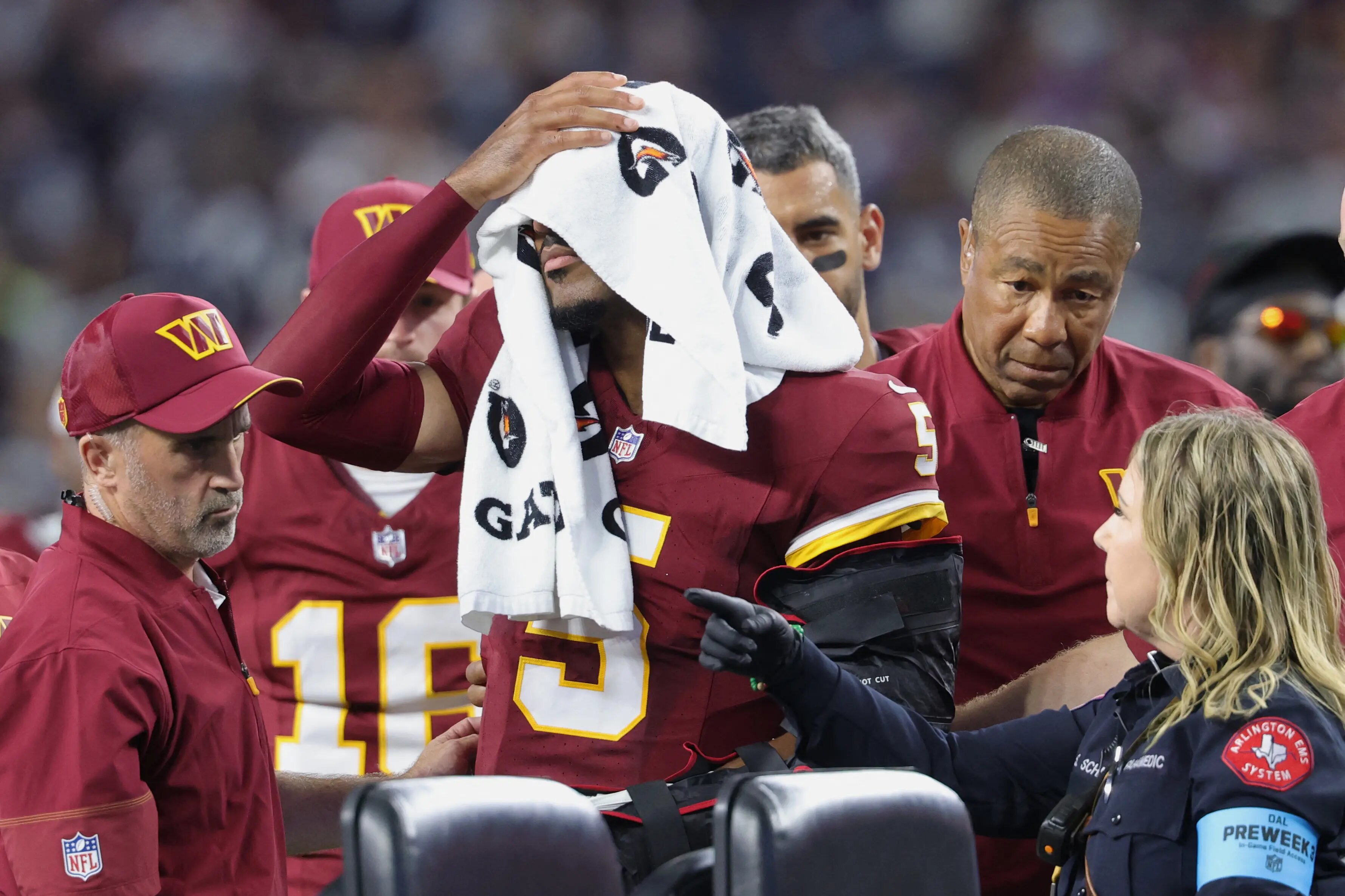
The NFL quarterback injury crisis has spiraled out of control before Week 3 even began. Teams are shelling out record amounts of money for quarterbacks, yet several franchises are already experiencing the devastating impact of losing their key playmakers. Jayden Daniels, Caleb Williams, and Jaxson Dart all suffered injuries in Week 2, leaving the NFL to confront a problem that extends far beyond protecting starting quarterbacks.
Building a roster that can withstand the loss of a franchise quarterback proves to be a far more challenging task than maintaining their health. Within just three weeks of the 2026 season, six teams could be forced to rely on backup quarterbacks, a situation not seen since at least 2000. This season, Caleb Williams sprained his hamstring against Minnesota, while Jayden Daniels dislocated his elbow against Dallas.
Giants' young quarterback Daniel Jones went down with a knee injury against the L.A. Rams, and he will miss the remainder of the regular season. These are only three examples of the three different injuries that have left three franchises facing unexpected questions about their season. Injuries are an inevitable part of football; nobody disputes that.
However, when losing a player can jeopardize an entire season, general managers must reconsider their roster construction. The NFL quarterback injury crisis has exposed a troubling contradiction. While some teams have invested in experienced backups, they sometimes fall short. Washington, Chicago, and New York do have established alternatives.
The Commanders have Marcus Mariota, Chicago has Case Keenum and Tyson Bagent, and the Giants possess former No. 1 overall pick Jameis Winston. Yet, the struggles of Winston against Los Angeles highlighted the challenges of fitting a backup into an offensive system designed around a different starter. The issue goes beyond simply signing another recognizable name to the depth chart.
Teams must also invest time in developing offensive systems that accommodate their backups before an injury forces a change. It's not enough to expect an experienced quarterback to adapt overnight. An effective backup should seamlessly integrate into the existing offensive identity, executing the same plays and concepts as the starter.
Financially, spending heavily on backup quarterbacks may not make sense. The salary cap doesn't allow every organization to carry two highly paid quarterbacks. However, the NFL quarterback injury crisis reveals the need for teams to strike a balance between caution and preparation. While not every franchise needs to sign another expensive veteran, investing in backups who can effectively contribute to the existing system is essential.
It's equally important to ensure that backup quarterbacks receive sufficient practice time working with the starters, enabling them to maintain a consistent offensive identity.
Written by urgent.news from Yahoo Sports's reporting — not their text. Machine-written — may contain errors; check the original before relying on it.