TD sees rhodium surplus ending four-year squeeze
Weakening auto demand could tip rhodium into surplus by 2027, though scarce inventories leave prices vulnerable to spikes.
Rhodium prices are expected to decline as reduced demand for autocatalysts pushes the market into surplus next year, according to TD Commodity Strategy. The bank projects the rare metal will fall from around $9,000 an ounce to $7,600 in 2027, and to $6,500 in 2028. After four consecutive years of deficits, TD anticipates a surplus of 20,000 ounces next year as rising mine and recycled supply combines with flat-to-declining consumption. This would mark the first surplus in the market since 2022.
However, the outlook is tempered by a significant caveat. Above-ground inventories are projected to fall to around three months of demand, leaving little room to absorb unexpected disruptions at major mines or refineries. Rhodium's lengthy processing cycle, taking over three months to move from mine production to refined metal, adds to the risk of sudden price spikes despite the market trend towards surplus.
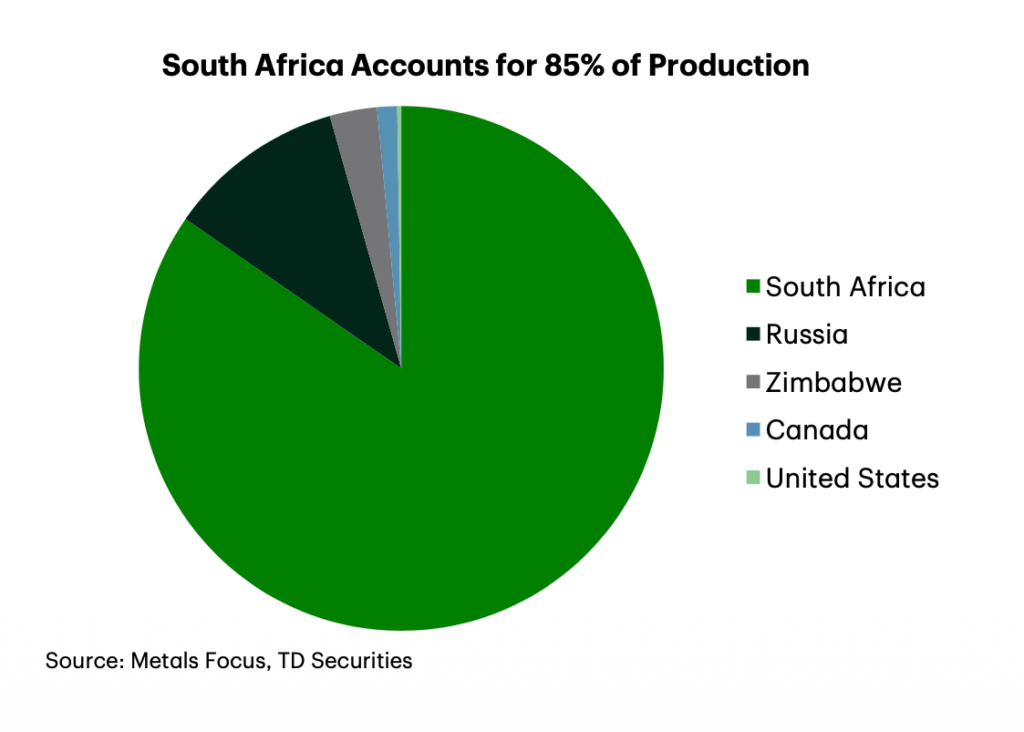
South Africa supplies about 85% of the world's primary rhodium, with only five of the country's platinum-group metals (PGM) mines accounting for roughly half of global output. The remaining production comes from mines in Russia and Zimbabwe. Rhodium supply is also sensitive to its own price, as the metal is primarily produced as a by-product of platinum and palladium mining. Miners tend to rely on the economics of the broader PGM basket for development and production decisions, creating an unusual market dynamic.
The more persistent challenge lies in the demand for autocatalysts, which account for most rhodium consumption. As electric vehicles (EVs) gain market share, the demand for rhodium is expected to decline over the coming years, although slower-than-anticipated EV adoption could mitigate this decline in the near term. Additionally, longer vehicle lifespans delay the return of rhodium from older catalytic converters to the recycling market, which is already constrained by imperfect recovery rates and limited processing equipment in some vehicle-retirement markets.
Written by urgent.news from Mining.com's reporting — not their text. Machine-written — may contain errors; check the original before relying on it.