Seven Places in Europe That Legends Say Were Built by Giants, Devils or Dragons
Bridges, mountains, caves and rock formations that seem impossible to explain become magnets for folklore
The Devil's Bridge in Wales features three levels spanning the Mynach Gorge, with the lower one possibly dating back to the medieval era. The bridge is believed to have been tricked by a cunning woman who outsmarted the devil by sending her dog after a bread roll thrown over the bridge. A second bridge was added in 1753, and an iron span was constructed in 1901. The tale of the Devil's Bridge varies, with some attributing its construction to the Devil himself and others to monks from Strata Florida Abbey.
In Northern Ireland, the Antrim Coast boasts an astounding 40,000 interlocking basalt columns, known as the Giant's Causeway. These polygonal columns, formed by volcanic activity around 50 million to 60 million years ago, have captivated visitors for centuries. According to Irish legend, the giant Finn McCool built a causeway across the sea to confront his Scottish rival, Benandonner.
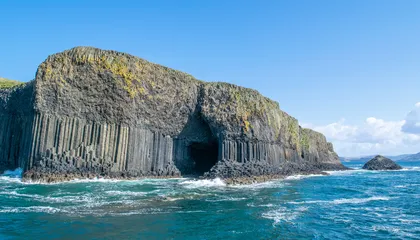
Upon realizing Benandonner's immense size, Finn disguised himself as a baby, causing Benandonner to flee and tear up the causeway behind him. The remnants of this causeway became the Giant's Causeway, while Fingal's Cave, located on the nearby island of Staffa, formed from the same volcanic activity.
Fingal's Cave, along with the Giant's Causeway, is shrouded in folklore that connects the two through the tale of Finn and Benandonner. The cave's striking columnar basalt and unique acoustics have earned it the Gaelic name An Uamh Binn, or Musical Cave, inspiring Felix Mendelssohn's "Hebrides Overture." The mysteries of these geologic formations and their legends have persisted despite scientific explanations, drawing people to marvel at their grandeur and the supernatural stories that surround them.
Written by urgent.news from Smithsonian's reporting — not their text. Machine-written — may contain errors; check the original before relying on it.