Scientists strip down the LSD molecule to find the exact parts that trigger hallucinations
By systematically stripping down the complex structure of the LSD molecule, scientists have pinpointed the exact components that trigger hallucinations. This breakthrough paves the way for safer, non-hallucinogenic psychiatric treatments that harness the drug’s therapeutic benefits.
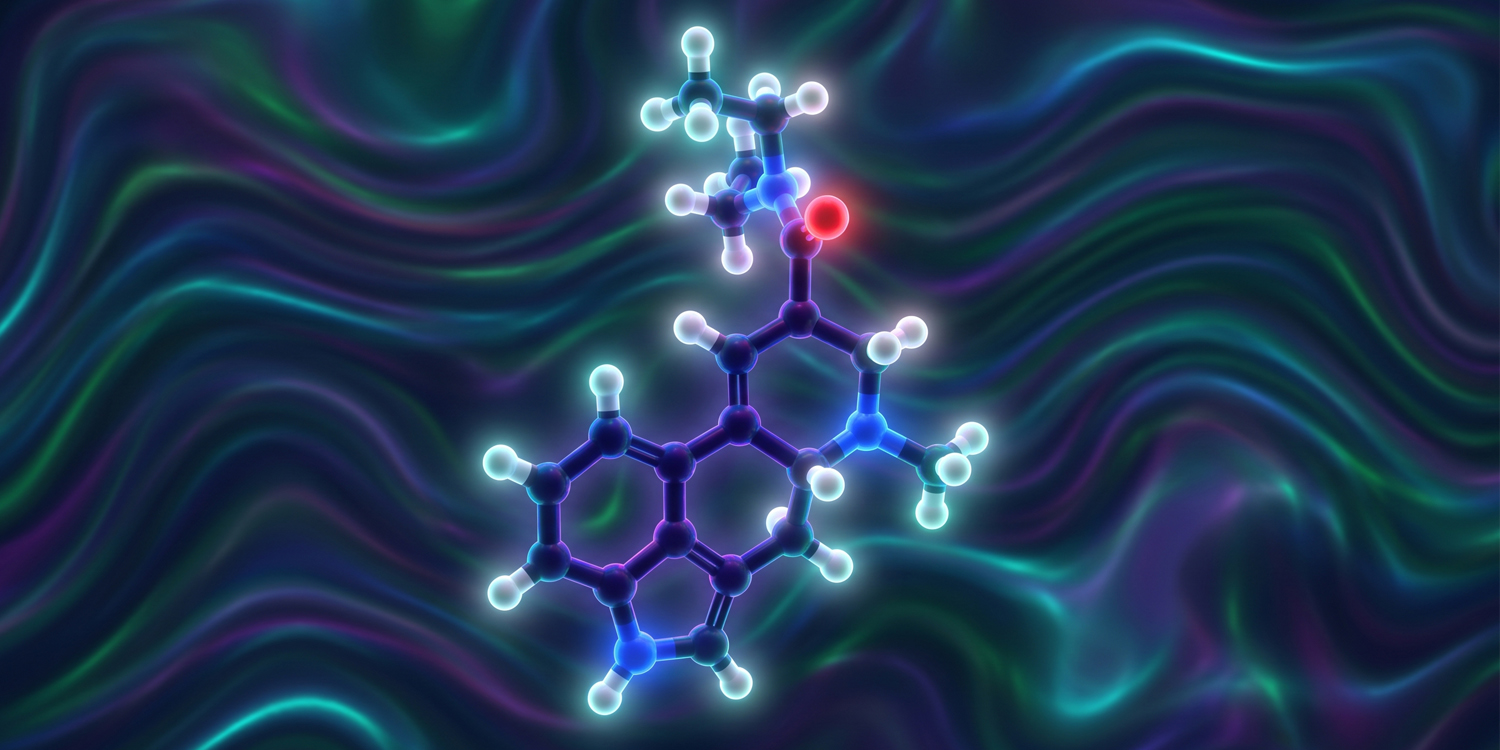
A recent study has successfully analyzed the LSD molecule to determine which parts of its chemical structure cause hallucinations and which parts might be beneficial for therapeutic use. The research, published in PNAS, identifies a specific structural combination that produces antipsychotic effects in mice without causing hallucinations.
LSD, or lysergic acid diethylamide, is a powerful psychedelic drug that alters perception, mood, and cognitive processes by interacting with serotonin receptors, particularly the serotonin 5-HT2A receptor. This receptor is responsible for triggering hallucinogenic experiences and promoting neuroplasticity. Classic psychedelics activate many different signaling pathways in the brain and body, which can lead to unwanted side effects.
To create safe psychiatric treatments from psychedelics, researchers aim to modify these molecules so they no longer activate the 5-HT2B receptor or cause hallucinations. By systematically deconstructing LSD, scientists found that a two-ring combination of the original molecule's "A" and "D" rings is the minimum required to induce the characteristic head-twitch response in mice, indicating a psychedelic effect.
Further simplification led to the creation of a three-ring compound named UCD0094, which maintains the ability to activate the 5-HT2C receptor, associated with antipsychotic and anti-addictive properties. UCD0076, a two-ring compound, showed almost no activation of the hallucinogenic 5-HT2A receptor but strong activation of the 5-HT2C receptor.
At high doses, UCD0076 prevented head twitches when mice were subsequently given a known hallucinogen and reduced amphetamine-induced hyperactivity in an open-field test. This research suggests that by selectively targeting the 5-HT2C receptor, this simplified molecule could be developed as a safer, non-hallucinogenic treatment for mental health conditions.
Written by urgent.news from PsyPost's reporting — not their text. Machine-written — may contain errors; check the original before relying on it.