Savannah Regional Minister calls for clear rules to distinguish generosity from vote-buying
Savannah Regional Minister Salisu Be-Awuribe has called for clear guidelines to distinguish between vote-buying and genuine acts of generosity, saying the country must establish what constitutes an electoral offence.
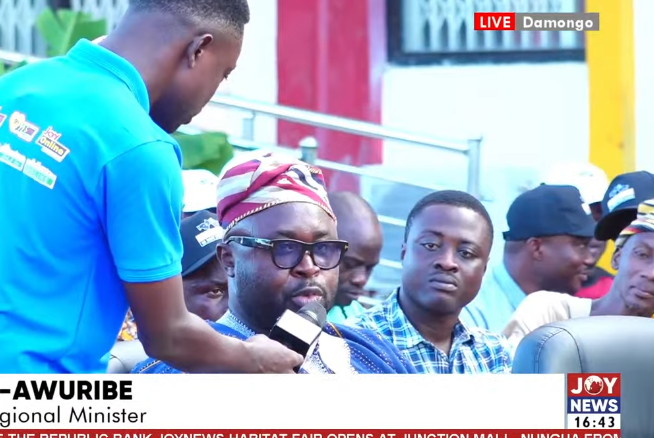
Savannah Regional Minister Salisu Be-Awuribe has urged the establishment of clear guidelines to differentiate between genuine acts of generosity and electoral vote-buying in Ghana. During an interview with JoyNews in Damongo, the Regional Minister, who also chairs the Savannah Regional Security Council, admitted to hearing allegations of vote-buying, but claimed he had not witnessed the practice first-hand.
Be-Awuribe emphasized that Ghana's electoral laws, particularly provisions under the Representation of the People’s Law, 1992 (PNDCL 284), forbid attempts to influence voters to vote, refrain from voting, or sway their electoral decisions.
Addressing concerns surrounding the rising discourse on vote-buying in Ghanaian politics, Be-Awuribe highlighted the challenge in distinguishing between acts of generosity or support and those intended to sway voters. He explained that politicians and community members often engage in exchanges that might not have an electoral motive.
To illustrate, the Minister recounted a visit to a community where community members expressed gratitude by providing him with gifts such as tubers of yam, a goat, and other dishes. He clarified that such gestures alone did not necessarily imply an attempt to influence an electoral decision.
Be-Awuribe also noted that the behavior of politicians and candidates could impact how communities perceive their actions. For instance, when someone who had not previously shown regular interest in community affairs suddenly becomes more generous or involved, it could be interpreted as a sign that they intend to contest an election. He argued that such a shift could introduce a sense of generosity that was not previously evident.
When asked whether assistance like paying for a constituent's child's school fees, settling medical bills, or other forms of aid could be considered vote-buying, especially if the beneficiary is a potential voter, the Minister stated that Ghana required clear and practical guidelines on the issue. He noted that while he understood instances where individuals provided financial support while pursuing political ambitions, there was a pressing need to clearly identify which actions should be deemed prohibitive.
Be-Awuribe stressed that determining whether an act constitutes an attempt to influence an election cannot be based on a single isolated instance. Instead, he advocated for clear standards to distinguish legitimate community support from conduct aimed at inducing voters. He reiterated that actions prohibited by electoral law could have legal consequences, irrespective of their nature.
The Savannah Regional Minister's comments come amid ongoing discussions about vote-buying and the use of money and other forms of assistance in Ghanaian politics, emphasizing the importance of differentiating between providing aid and influencing electoral choices.
Written by urgent.news from MyJoyOnline Ghana's reporting — not their text. Machine-written — may contain errors; check the original before relying on it.