Minority rights in Sindh: Eight-point demands presented for protection
KARACHI: The Parliamentary Council for Human Rights and representatives of minority communities have presented an eight-point set of demands for the protection of minority rights in Sindh. Speaking at a media briefing at a local hotel, MNA and former federal minister Kamran Michael, Parliamentary Council for Human Rights Executive Director Shafiq Chaudhry and others said minority rights should be…
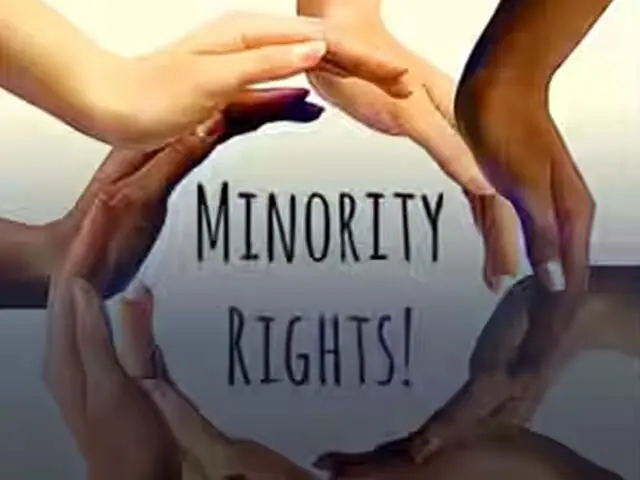
Karachi witnessed a media briefing by the Parliamentary Council for Human Rights and minority community representatives, where eight key demands were laid out for safeguarding minority rights in Sindh. Executive Director Shafiq Chaudhry of the Parliamentary Council emphasized that minority rights should be considered as fundamental citizenship rights and not as a secondary or specific concern.
The speakers urged addressing deficiencies in political representation, civil liberties, employment, education, social welfare, cultural rights, and protection against violence and coercion.
According to the National Commission for Human Rights (NCHR), there were 136 reported cases of forced religious conversion in 2023, predominantly involving Hindu women and girls in Sindh. The demands included removing biased and stereotypical content from school textbooks, integrating the history and contributions of religious minorities into the educational curriculum, offering scholarships to minority students, and recruiting skilled educators from minority communities.
The speakers also sought the collection of disaggregated, religion-based data to evaluate minorities' access to social protection programs, healthcare, education, housing, clean water, employment, and welfare schemes. They advocated for the proper implementation of the five percent employment quota, stringent enforcement of the minimum marriage age set at 18 years, robust legislation against forced religious conversions, and the establishment of a district-level mechanism to protect minorities' rights.
Calls for religious education curriculum reforms, improved religion-based data collection, and meaningful participation of minority communities in the preservation and restoration of places of worship, cemeteries, religious seminaries, and historical sites were also part of the eight demands presented. The speakers emphasized the need for transparent implementation of employment quotas, strict enforcement of legal standards, effective legislation against forced religious conversions, and the establishment of district-level mechanisms to protect minority rights across Sindh.
Written by urgent.news from Business Recorder's reporting — not their text. Machine-written — may contain errors; check the original before relying on it.