Mahama unveils Three Pillars of Next Steps towards attaining global reparatory justice
President John Dramani Mahama has unveiled Three Pillars of the "Next Steps" towards the attainment of global Reparatory Justice on the sidelines of the 81st United Nations General Assembly Meeting in New York, The post Mahama unveils Three Pillars of Next Steps towards attaining global reparatory justice appeared first on Ghana Business News .
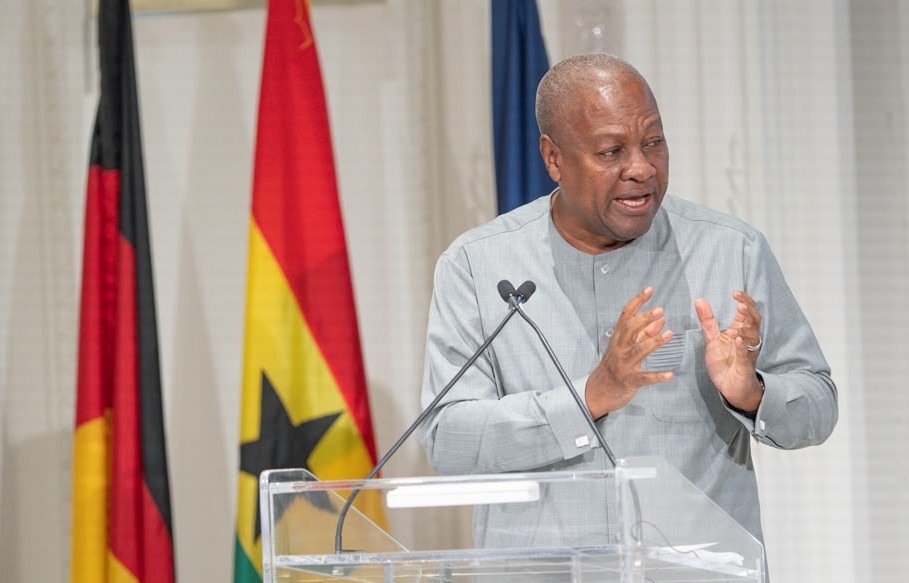
President John Dramani Mahama has introduced Three Pillars representing the subsequent actions required to achieve global Reparatory Justice, following the 81st United Nations General Assembly Meeting in New York. This comes after the June 2026 Next Steps High-Level Consultative Conference in Accra. At the UN General Assembly meeting, Mahama highlighted that on March 25th, the Assembly adopted Resolution 80/250, recognizing the Transatlantic Slave Trade as a greatest Crime Against Humanity.
This resolution, he emphasized, was a crucial moment for global acknowledgment and called for the prompt return of cultural property, sacred artifacts, and national archives. He stressed that the journey towards truth is merely the beginning. In June, Ghana convened a High-Level Consultative Conference, where leaders from Africa, the Caribbean, and the diaspora discussed the next steps.
The President explained that the Accra Next Steps commitment now provides a clear blueprint for this transition from acknowledgement to action. The Three Pillars of the Next Steps are: first, acknowledging and celebrating the progress made since the resolution's adoption, thanking countries like the Netherlands for cataloging and returning 2,000 Ghanaian artifacts.
Second, Germany's engagement with Kpando-traditional area, France's legislative changes, and France's return of Gigi Ayokui's sacred talking drums from Cote d'Ivoire. Lastly, President Mahama called for UNESCO, the United Nations, and other holding countries to establish standardized legal and diplomatic mechanisms to streamline provenance research.
Through the African Union's 2063 projects, Ghana is advancing the Great African Museum, which will receive these returned treasures for preservation. In Ghana, construction is underway for a state-of-the-art national and traditional institution to house these artifacts. Mahama stressed that cultural heritage is not a luxury, but an engine for development, contributing to education, identity, international tourism, and a thriving creative economy.
He urged multilateral development banks, international financial institutions, global foundations, and private sector partners to invest in Africa's cultural infrastructure, focusing on regional archives, conservation labs, digitization initiatives, and training for future African curators and historians. Mahama concluded by asserting that while we cannot rewrite the history of conquests, we have the power to determine how we heal from it.
He emphasized that the story of Africa's cultural heritage must continue beyond its removal, concluding that the 81st UN General Assembly should be remembered not as a place where the past was agreed upon, but as a moment where the future was collectively built.
Written by urgent.news from Ghana Business News's reporting — not their text. Machine-written — may contain errors; check the original before relying on it.