MACC chief calls for research findings to shape policies, institutions
PUTRAJAYA: Findings from research into governance, integrity and anti-corruption issues should be translated into policies and institutional improvements, Malaysian Anti-Corruption Commission (MACC) chief commissioner Datuk Seri Abd Halim Aman said.
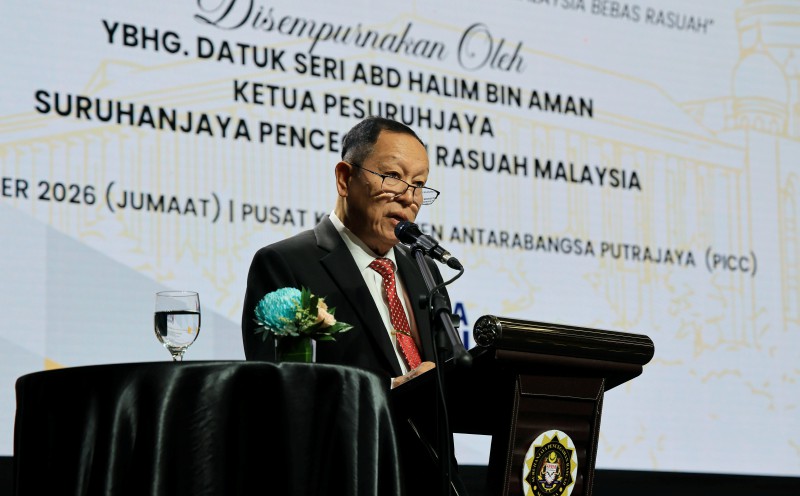
The Malaysian Anti-Corruption Commission (MACC) chief commissioner, Datuk Seri Abd Halim Aman, has emphasized that research findings on governance, integrity, and anti-corruption issues should inform policy and institutional improvements. From 2020 to 2025, 50 research topics were selected and studied by local research entities under the National Centre for Governance, Integrity and Anti-Corruption (GIACC) through grants.
Halim highlighted the importance of research in identifying system weaknesses, assessing risks, measuring policy effectiveness, and suggesting sustainable improvements. He stressed that public policy formulation should be bolstered through high-quality research, accurate data, and thorough analysis to ensure decisions genuinely benefit the nation and its citizens.
Halim reiterated that this approach aligns with the international trend of evidence-based policymaking, which relies on evidence, data, and objective evaluations. He also mentioned that research findings have been showcased at national-level research conferences, creating a platform for researchers, practitioners, and stakeholders to engage in discussions.
To enhance the utilization of research findings beyond conference presentations, Halim's MACC developed a compilation report encompassing research presented from 2022 to 2025. He expressed his hope that this report would continue to serve as a valuable reference for policy formulation, system enhancement, and the creation of evidence-based anti-corruption strategies.
The 5th National Governance, Integrity and Anti-Corruption Research Conference, themed "Madani as a Catalyst for Integrity-Based Governance Towards a Corruption-Free Malaysia," brought together researchers from six public universities - IIUM, UiTM, UKM, UPM, USM, and USIM - to present their findings in strategic areas relevant to national development.
Written by urgent.news from New Straits Times's reporting — not their text. Machine-written — may contain errors; check the original before relying on it.