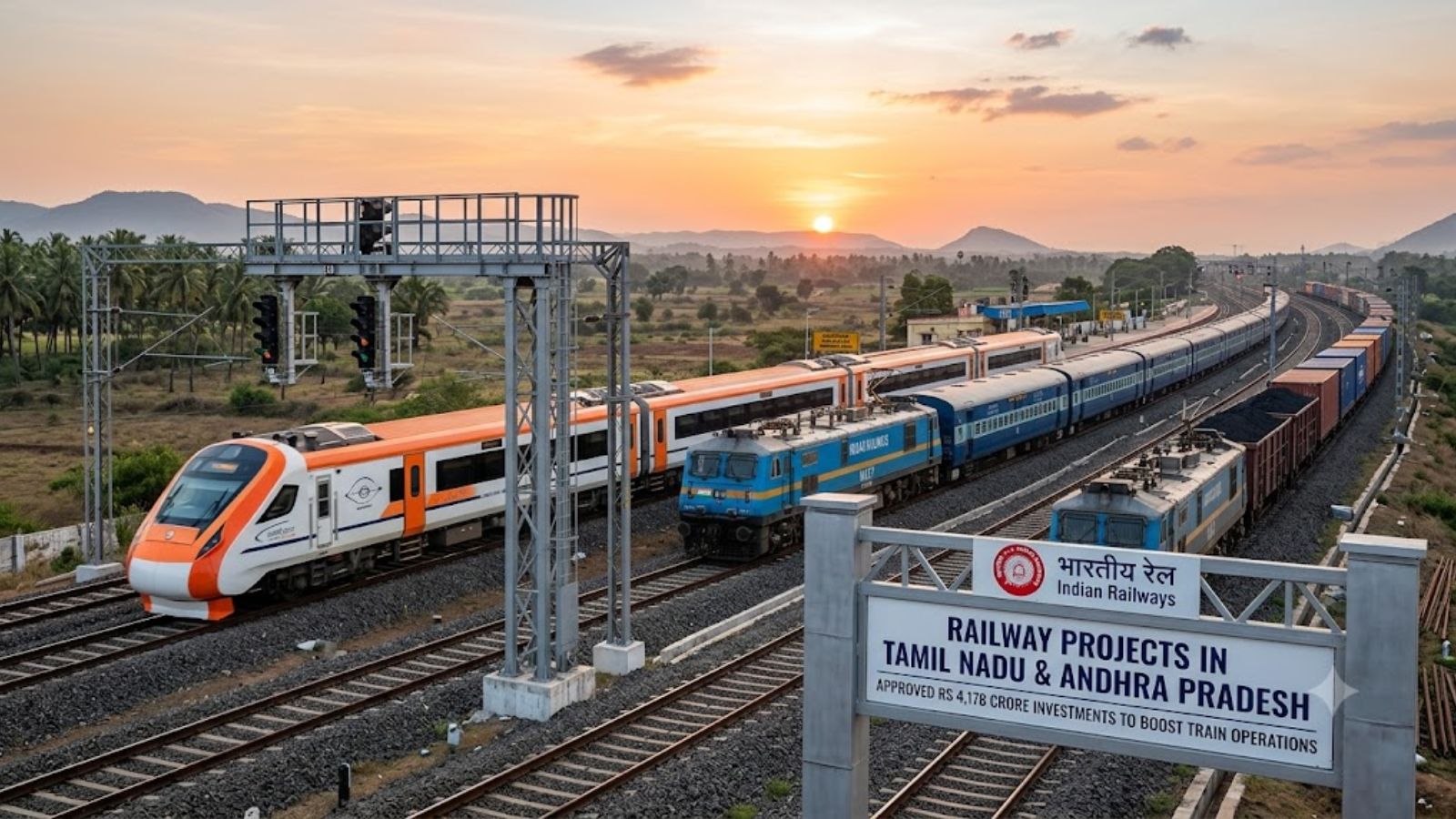
Indian Railways approves Rs 4,178 crore projects in Tamil Nadu, Andhra Pradesh to boost train operations
Tamil Nadu is set to launch a groundbreaking "One Degree, Six Skills" program, beginning in the January 2027 semester. This initiative aims to equip undergraduate students at the state's 181 government arts and science colleges with at least one job-oriented skill each semester. The program, developed in collaboration with the Tamil Nadu State Council for Higher Education (TANSCHE), aims to complement existing academic curriculums with industry-oriented training.
Upon completion of a standard three-year undergraduate degree, students will have acquired a total of six additional industry-specific skills. Unlike traditional academic courses, these skills will be taught concurrently with the primary degree, rather than replacing it. Initially referred to as the "One Skill Per Semester" program, the current description, "One Degree, Six Skills," highlights the expected outcome of obtaining a regular degree along with six supplementary skills over the course of three years.
The program targets undergraduate students enrolled in Tamil Nadu's government arts and science colleges. As of now, these 181 institutions are designated to participate in the scheme, with undergraduate admissions for the 2026-27 academic year already completed. However, it's important to note that this is not an open course for graduates or jobseekers; students will integrate the skill courses into their regular college programs.
The department has curated a list of 20 potential skill courses from both arts and basic sciences sectors, from which colleges will select the specific skills they wish to offer. Each skill course is projected to require approximately 30 to 45 hours of study time. Colleges are expected to finalize their choices within the next three months and appoint an expert trainer for each selected course.
Assessment for these skill courses will be primarily practical, focusing on the students' ability to apply the learned skills rather than relying on conventional written examinations. The evaluation framework allocates 40% weightage to skill exercises, 30% to individual competency, and 30% to a final demonstrable output. This assessment structure emphasizes practical application and real-world skills rather than rote memorization.
Moreover, industry partners play a significant role in this program. Government colleges are required to establish Memorandums of Understanding (MoUs) with at least three leading industries, while individual departments will collaborate with companies in their respective sectors. Industry partners are expected to contribute to curriculum development and provide opportunities for internships and placements for students.
However, the criteria outlined in the separate Technical Nations Development Corporation (TNSDC)/Naan Mudhalvan Employer's Open Invitation (EOI) are distinct from the requirements for participating in this higher-education scheme.
Written by urgent.news from The Indian Express's reporting — not their text. Machine-written — may contain errors; check the original before relying on it.
This story
This is one outlet's version. Read the fullest account.
- Tamil Nadu CM Vijay announces ₹7.5 million reward for Kamalini after Asian Games gold gulfnews.com
- Tamil Nadu CM Vijay conducts surprise inspection at TNDPCL headquarters thehindu.com
- Indian Railways approves Rs 4,178 crore projects in Tamil Nadu, Andhra Pradesh to boost train operations indianexpress.com