In Calabria, Sardegna e Sicilia i primi treni a idrogeno a scartamento ridotto al mondo
I 21 convogli fabbricati dal gruppo svizzero Stadler sono destinati a tre operatori: l’Azienda regionale sarda trasporti (10 treni), le Ferrovie della Calabria (9) e la Ferrovia Circumetnea (due) in Sicilia
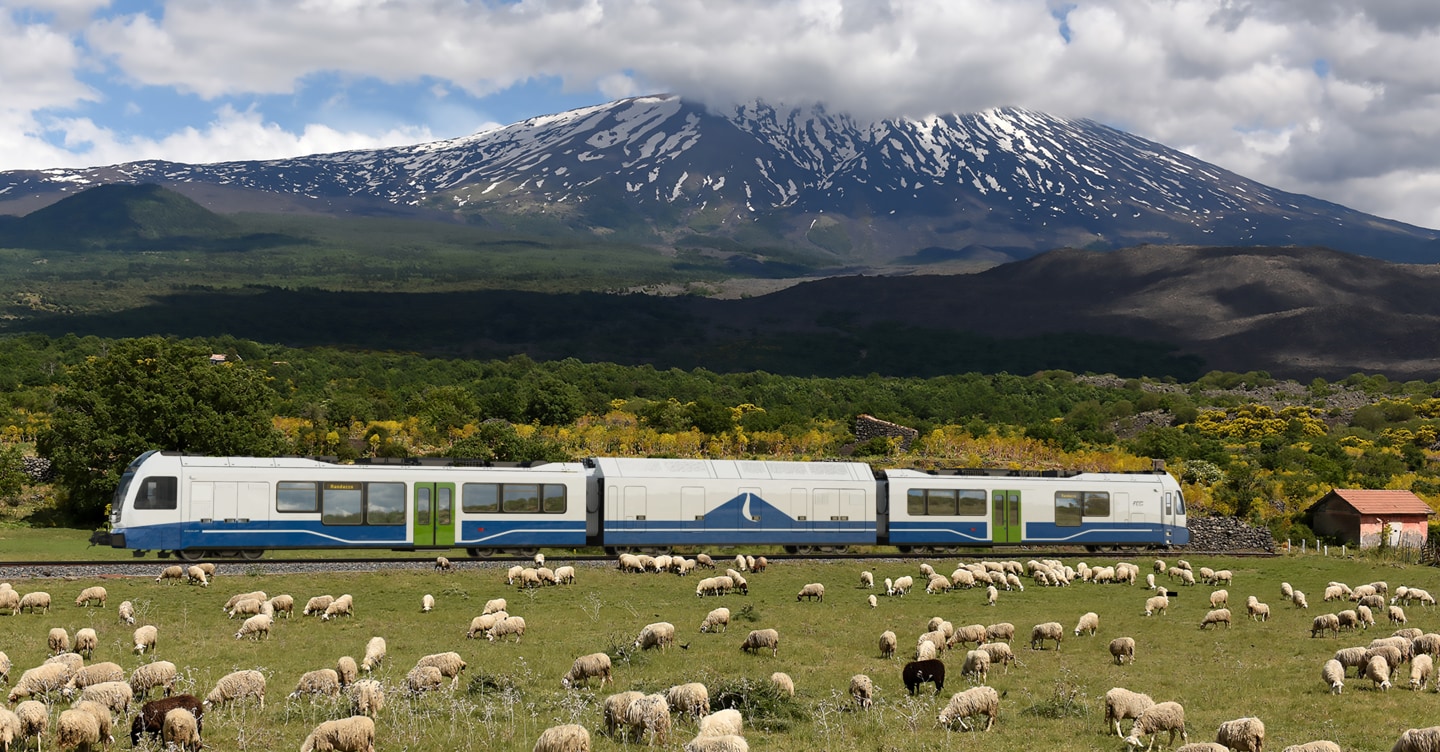
The world's first hydrogen-powered train with reduced emissions is set to run on Italian tracks in the southern regions of Calabria, Sardinia, and Sicily. The innovative trains, unveiled at the global rail industry exhibition Innotrans in Berlin, will replace older diesel-powered trains that pollute the environment. Manufactured at Stadler's central facility in Bussnang, Switzerland, these new trains will soon provide a zero-emission rail experience.
Stadler is currently building a series of 21 new trains for the Sardinian regional transport company (Arst), the Ferrovie della Calabria (FdC), and the Circumetnea (Fce) railways in Sicily. The first train was built for Arst in Sardinia, with a comprehensive contract to develop ten vehicles. Additionally, nine trains are being produced for FdC and two for Fce.
In the future, these trains will be used for regional and local services. The distinctive feature of the new trains is their eco-friendly propulsion system based on fuel cells and hydrogen tanks installed in the central carriage, which works together with traction batteries. This technology allows the trains to move efficiently, environmentally, and uninterrupted on non-electrified routes.
For example, ten hydrogen-powered trains will save up to 2,100 tonnes of CO2 per year compared to diesel vehicles. Hydrogen trains are also significantly quieter, offering a practical advantage for residents and passengers. Passengers will also enjoy brighter and more spacious panoramic windows. Additionally, the lowered access allows for easy boarding, including for people with reduced mobility.
The trains will be refueled with green hydrogen generated by a network of solar-powered power plants. Arst, FdC, and Fce are strongly committed to developing their respective power plants, currently under construction. "These vehicles, developed in collaboration with Stadler, are a central element of the decarbonization strategy of the reduced disposal network.
We are proud to bring the world's first hydrogen-powered train with reduced emissions to our lines," says Carlo Poledrini, Arst's CEO. "For our company, this project represents the first step in Arst's evolution from a transportation operator to an energy company." Each train is specifically designed to meet the needs of different lines and operators, from the coastal tracks of Sardinia to the mountain tunnels of Calabria and the steep grades of Mount Etna in Sicily.
"Thanks to our close collaboration with the Ministry of Transport and the railway operators Arst, FdC, and Fce, Stadler has developed a modular solution that can adapt to the different needs of the Italian reduced disposal rail networks," says Maurizio Oberti, Stadler's Director of Sales & Marketing for the Italian market. Aristide Vercillo Martino, Arst's sole shareholder, emphasizes: "The collaboration between Stadler and the Ferrovie della Calabria has been successful for about 20 years.
A path initiated with the first vehicle developed for the reduced disposal railways in Italy for FdC. This long partnership has laid the foundation for developing a new generation of trains." Compared to diesel trains, hydrogen-powered trains are significantly quieter, providing an additional practical advantage for residents and passengers.
They also offer passengers more comfortable environments with bright and spacious panoramic windows. The lowered boarding level allows for easy boarding, even for people with reduced mobility. "With the use of the new hydrogen-powered trains, we can increase comfort and, at the same time, make a concrete contribution to more sustainable mobility," says Salvatore Fiore, CEO of Fce.
Written by urgent.news from Il Sole 24 Ore's reporting — not their text. Machine-written — may contain errors; check the original before relying on it.