How much of India’s shift to ‘alternative fuels’ is electric vehicles?
While adoption of EVs has risen in the passenger vehicles category, it is mainly two-wheeler and three-wheeler categories that are adopting EVs than cars
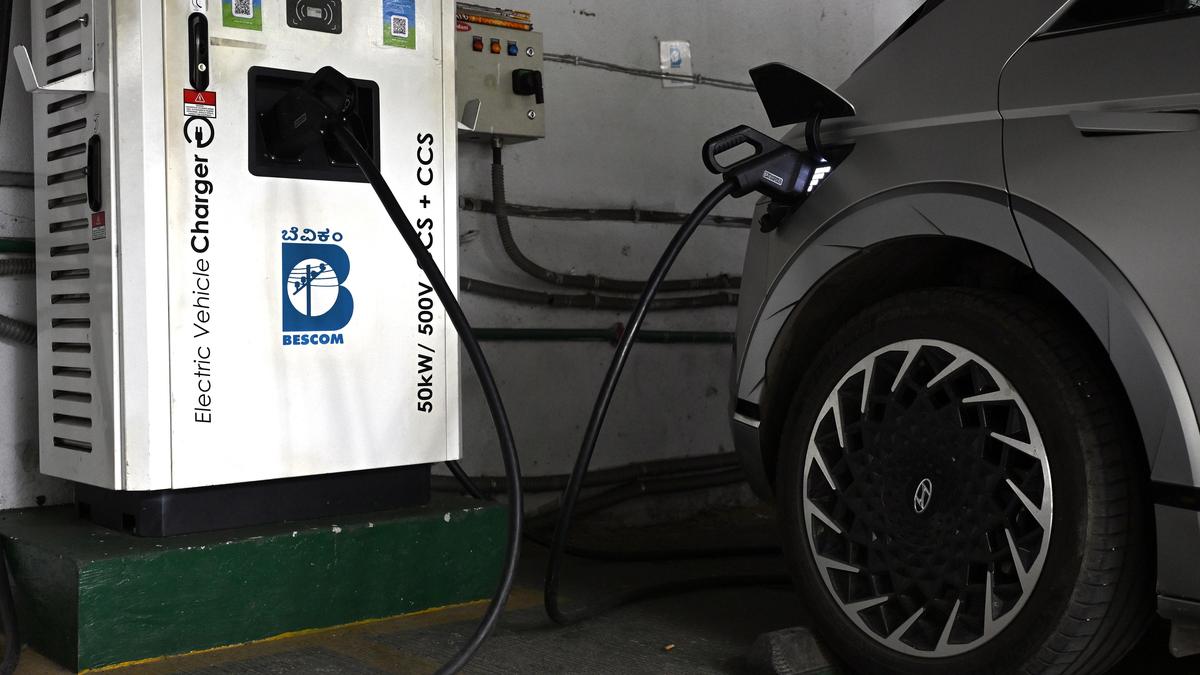
In August 2026, India reached a significant milestone in its transition from fossil-fuel driven vehicles to electric vehicles (EVs), as per data from the Federation of Automobile Dealers Associations (FADA). Passenger vehicles, primarily comprising cars, saw alternative fuels (including CNG, hybrid, and electric) outnumber petrol vehicles for the first time, with alternative fuels holding a 41.95% share compared to petrol's 40.85%.
However, petrol and diesel still dominate the market, accounting for 83.5% of the roughly 82 lakh vehicles registered from January to March 2026, a 11.5 percentage point decrease from the same period in 2021, when they accounted for over 95% of all registered vehicles.
The rise in EV adoption has mainly been driven by two-wheelers and three-wheelers, as per data from Vahan portal. In the two-wheeler segment, which makes up over 70% of new vehicles, EVs have seen a surge, with their share jumping from 6.4% in 2025 to 9.1% in 2026 (up to August). This has contributed significantly to the overall decrease in petrol and diesel vehicles, with the share of these vehicles coming below the 85% mark this year.
Meanwhile, the three-wheeler category, accounting for just 4% of all vehicles sold, has the highest share of EVs, with 60.5% of the roughly 9.8 lakh three-wheelers registered being electric.
When it comes to cars, the nuance of the shift is more pronounced. While the overall share of petrol and diesel cars has dropped from 86% in 2021 to 61.6% in 2026, this decline is largely due to an increase in hybrid cars running on petrol with CNG or LNG. The share of pure EVs in cars has remained relatively constant at around eight percent since 2023. The data suggests that further measures, such as improving charging infrastructure, are needed to accelerate EV adoption in cars.
Written by urgent.news from The Hindu's reporting — not their text. Machine-written — may contain errors; check the original before relying on it.