How Astrobase Is Building The Base For Tomorrow’s Medium-Lift Rockets
In June 2026, three spacetech startups became the first cohort to receive funds selected under the Indian National Space Promotion…
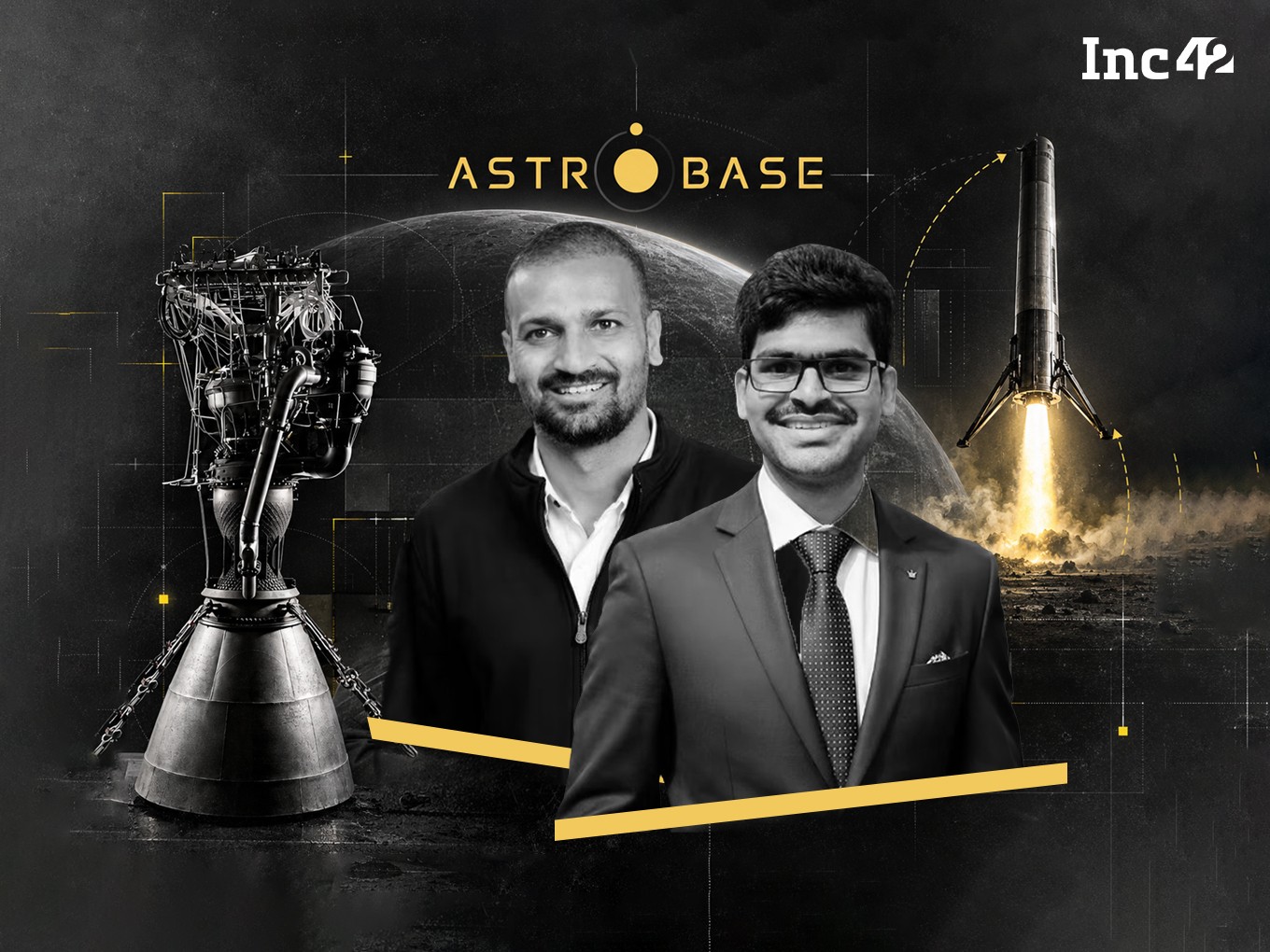
In June 2026, three Indian tech startups were selected to receive funding under the Indian National Space Promotion and Authorization Centre's (IN-SPACe) Technology Adoption Fund's (TAF) ₹500 Cr scheme. Among the three, Bengaluru-based Astrobase Technologies stood out even though it was only two years old. Founders Neeraj Khandelwal and Devakumar Thammisetty, who are classically trained, saw their shared passion for space tech rewarded with the significant investment.
Thammisetty, who previously worked on cryogenic engines at ISRO, had contributed significantly to the development of India's only cryogenic engine, CE-20. Meanwhile, Khandelwal's entrepreneurship journey began with the founding of cryptocurrency exchange CoinDCX in 2018. However, after witnessing the emergence of private sector involvement in space infrastructure through the establishment of IN-SPACe, Khandelwal returned to his interest in space technology.
For Astrobase, this comes down to launch vehicles, specifically focusing on propulsion. In August this year, the startup unveiled its first full-flow staged combustion (FFSC) engine named Everest. FFSC engines, which have been developed by India, the US, Russia, and China, are more efficient and re-usable than conventional engines as they make use of 100% of fuel and oxidizer. By 2035, Khandelwal aims to send 1,000 tons of payload into space annually.
The core of Astrobase's approach lies in propulsion, which Khandelwal considers the core technology in a launch vehicle. The Everest rocket engine, an 80-tonne-class, 800 kN engine, is currently under development. The company has built India's first methane-based engine test facility, an important aspect of developing reusable propulsion technology.
The company's Bengaluru facility not only produces engines entirely in-house but also employs over 70 people, with an aim to grow to 300 by the time of the first launch by 2028.
Written by urgent.news from Inc42's reporting — not their text. Machine-written — may contain errors; check the original before relying on it.