From Agra to Abu Dhabi: Why India's Taj Mahal made me think of my UAE home
One of the first things I thought of when I saw the Taj Mahal was the UAE , the place I call home. Standing in front of one of India ’s most recognisable historic structures, my mind went almost immediately to the Sheikh Zayed Grand Mosque in Abu Dhabi – another vast white-marble landmark, another expression of Islamic architecture and another building that has become inseparable from the country…
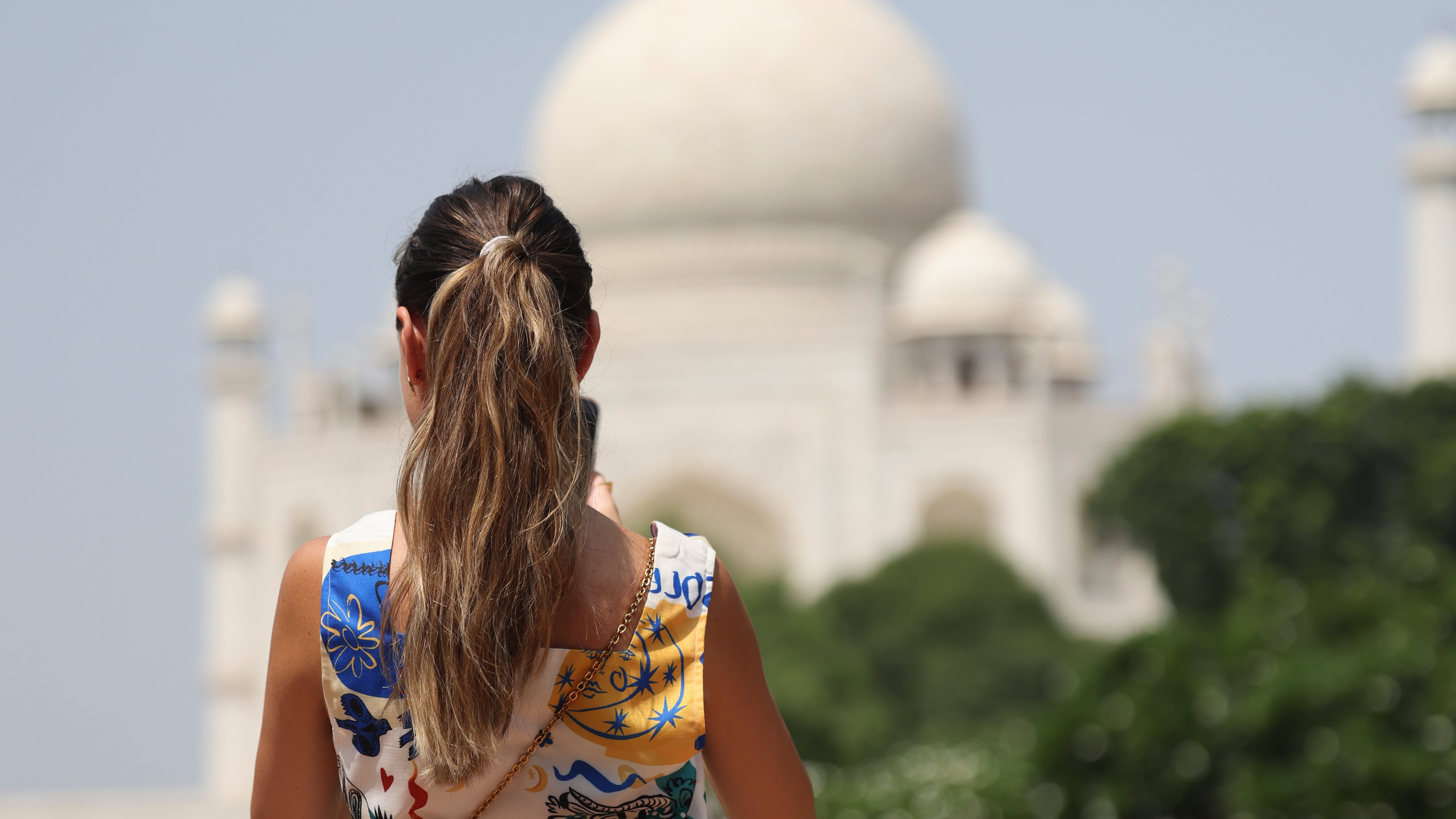
When I first saw the Taj Mahal, a vivid image of Abu Dhabi came to mind. Both the iconic landmark in India and the Sheikh Zayed Grand Mosque in the UAE are magnificent white-marble structures that symbolize Islamic architecture and are deeply woven into their respective nations. While the Taj Mahal was built in Agra in the 17th century as a mausoleum for Shah Jahan's beloved wife, the Sheikh Zayed Grand Mosque was constructed in 2007 to embody modern UAE identity.
The two structures stand as powerful representations of their time and place, embodying the distinct stories of the Mughal empire and a young federation. As a journalist from the UAE, I was invited to India alongside three other colleagues for a programme organized by the Ministry of External Affairs. Our assignment during Brics week in New Delhi was to explore the present and future of the country, focusing on diplomacy, influence, and global partnerships.
The Taj Mahal, however, served as a stark contrast to the modern discussions taking place in New Delhi, transporting me back to an older India. The site embodies centuries of cultural exchange, blending Persian, Central Asian, Indian, and Islamic influences and showcasing the movement of people, ideas, and artistic techniques across borders.
This juxtaposition of the timeless Taj Mahal and the modern Sheikh Zayed Grand Mosque presents two contrasting narratives of Muslim identity—one rooted in an empire that no longer exists, and another belonging to a contemporary Arab state. Both structures serve as powerful monuments to Islamic heritage, yet they encapsulate different historical moments and expressions of that heritage.
As I wandered through the sprawling complex, I was struck by the scale of the monument and the interplay of light on the marble under the strong sun. Despite the heat, the people around me were captivated by the beauty of the Taj Mahal, many capturing photographs and marveling at the intricate details. The experience offered a refreshing perspective on India, away from the political fervor of the Brics summit, revealing a country with a rich tapestry of history, culture, and architectural marvels that extend far beyond the realm of contemporary geopolitics.
Written by urgent.news from The National UAE's reporting — not their text. Machine-written — may contain errors; check the original before relying on it.
Also reported by 1 other outlet
- From Agra to Abu Dhabi: Why India's Taj Mahal made me think of my UAE home thenationalnews.com