First Okapi Born in Southeast Asia Is Spending His First Months Playing Hide-and-Seek
Learn why a newborn okapi spends its first weeks hidden and how keepers in Singapore are helping this calf explore.
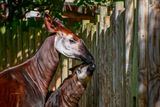
A newborn okapi, Kisala's calf, was born at Singapore's Rainforest Wild Adventure on July 27, marking the first okapi birth in Southeast Asia. The Mandai Wildlife Reserve, which manages the facility, confirmed the calf's birth. Born to hide, the calf spent its first weeks in a cozy calving box within his mother's off-exhibit den, where he could nurse and sleep undisturbed.
Like wild okapis, Kisala's calf stays hidden in the rainforests of the Democratic Republic of the Congo, keeping still and quiet to avoid predators. With his mother, the calf now explores outdoors, gradually building confidence at his own pace. At birth, the calf weighed 20 kilograms (44 pounds), more than doubling to 48 kilograms (106 pounds) by his first weigh-in a month later.
The okapi's closest living relative is the giraffe, as evidenced by its striped legs and bony bumps on its head called ossicones. In the wild, okapis are threatened by illegal hunting, deforestation, and human encroachment, with the IUCN listing them as Endangered. The Mandai Wildlife Group is helping to protect the species by coordinating breeding among zoos through the EAZA Ex situ Programme.
Visitors can view Kisala and his mother in Hidden Forest at Rainforest Wild Adventure East, with the calf's location changing periodically to mimic his natural hiding behavior.
Written by urgent.news from Discover Magazine's reporting — not their text. Machine-written — may contain errors; check the original before relying on it.