Fed’s Tom Barkin, a former McKinsey CFO, says the ‘AI Apocalypse’ hasn’t arrived
The Richmond Fed president says companies are investing heavily in AI to boost productivity, but strong earnings are keeping them from making deep cuts to their workforces.
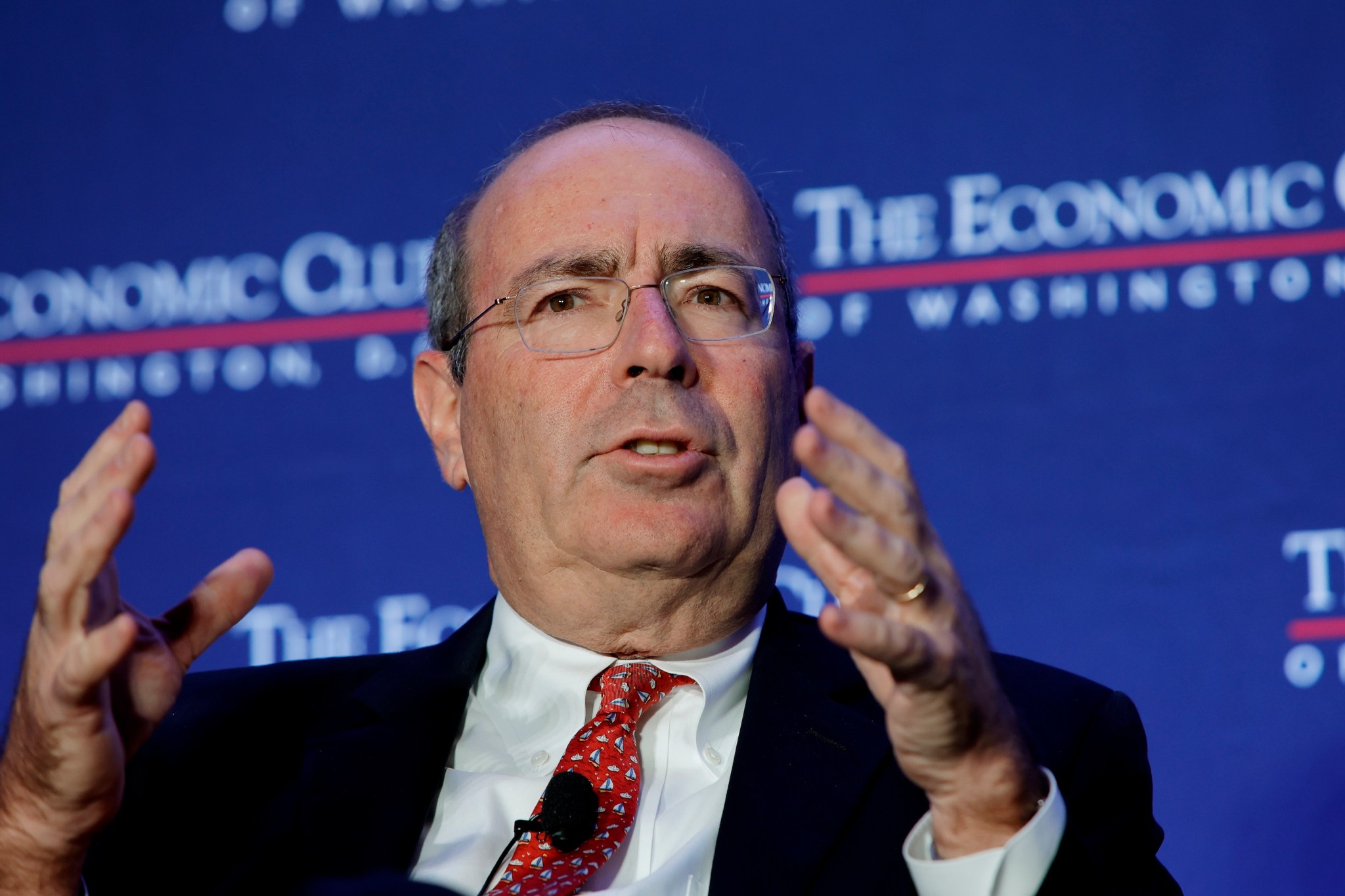
Federal Reserve President and CEO Tom Barkin, a former McKinsey CFO, stated on Thursday that the "AI Apocalypse" has not yet arrived. During a conversation with Barbara Humpton, CEO of USA Rare Earth, at an Economic Club of Washington, D.C., event, Barkin highlighted persistent tariff costs, higher gasoline prices, and a surge in AI investment that are contributing to inflation.
Six months ago, he said, it was easier to assume that inflation would be temporary, and that oil prices, tariffs, and the AI buildout would eventually "morph" away. However, if inflation persists for a long time, he argued, policymakers must acknowledge that the current situation may be more significant than previously thought. Barkin compared the Fed's challenge to a log flume ride: slowly ascending the hill of the last ramp before plunging into a pool of water.
This metaphor represents the predicament faced by Federal Reserve officials like Kevin Warsh and Jay Powell, who must maintain higher interest rates as inflation proves more resilient than anticipated, while simultaneously navigating the transformative impact of AI investment on prices and the labor market. Barkin expressed deep respect for the magnitude of the task ahead of Warsh, acknowledging that he made "very profound calls."
Regarding AI, he emphasized that the economy is experiencing an immense AI investment cycle, with companies allocating resources aggressively due to expectations of heightened productivity from AI. Nevertheless, the expectation of AI-driven efficiency is causing firms to exercise caution when it comes to hiring. The technology is already being applied in various sectors, including coding, call centers, compliance paperwork, and engineering.
Despite strong corporate earnings, companies with substantial technology project backlogs prefer to redeploy freed-up capacity rather than reduce headcount. However, the real challenge lies in organizational adaptation. "The unit of an AI-enabled task is not precisely the same as a mid-level manager and what they do," Barkin noted.
Companies can recognize how AI might improve individual tasks without fully grasping the implications for the personnel responsible for executing them. Many firms have yet to devise strategies to translate task-level efficiency into revised staffing models. Barkin also proposed an unconventional solution: AI could facilitate the entry of inexperienced workers into skilled trades.
He cited auto mechanics as an example, suggesting that an AI assistant could provide a less-experienced worker with a real-time checklist to compensate for any missing expertise. While many discussions focus on an "AI apocalypse," Barkin insisted that such dire predictions are no longer as prevalent as they were six months ago.
Written by urgent.news from Fortune's reporting — not their text. Machine-written — may contain errors; check the original before relying on it.