Dependency Mocking Approach That Gets More Accurate as Your Services Deploy More Often
Traffic-based dependency mocking turns frequent upstream deployments into opportunities to refresh mocks from real behavior and reduce integration test drift.
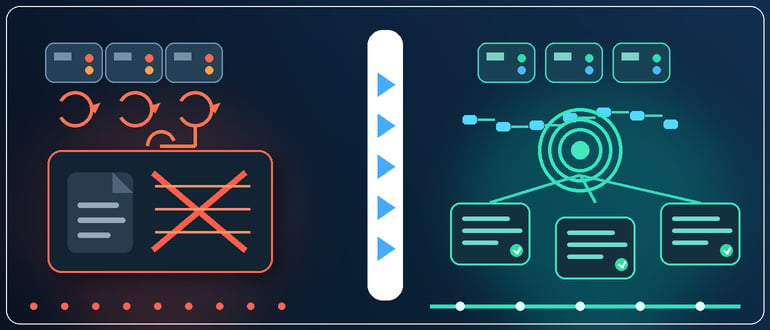
Standard dependency mocking results in an inverse relationship between the frequency of upstream service deployments and the accuracy of mock configurations. Services that deploy more frequently create more opportunities for mock configurations to become outdated, as the mock may no longer accurately reflect the current behavior of the upstream service.
This becomes a liability for test suite accuracy, as the tests validate compatibility with the outdated mock instead of the upstream service's current behavior. Traffic-based dependency mocking inverts this relationship by generating mock configurations from observed real traffic after each upstream deployment. As a result, higher deployment frequency becomes an asset for test accuracy, as more deployments provide more opportunities to observe and record current behavior.
This approach differs from standard dependency mocking, which relies on developer-specified behavioral assumptions encoded in mock files or test fixtures. In traffic-based mocking, these assumptions are derived from real observed behavior, leading to a more accurate representation of the upstream service's current behavior. The key differences in the two approaches stem from where the behavioral assumptions in the mock come from.
In standard mocking, the assumptions are based on developer specifications, while in traffic-based mocking, they are based on real observed behavior. This distinction is crucial when dealing with large-scale systems where services have independent deployment cadences. In such architectures, the gap between a mock's specification and the real service's behavior grows with each deployment that the mock does not account for.
This gap can lead to a failure pattern where integration test suites become increasingly comprehensive but less accurate over time. Traffic-based dependency mocking addresses this issue by triggering recording sessions after each upstream deployment, capturing the service's current behavior, and using these recordings as the source of truth for mock configurations.
This approach ensures that mock configurations always reflect the latest behavior of the upstream service, leading to more accurate test suites and reducing the risk of integration failures caused by outdated mocks.
Written by urgent.news from DevOps.com's reporting — not their text. Machine-written — may contain errors; check the original before relying on it.