Colorado researchers grow saffron on solar panels, double yield and make $60,000
A study by Colorado State University reveals that saffron flourishes under semi-shaded solar panels, yielding better results than those without shade. By integrating rooftop farming with renewable energy, urban food production can tackle space constraints. Projections suggest considerable net revenue from saffron and electricity production in five years, although challenges related to…
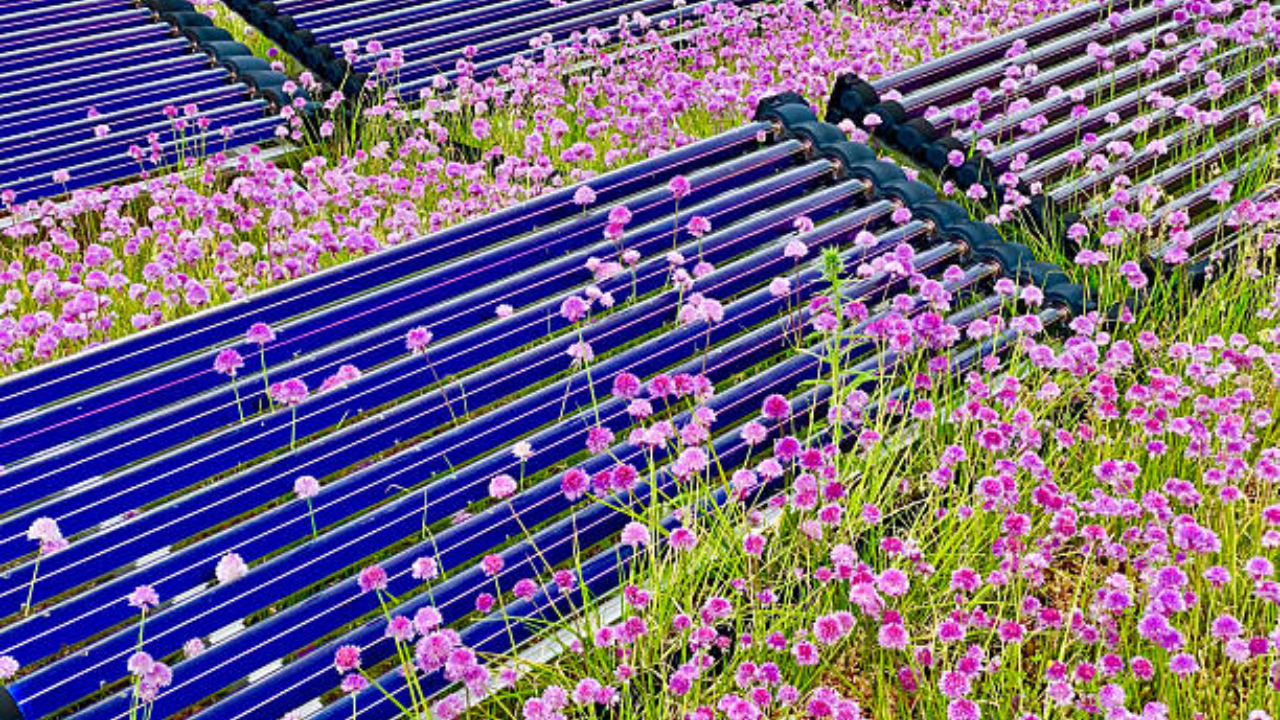
Colorado researchers have discovered a novel way to maximize the output of solar panels while simultaneously boosting the production of saffron, the world's most expensive spice. According to a study conducted at Colorado State University's Spur campus in Denver, growing saffron beneath solar panels that allow 40% of light through resulted in double the number of flowers and double the yield of dried saffron compared to unshaded rooftop plots.
The unique microclimates and well-drained, nutrient-poor substrates on green roofs create ideal conditions for saffron cultivation. This discovery highlights the potential of agrovoltaics, which combines agriculture with solar electricity generation. The research was carried out by Jennifer Bousselot's team, who have been studying the relationship between green roofs and solar panels since 2007.
The researchers caution that excessive shade can negatively impact saffron yield, recommending panels that transmit between 30% to 40% of the light and are mounted 6 to 8 feet above the growing surface. A 2022 experiment in eastern Morocco found that 30% shade level yielded the highest saffron production, which equates to roughly 70% of sunlight remaining.
The Colorado team's five-year model, based on a 46-kilowatt rooftop array, projects $61,000 in net revenue from the sale of electricity, dried saffron, and corms (the underground structures used to grow new plants). The revenue estimate includes $35 per gram of saffron and $0.25 per corm. Electricity is projected to generate $13,470 over the five-year period.
Saffron, derived from the dried red stigmas of the Crocus sativus flower, is harvested by hand and harvested in October or November. The labor-intensive process behind saffron production helps explain its high price tag. Despite the high yield and potential for additional seasonal income, the first-year costs outweigh the revenue, and the budget does not cover the construction of a new rooftop installation.
However, the study demonstrates the exciting potential of integrating rooftop farming and solar generation in urban settings, where shared space and panel shade can mitigate crop heat stress and irrigation needs.
Written by urgent.news from Times of India's reporting — not their text. Machine-written — may contain errors; check the original before relying on it.