Climate change ultimate test of global equity – Mahama
President John Dramani Mahama has described climate change as the ultimate test of global equity, calling for greater international commitment to climate justice and financing.
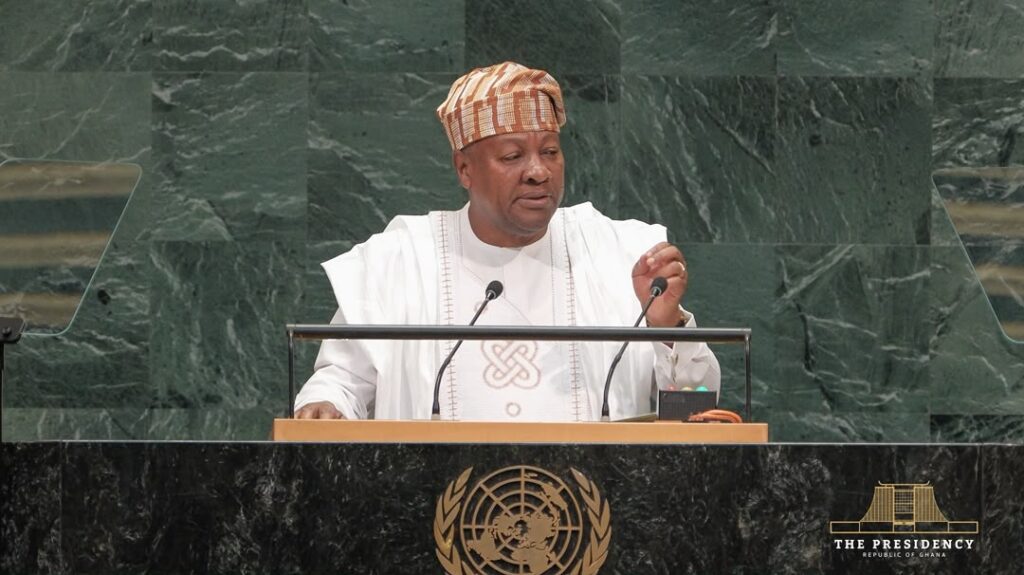
President John Dramani Mahama has declared that climate change represents the ultimate test of global equity, advocating for increased international commitment to climate justice and financing. Speaking at the 81st United Nations General Assembly in New York, the Ghanaian president pointed out that Africa contributes less than four percent of global greenhouse gas emissions, yet bears a significant share of the burden from climate devastation.
He described the environmental challenges facing the continent, such as erratic rainfall, coastal erosion, and desertification in the Sahel. President Mahama recounted the extreme weather event that hit Ghana and coastal West Africa on June 29, where torrential rainfall of over 160 millimeters in 24 hours led to 39 deaths and one person still missing.
He emphasized that climate justice necessitates developed countries fulfilling their long-awaited financial commitments to the most vulnerable nations. President Mahama stressed that climate mitigation support should be provided through predictable, non-debt-creating grants instead of loans that exacerbate the debt issues of already fragile economies.
Drawing on recent extreme weather events, he warned those who dismissed climate change as a hoax as a geopolitical ploy, stating that melting glaciers, flash flooding, droughts, record-breaking heatwaves, brush fires, hurricanes, and other extreme weather phenomena are undeniable indicators of an overburdened planet. The president also called for enhanced international solidarity in addressing global health security, arguing that pathogens do not recognize national boundaries or Gross Domestic Product.
He urged the international community to establish an equitable global health architecture that ensures regional manufacturing of vaccines and therapeutics, improves epidemic surveillance, and finances resilient public health infrastructure across the Global South in line with the demands of the Accra Reset. Despite African countries advocating for greater representation at the United Nations and supporting a more equitable and just global order, Mahama noted that African leaders also bear the responsibility of improving their own nations.
Written by urgent.news from MyJoyOnline Ghana's reporting — not their text. Machine-written — may contain errors; check the original before relying on it.